
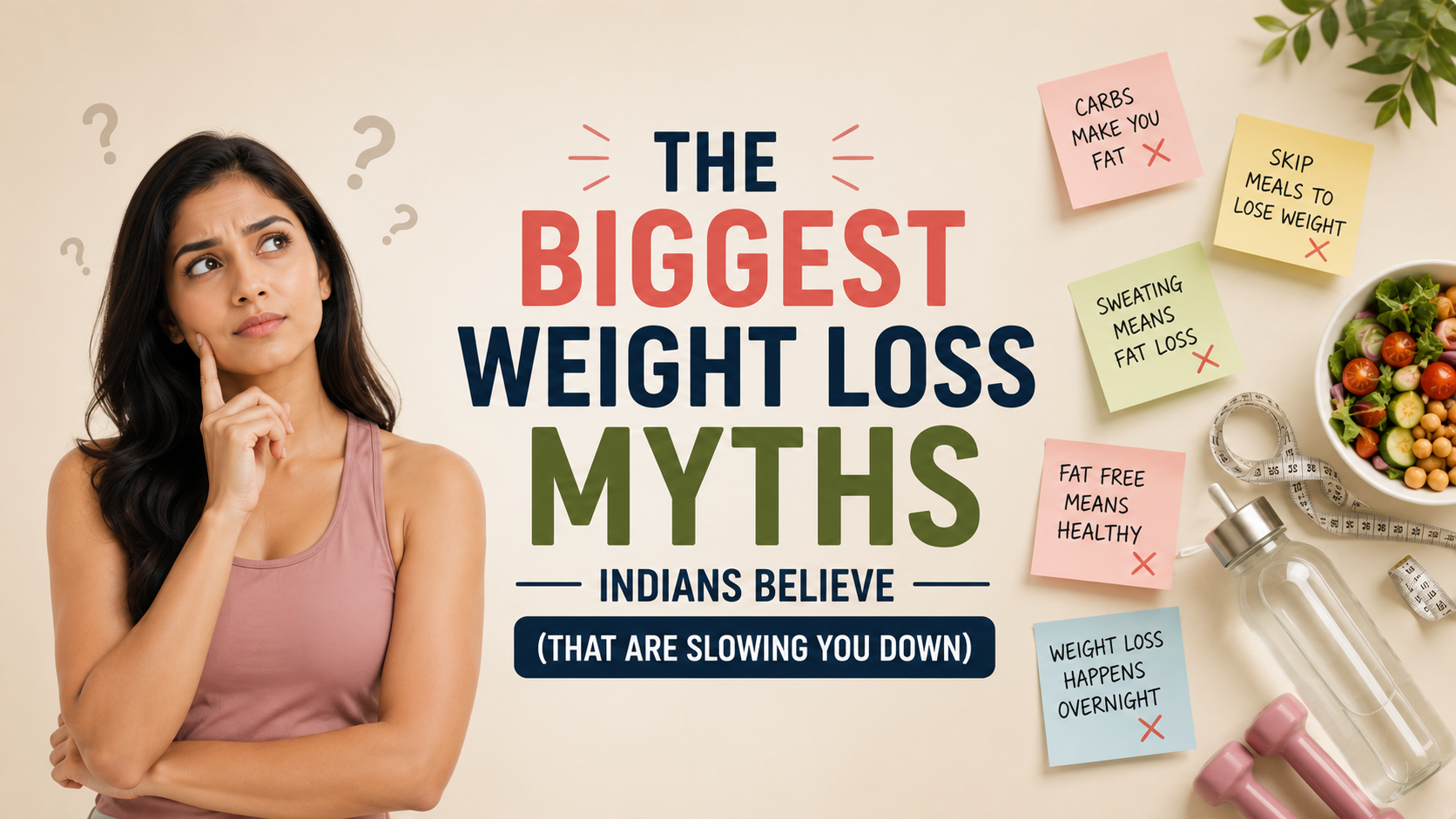
The Biggest Weight Loss Myths Indians Believe (That Are Slowing You Down)
The Advice That Sounds Right But Holds You Back
Skip dinner to lose weight faster. Cut out rice completely. Sweat more during workouts to burn more fat. Drink lemon water every morning to "detox."
If you have heard, and maybe followed, any of this advice, you are not alone. Indian weight loss culture is full of myths passed down through families, WhatsApp forwards, and well-meaning but misinformed friends.
The problem is that these myths do not just fail to help. Many actively work against your goals, wasting your time and effort while keeping you frustrated and stuck.
Myth: Skipping Meals Helps You Lose Weight Faster
This is one of the most common and most counterproductive weight loss strategies in India. The logic seems simple: eat less often, consume fewer calories, lose more weight.
In reality, skipping meals, especially breakfast, tends to backfire. Research shows that meal skippers often end up eating more later in the day due to intense hunger, frequently choosing higher-calorie, less nutritious options when that hunger hits.
Skipping meals regularly also slows your metabolism over time as your body adapts to perceived food scarcity, and it can cause muscle loss alongside fat loss, which further reduces your metabolic rate.
What works instead: Eating regular, balanced meals with adequate protein keeps your metabolism stable, controls hunger, and supports sustainable fat loss without the muscle loss that comes from chronic under-eating. For a full breakdown of how much protein you actually need, see how much protein do women actually need per day.
Myth: Carbs (Especially Rice and Roti) Are the Enemy
Low-carb diets have become extremely popular, leading many Indians to believe that rice, roti, and other carbohydrate staples are inherently fattening and must be eliminated.
This is an oversimplification. Weight gain results from a sustained calorie surplus, not from any single macronutrient. Rice and roti, eaten in appropriate portions alongside protein, vegetables, and fibre, are not the cause of weight gain for most people.
The real issue is usually portion size and what is eaten alongside the carbs, such as excessive oil, sugar, or very large servings without balancing protein and fibre.
What works instead: Focus on portion control and balanced meals rather than eliminating entire food groups. A roti with dal, sabzi, and salad is a completely reasonable part of a weight loss diet. Choosing whole grains like brown rice, bajra, and jowar over heavily refined options provides more fibre and supports better blood sugar control.
Myth: Sweating More Means Burning More Fat
Many people equate a drenched workout shirt with an effective fat-burning session, leading to practices like wearing extra layers or exercising in extremely hot conditions to "sweat it out."
Sweating is your body's mechanism for cooling itself down. It is influenced by ambient temperature, humidity, hydration status, and individual physiology, not directly by how many calories or how much fat you are burning.
You can have an extremely effective, calorie-burning workout with relatively little sweat in a cool, air-conditioned space, and a low-effort session with a lot of sweat in a hot, humid room. The weight lost from excessive sweating is water weight, which returns as soon as you rehydrate.
What works instead: Track your actual exercise intensity through heart rate, perceived effort, or the specific exercises and reps completed, rather than how much you sweat.
Myth: You Need to Avoid All Fats
The low-fat diet trend of previous decades left a lasting impression that all fats are bad for weight loss. Many Indians still avoid ghee, nuts, and oils entirely in pursuit of weight loss.
Healthy fats are essential for hormone production, nutrient absorption, and satiety. Diets that are extremely low in fat often leave people feeling unsatisfied and prone to overeating other foods, particularly refined carbohydrates, to compensate.
Important: Ghee in moderate amounts, nuts, seeds, and cold-pressed oils all have a place in a healthy weight loss diet. The key is moderation and choosing quality fat sources over heavily processed, refined oils, not elimination altogether.
What works instead: Include moderate amounts of healthy fats, such as a teaspoon of ghee, a small handful of nuts, or fatty fish if you eat non-vegetarian, as part of a balanced diet, rather than eliminating fat entirely.
Myth: Detox Drinks and Lemon Water Burn Fat
Morning lemon water, apple cider vinegar shots, and various "detox" drinks are widely believed to kickstart metabolism and burn fat.
There is no significant scientific evidence that lemon water or similar drinks have any meaningful fat-burning effect. Your liver and kidneys already handle detoxification naturally and effectively. No drink "flushes out toxins" in the way marketing suggests.
That said, replacing sugary drinks with lemon water is a reasonable, low-calorie choice, and proper hydration does support overall health and can help distinguish hunger from thirst. The benefit comes from what you are not drinking, not from any special fat-burning property of lemon water itself.
What works instead: Drink water consistently throughout the day for genuine hydration benefits. Lemon water is fine as a pleasant way to do this, but do not expect it to meaningfully accelerate fat loss on its own.
Myth: Spot Reduction Works (Targeting Belly Fat With Crunches)
Many people do hundreds of crunches hoping to specifically burn belly fat. This idea, known as spot reduction, has been thoroughly studied and consistently disproven.
You cannot choose where your body loses fat from through targeted exercises. Fat loss occurs based on your genetics and overall body composition changes, not based on which specific muscles you are exercising.
Doing ab exercises will strengthen your core muscles, which is valuable for posture and stability, but it will not specifically melt belly fat faster than other types of exercise.
What works instead: Overall fat loss through a combination of strength training, cardio, and a calorie-appropriate diet reduces body fat throughout your body, including your belly, over time. For more on building this kind of routine, see yoga for belly fat reduction.
Myth: Eating After 7pm Causes Weight Gain
The idea that eating late at night directly causes weight gain, regardless of total daily calorie intake, is widely believed but not well supported by evidence.
Weight gain is primarily determined by your total calorie intake relative to your needs over time, not the specific clock time you eat. However, there are indirect reasons why late-night eating is often associated with weight gain: people who eat late are more likely to be consuming additional, unplanned calories on top of their regular meals, and late-night eating can interfere with sleep quality, which independently affects weight regulation.
What works instead: Focus on your total daily calorie and nutrient intake rather than rigid timing rules. If eating dinner earlier helps you avoid mindless late-night snacking or supports better sleep, that is a reasonable strategy, but it is the behaviour change, not the clock time itself, that matters.
Myth: All Calories Are Equal
While weight loss does come down to calorie balance, the idea that "a calorie is a calorie" oversimplifies how your body actually processes different foods.
100 calories of almonds and 100 calories of sugar affect your body very differently. Protein has a higher thermic effect, meaning your body burns more calories digesting it. Fibre-rich foods slow digestion and improve satiety. Highly processed foods can drive overeating through their effect on hunger hormones and reward pathways in the brain.
What works instead: While calorie balance ultimately matters for weight loss, prioritising whole, minimally processed, protein and fibre-rich foods makes it significantly easier to maintain that balance without constant hunger and cravings.
Myth: Cardio Is the Only Exercise That Matters for Weight Loss
Many people, especially women, focus almost exclusively on cardio for weight loss, avoiding strength training out of fear of "bulking up" or because cardio feels more directly connected to calorie burning.
As covered in our walking vs running for weight loss comparison, cardio is valuable, but strength training plays an equally important, often more important, role in sustainable weight loss. Strength training builds and preserves muscle mass, which increases your resting metabolic rate. Without it, weight loss often comes with significant muscle loss, which makes maintaining the weight loss harder over time and can leave you looking "smaller but soft" rather than toned.
What works instead: Combine cardio with regular strength training, at least 2 to 3 sessions per week, for the most effective and sustainable body composition changes.
What Actually Works
Strip away the myths, and effective weight loss comes down to a few consistent, well-supported principles:
- A moderate calorie deficit: Achieved through balanced, whole-food meals, not extreme restriction
- Adequate protein intake: To preserve muscle mass and support satiety throughout the day
- Combined cardio and strength training: Not cardio alone, for the best body composition results
- Consistent sleep of 7 to 9 hours: Since poor sleep disrupts the hunger hormones that drive cravings
- Stress management: Since chronic stress raises cortisol and promotes fat storage, particularly around the abdomen
Patience and consistency over weeks and months, rather than expecting dramatic results in days, ties all of these principles together. None of them are exciting or quick, which is exactly why myths promising fast, effortless results remain so appealing, even though they consistently fail to deliver lasting change.
Why fitnoa Works for Cutting Through Weight Loss Confusion
fitnoa offers live fitness sessions across yoga, cardio, strength training, and bodyweight exercises, ensuring your programme includes the balanced combination of training types that actually drives sustainable weight loss, rather than relying on cardio alone or any single exercise myth.
- AI posture tracking with a live trainer: Ensures the time and effort you invest in strength training and cardio translates into real results, rather than wasted effort from incorrect technique
- Detailed post-session reports that replace guesswork and myth-based assumptions, like judging a workout by how much you sweat, with real, objective information about your progress
- Complete privacy: Only you and your trainer can see each other during sessions, creating a comfortable, judgement-free space to learn correct techniques and build sustainable habits
- Goal-based programmes built on evidence-based principles, not popular myths, designed around what is scientifically proven to work for your specific body and goals
- Personalised nutrition plans built around balanced, sustainable principles tailored to your goals, preferences, and lifestyle, cutting through the confusion of conflicting diet advice
- One accessible price combining live fitness coaching and personalised nutrition guidance, giving you expert-guided, myth-free support for both your workouts and your diet in one place
Key Takeaways
- Skipping meals often backfires by increasing hunger and slowing metabolism, rather than accelerating weight loss
- Carbohydrates like rice and roti are not inherently fattening. Portion size and overall diet balance matter more
- Sweating more during a workout does not mean you are burning more fat, it primarily reflects body temperature regulation
- Healthy fats in moderate amounts support hormone health and satiety, and should not be eliminated entirely
- Detox drinks and lemon water do not have meaningful fat-burning properties beyond being a low-calorie hydration choice
- Spot reduction, like crunches for belly fat, does not work. Fat loss happens throughout the body based on overall calorie balance
- Effective weight loss comes from a moderate calorie deficit, adequate protein, combined cardio and strength training, good sleep, and stress management
Related reads you may find helpful
Frequently asked questions
Everything you need to know
Stop Following Myths. Start Following What Actually Works.
Tired of conflicting advice and quick fixes that never deliver? fitnoa's live fitness coaching and personalised nutrition plans are built on evidence, not myths, giving you a clear, sustainable path to real results. Try your first class completely free.