
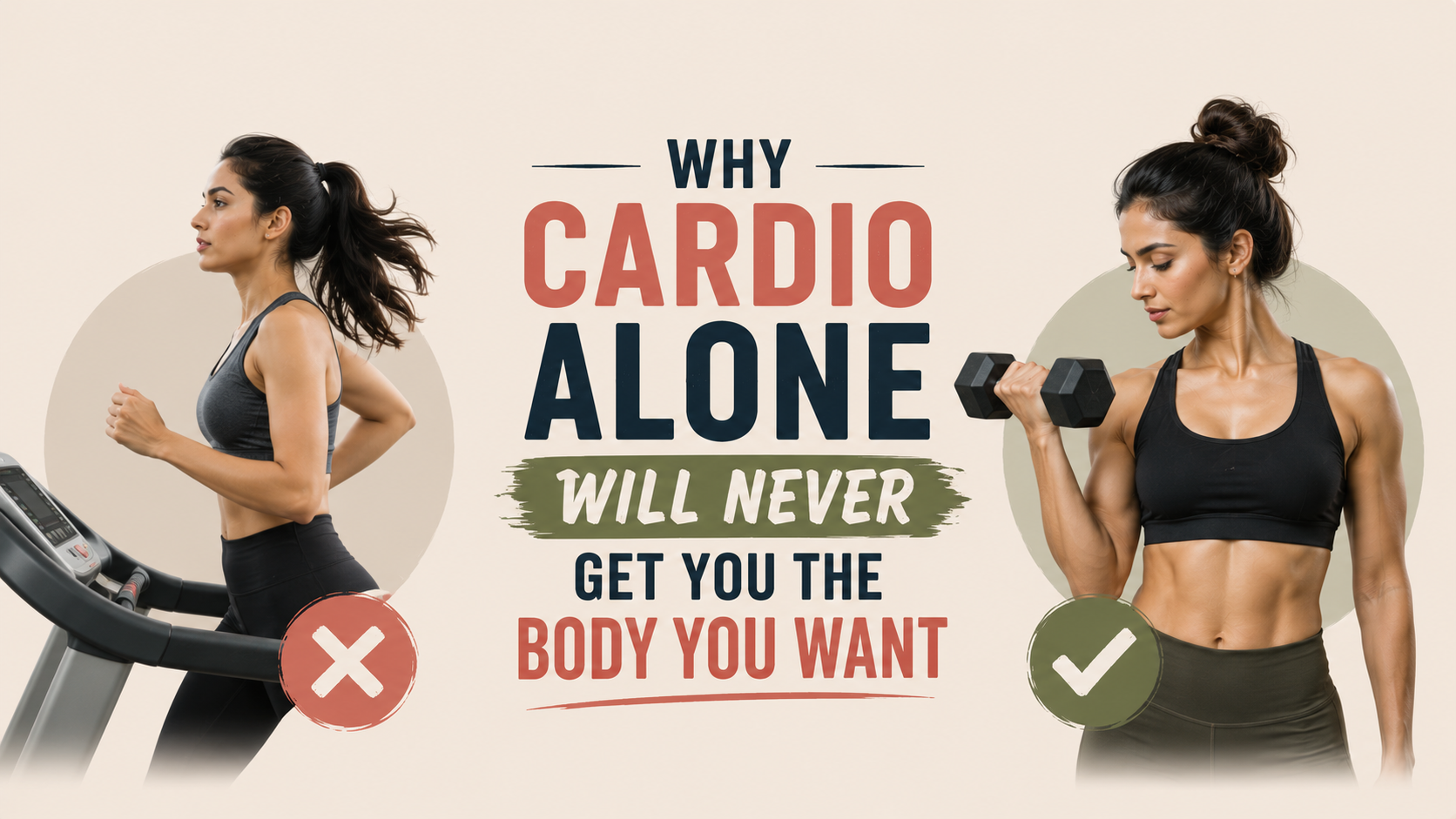
Why Cardio Alone Will Never Get You the Body You Want
Months of Cardio, Same Soft Shape
You have been doing cardio for months. Treadmill sessions, cycling classes, maybe even training for a 5k. The scale has moved a little, but your body does not look the way you imagined. You feel "smaller" but not toned. Soft, not strong.
If this sounds familiar, you are experiencing one of the most common frustrations in fitness, and it is not because you are not working hard enough. It is because cardio alone, no matter how consistent or intense, cannot create the specific body composition changes most people actually want.
What Cardio Actually Does for Your Body
Cardiovascular exercise, including walking, running, cycling, and aerobics, is genuinely valuable. It strengthens your heart and lungs, improves circulation, burns calories during the activity, supports mental health, and improves endurance.
These benefits are real and important. The issue is not that cardio is bad. The issue is that cardio alone addresses only part of what determines how your body looks and functions.
Cardio primarily burns calories during the activity itself and creates modest improvements in cardiovascular fitness over time. What it does relatively little of is build or preserve the muscle tissue that creates a toned, defined appearance and supports your metabolism long-term.
The Body Composition Problem
Here is a concept that explains why two people can weigh exactly the same but look completely different: body composition.
Body composition refers to the ratio of fat mass to lean mass (muscle, bone, organs) in your body. Two women who are both 60 kg can have dramatically different body compositions, one with 35 percent body fat and minimal muscle, another with 22 percent body fat and meaningfully more muscle.
The second woman will typically look more toned, defined, and fit, even at the identical body weight, because muscle creates shape and definition that fat does not.
Cardio alone, especially combined with calorie restriction, tends to reduce both fat and muscle. Without a stimulus to build or preserve muscle, which only resistance training provides, your body composition does not improve as much as your weight on the scale might suggest.
Why Cardio Alone Often Leads to Muscle Loss
This is the part most people do not realise: significant amounts of cardio, particularly when combined with a calorie deficit, can actively contribute to muscle loss.
When you are in a calorie deficit, your body looks for energy sources. Without a strong signal to preserve muscle, which comes specifically from resistance training and adequate protein intake, your body will break down some muscle tissue for energy alongside fat.
Excessive cardio volume, especially long-duration steady-state cardio, can also elevate cortisol when done in excess, which independently promotes muscle breakdown and can work against fat loss in the abdominal area specifically. Read more about this in doing everything right but still not losing weight, the cortisol factor.
This explains the common experience of someone who does extensive cardio for weight loss, sees the number on the scale go down, but ends up looking less toned and more "deflated" rather than fit and defined.
The Metabolism Connection
Muscle tissue is metabolically active, meaning it burns calories even when you are not exercising, simply to maintain itself. This is your resting metabolic rate, and it is significantly influenced by how much muscle mass you carry.
When cardio-only approaches lead to muscle loss alongside fat loss, your resting metabolic rate decreases. This means your body burns fewer calories throughout the day, even when you are sitting, sleeping, or doing daily activities.
Important: Over time, a shrinking metabolic engine creates a frustrating pattern. You need to eat less and less, or do more and more cardio, just to maintain your results. This is one of the key reasons why weight regained after cardio-focused weight loss often comes back more easily than the weight that was lost.
Strength training reverses this pattern. By building and preserving muscle, it helps maintain or even increase your resting metabolic rate, making your results more sustainable and giving you more flexibility with your food intake.
Why Strength Training Changes Your Shape
Strength training, also called resistance training, involves working your muscles against resistance, whether through bodyweight exercises, resistance bands, dumbbells, or gym equipment.
It Builds the Shape You Are Looking For
The toned appearance most people associate with fitness comes from having visible muscle definition under a moderate layer of body fat, not simply from being thin. Strength training is the primary tool for building this muscle definition. Cardio alone cannot create this effect.
It Reshapes, Not Just Shrinks
Cardio and calorie restriction alone tend to make your existing body shape smaller, proportionally. Strength training actually reshapes your body by building muscle in specific areas (glutes, shoulders, back) that create a more defined, athletic silhouette, regardless of your specific body type or starting point.
It Improves Functional Strength
Beyond appearance, strength training makes daily activities easier, such as carrying groceries, climbing stairs, and picking up children, and significantly reduces injury risk, particularly important as you age.
It Supports Bone Density
This is especially important for women, who face a higher risk of osteoporosis, particularly after menopause. Strength training is one of the most effective tools for maintaining bone density throughout life.
The "Skinny Fat" Phenomenon
This term, while not the most flattering, describes a real and common body composition outcome: someone who appears thin in clothing but has a relatively high body fat percentage and very little muscle mass.
This pattern is extremely common in people who rely exclusively on cardio and calorie restriction for weight management without any strength training. The scale shows a "normal" weight, but body composition tells a different story: minimal muscle, higher relative body fat, and often, persistent softness around the midsection despite being objectively thin overall.
This is not just a cosmetic concern. Skinny fat individuals often have similar metabolic health risks, including insulin resistance, as those who are overweight, despite their lower body weight, because the issue is body composition, not the number on the scale.
How to Combine Cardio and Strength Effectively
The goal is not to abandon cardio, but to ensure strength training is a core, non-negotiable part of your routine alongside it.
- 2 to 3 strength training sessions per week: Focus on compound movements (squats, lunges, push-ups, rows) that work multiple muscle groups
- 2 to 3 cardio sessions per week: A mix of moderate steady-state cardio (walking, cycling) and optionally some higher intensity intervals
- Adequate protein intake: To support muscle preservation and growth alongside your training
- At least 1 to 2 rest days: To allow for recovery and adaptation
This combination produces significantly better body composition outcomes than either cardio or strength training alone, supported by extensive research comparing different exercise approaches for fat loss and body composition. For guidance on starting strength training safely, see strength training for beginners at home.
Common Fears About Strength Training (Debunked)
"I Will Get Bulky"
This is one of the most persistent myths preventing women from strength training. Building significant muscle mass requires years of dedicated, progressive training combined with a significant calorie surplus, and for most people, levels of muscle growth that happen very slowly and gradually. The natural hormonal profile of most women makes rapid, dramatic muscle gain physiologically unlikely. What strength training actually produces for most women is a toned, defined appearance, not bulk.
"Cardio Burns More Calories So It Is Better for Weight Loss"
While cardio may burn more calories during the activity itself, strength training contributes to your metabolism long-term by preserving and building muscle. The total impact on body composition over weeks and months typically favours a combined approach over cardio alone.
"I Am Too Old to Start Strength Training"
Strength training is valuable and safe at virtually any age, with appropriate modifications. In fact, the muscle-preserving effects of strength training become increasingly important as you age, since muscle loss accelerates after 30 and again after 60.
Why fitnoa Works for Building a Toned, Strong Body Beyond Cardio
fitnoa offers live fitness sessions across yoga, cardio, strength training, and bodyweight exercises, ensuring your programme includes the strength training component that cardio-only approaches miss entirely.
- Balanced sessions that target both fat loss and muscle building together, rather than relying on cardio alone
- AI posture tracking with a live trainer: Particularly important for strength training, where correct technique determines whether you are effectively building muscle or risking injury and wasted effort
- Detailed post-session reports that help you see body composition progress beyond just the number on a scale, including improvements in strength and performance
- Complete privacy: Only you and your trainer can see each other during sessions, which is especially valuable for women who feel intimidated starting strength training for the first time
- Goal-based fitness programmes built around a balanced combination of strength training and cardio, recognising that cardio alone does not produce the body composition changes most people are actually seeking
- Personalised nutrition plans designed to support your specific training programme, ensuring you have the protein and nutritional foundation needed for strength training to actually build the toned physique you are working toward
Key Takeaways
- Cardio alone burns calories and improves cardiovascular fitness but does relatively little to build or preserve muscle
- Body composition, the ratio of muscle to fat, determines how toned your body looks, more than total body weight alone
- Excessive cardio combined with calorie restriction can lead to muscle loss, reducing your metabolic rate over time
- Strength training builds the muscle definition associated with a "toned" appearance, something cardio cannot replicate
- The "skinny fat" pattern, a thin appearance with low muscle and higher body fat, is common in cardio-only approaches without strength training
- A balanced weekly routine includes 2 to 3 strength sessions and 2 to 3 cardio sessions, combined with adequate protein
- Strength training does not cause women to "bulk up". It typically produces toned, defined results instead
Related reads you may find helpful
Frequently asked questions
Everything you need to know
Build the Toned, Strong Body Cardio Alone Cannot Give You
If cardio has not gotten you the results you want, the missing piece is likely strength training. fitnoa's live sessions combine cardio, strength, and AI posture tracking with personalised nutrition built to support real muscle and lasting body composition change. Try your first class completely free.