
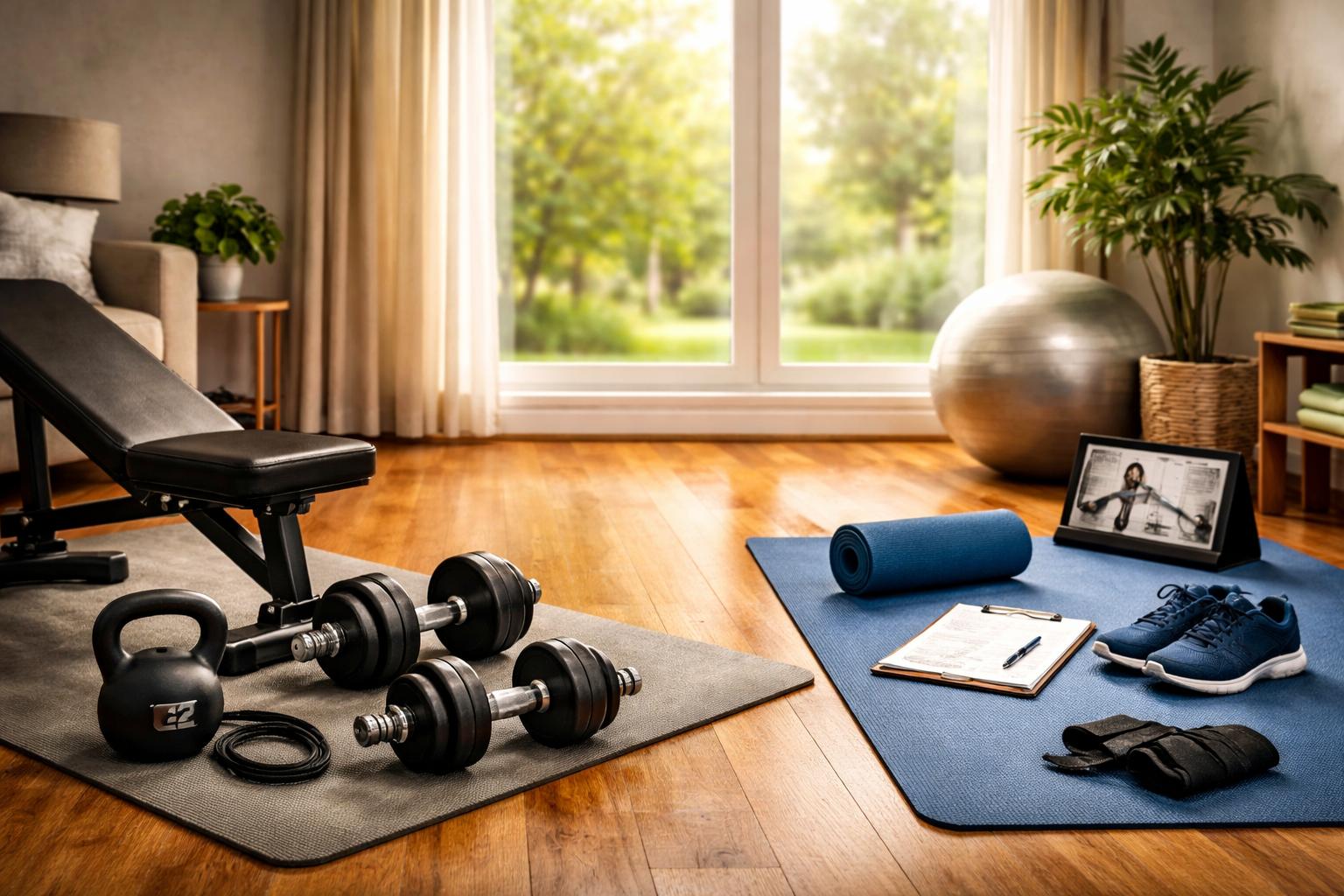
How to Start Weight Training at Home Without Injuries (Beginner Guide)
A lot of people want to start weight training at home, but one fear holds them back: "What if I do something wrong and get injured?"
This is a valid concern. Unlike gyms, home workouts lack supervision. There's no trainer correcting your form, no feedback on posture, and no one watching your technique.
Because of this, most beginners either avoid weight training entirely or start with incorrect form, quietly building habits that lead to injury.
Why Injuries Happen in Beginner Weight Training
Injuries don't happen because weight training is dangerous. They happen because of how people begin.
1. Lifting Too Heavy Too Soon
Many beginners assume heavier weights mean faster results. In reality, this breaks your form, stresses your joints, and significantly raises injury risk.
2. Ignoring Proper Form
Even basic exercises like squats, deadlifts, and shoulder presses can cause problems when performed incorrectly. This is the most common mistake.
3. No Structured Plan
Random workouts lead to random results. Without a proper home weight training plan, your body doesn't adapt effectively and progress stalls.
4. No Feedback or Correction
When you train alone, you can't accurately assess your own posture or spot mistakes. This is where most injuries quietly begin.
Important: The biggest risk in home weight training isn't the weights. It's the absence of feedback. Without real-time correction, small form errors compound into injuries over time.
How to Start Weight Training at Home Safely
Starting doesn't require complicated routines. What matters is a smart, gradual approach.
- Step 1 – Start light: Begin with light dumbbells, resistance bands, or bodyweight. Focus on learning movement patterns, not lifting heavy.
- Step 2 – Master basics first: Build a foundation with squats, lunges, push movements, and pull movements before advancing.
- Step 3 – Use controlled reps: Slow down your movements. Control beats speed, it improves results and reduces injury risk.
- Step 4 – Prioritise rest: Muscles grow during recovery, not during the workout. Don't skip rest days or neglect nutrition.
For a safe and structured approach to building strength, check out our full guide on weight training at home without injuries.
The Role of Proper Form in Injury Prevention
Correct form is more important than how much you lift.
When form is wrong, the wrong muscles get activated, pressure shifts to joints instead of muscles, and the risk of long-term damage increases.
Take the squat as an example. An incorrect squat may have knees collapsing inward or the back rounding forward. A correct squat keeps the back straight, knees aligned, and movement controlled throughout.
Small adjustments make a big difference, especially compounded over weeks of training.
The Biggest Challenge: Knowing If You're Doing It Right
This is where most people struggle.
At home, there are no proper mirror angles, no trainer watching, and no real-time feedback. You're left guessing whether you're performing exercises correctly and that uncertainty leads to slow progress, frustration, and potential injuries.
The Smart Way to Train: Real-Time Feedback
Modern fitness solutions are changing how people train at home.
Instead of guessing your form or following random videos, you can now track your posture in real time, receive instant corrections, and improve with every repetition. This makes weight training at home both effective and genuinely safe.
If you're also managing a condition like PCOS, structured low-impact strength training can be especially beneficial — read more about managing PCOS with lifestyle and exercise.
How fitnoa Helps You Avoid Injuries
fitnoa is built around one core idea: correct form and real-time guidance.
AI-based form correction tracks your body posture live, identifies mistakes, and helps you correct movements instantly. So you're not just working out, you're working out correctly.
Focused training environment means no crowded online sessions. You train with your trainer in a focused setting, which improves concentration, confidence, and performance.
Performance tracking reports give you post-session insights including accuracy score, calories burned, and progress metrics, so you can see whether you're improving safely.
Personalised nutrition support rounds out your recovery. Safe training isn't just about workouts, proper nutrition is essential for muscle repair and consistent progress.
Final Thoughts
Starting weight training at home doesn't have to be risky.
You don't need heavy weights or complex routines. What matters is correct form, gradual progression, and the right guidance. When done properly, home weight training can be safe, effective, and genuinely transformative.
Related reads you may find helpful
Frequently asked questions
Everything you need to know
Train smarter. Get your form right from day one.
Starting weight training without guidance is the fastest way to pick up bad habits or worse, get injured. fitnoa gives you real-time AI form correction and a dedicated trainer in every session, so you build strength safely from the very first rep. No guesswork. No wasted weeks.