
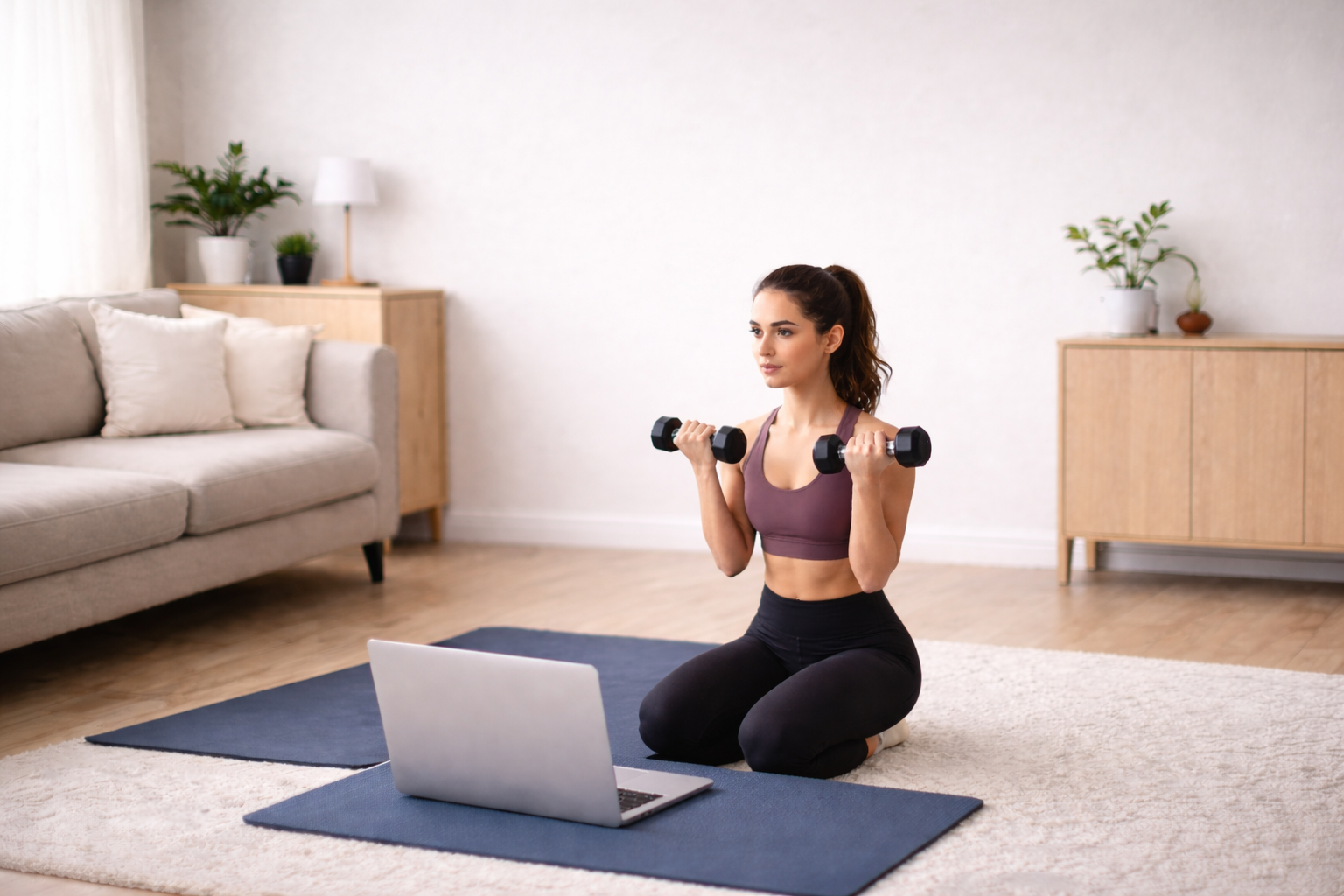
Strength Training for Beginners at Home: Complete Guide (No Gym Needed)
You've been working out consistently following YouTube videos, trying different home routines, maybe even experimenting with gym workouts. But results feel slow, confusing, or sometimes completely absent.
This is where most beginners get stuck. And the issue usually isn't effort. It's the lack of a structured strength training plan.
Many people focus only on cardio or random exercises with no progression. But what your body actually needs is a structured approach to strength training, one that builds muscle, improves metabolism, and delivers visible, long-term results.
What is Strength Training (And Why It Works)
Strength training is exercise where your muscles work against resistance. That resistance can come from your own bodyweight, dumbbells, or resistance bands. The goal is simple: gradually build muscle strength over time.
Why Strength Training Beats Random Workouts
- It burns more calories even at rest
- It builds lean muscle without making you bulky (unless specifically trained for it)
- It improves posture and balance
- It delivers sustainable results, not just temporary weight loss
How to Start Strength Training at Home
Starting can feel overwhelming without a gym or trainer but you can begin effectively at home with a simple, structured approach.
Step 1 – Start With Bodyweight Exercises
No equipment needed. Begin with foundational movements: squats, push-ups, lunges, and planks. These form the base of strength training without equipment and build overall strength safely.
Step 2 – Focus on Form
This is the most common beginner mistake. Doing more reps with incorrect posture reduces effectiveness and increases injury risk. Focus on controlled movements and proper technique, quality always matters more than quantity.
For a deeper look at how form affects safety, read our guide on weight training at home without injuries.
Step 3 – Follow a Simple Weekly Plan
- Day 1 – Full body: Squats, push-ups, lunges, planks
- Day 2 – Rest or light activity: Walk, stretch, or yoga
- Day 3 – Upper body: Push-ups, shoulder press, rows
- Day 4 – Rest: Full recovery
- Day 5 – Lower body: Squats, lunges, glute bridges
In the beginning, consistency matters more than intensity. Show up regularly and let your body adapt.
Common Mistakes in Beginner Strength Training
Even motivated beginners often plateau early, usually due to a few avoidable mistakes.
Important: Poor form is the single biggest obstacle for beginners training at home. Even a simple squat done incorrectly reduces results and quietly builds injury risk over time. Correct technique from day one is non-negotiable.
No Proper Guidance
Following random workouts without understanding technique leads to ineffective training, no matter how hard you work.
Ignoring Progress Tracking
Without measuring improvement, it's hard to stay motivated or know if your plan is working. Track your reps, sets, and how exercises feel each week.
No Personalisation
Most generic workout plans don't account for individual body differences. What works for someone else may not work for you and a plan tailored to your body delivers far better results.
Strength Training at Home vs Gym: What's Better?
Gyms offer equipment and trainers. Home workouts offer convenience, comfort, and better consistency.
The biggest challenge with home training is the absence of guidance, form correction, and progress tracking. This is what leads to slow or invisible results, even with consistent effort.
The good news: smart fitness technology is changing this.
The Missing Piece: Correct Form and Real-Time Feedback
When training alone, there's no one to correct your posture or tell you if you're performing an exercise correctly. There's no clear way to measure accuracy or performance either.
This means consistent effort can still lead to ineffective results not because you're not trying, but because you're training without feedback.
How fitnoa Helps You Fix This
fitnoa addresses the core gap in home strength training: doing exercises correctly, with real-time guidance.
AI-based posture tracking monitors your movements live, tells you whether your form is correct, and shows you exactly where to improve so you train with accuracy, not guesswork.
Personal trainer focus means you're not competing for attention in a crowded session. You get a dedicated, distraction-free environment that improves both confidence and performance.
Smart performance reports after each session give you accuracy scores, calories burned, and overall progress data so you can clearly see whether your training is working.
Integrated nutrition support connects you with experts who guide you based on your body, your progress reports, and your specific goals. Workouts alone are never enough.
Final Thoughts
Starting strength training at home doesn't have to be complicated.
You don't need a gym membership or expensive equipment. What truly matters is structure, correct form, consistency, and the right guidance. When these come together, home strength training becomes effective, sustainable, and genuinely results-driven.
Related reads you may find helpful
Frequently asked questions
Everything you need to know
Build strength at home the right way, from day one.
Starting strength training without guidance is the fastest way to waste effort or pick up habits that hold you back. fitnoa gives you a structured plan, real-time AI form correction, and a dedicated trainer every session, so you build strength safely and see results that actually show. Try a free class and experience the difference structure makes.