
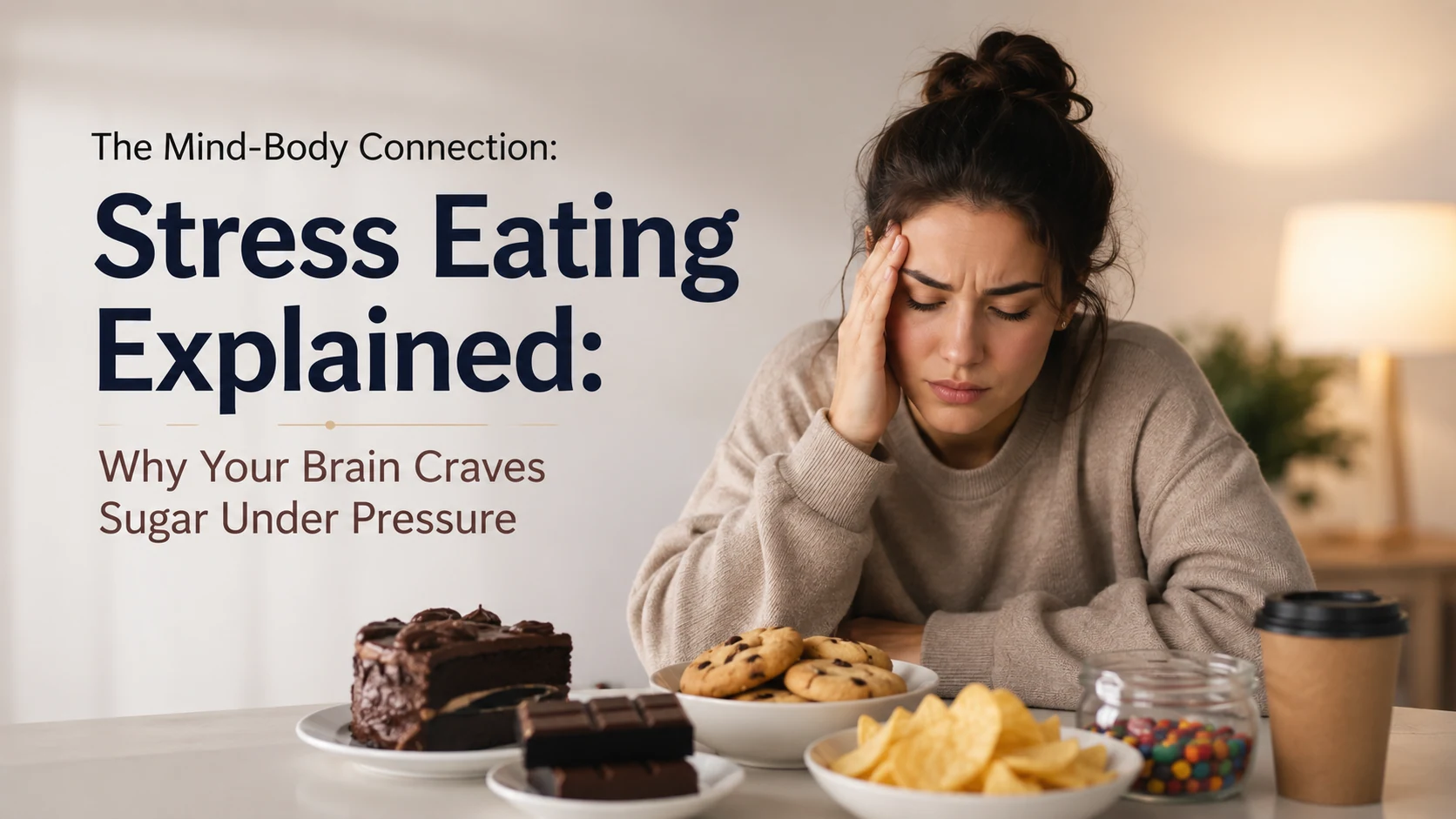
Stress Eating Explained: Why Your Brain Craves Sugar Under Pressure
You had a brutal day at work. By evening, you are not reaching for a salad, you are reaching for biscuits, chocolate, or whatever sweet thing is closest. If this sounds familiar, you are not alone, and more importantly, you are not lacking willpower. There is a real biological reason your brain pushes you toward sugar specifically when you are stressed.
Understanding why this happens is the first step toward managing it more effectively, rather than simply feeling guilty about it after the fact.
This article explains the science behind stress eating, why sugar specifically becomes so appealing under pressure, and practical, realistic strategies to manage it without relying on willpower alone.
What Is Stress Eating, Exactly?
Stress eating, sometimes called emotional eating, refers to eating in response to emotional states, particularly stress, rather than genuine physical hunger. It often involves a strong pull toward specific foods, typically high in sugar, refined carbohydrates, or fat, rather than a craving for food in general.
This is different from eating out of normal hunger. Stress eating usually comes on quickly, feels urgent, and is often directed at a very specific type of food, rather than openness to any nutritious meal.
Why Does Stress Make You Crave Sugar Specifically?
Cortisol Increases Appetite and Sugar Cravings
When you are stressed, your body releases cortisol, the primary stress hormone. Cortisol increases appetite generally, and research has specifically linked elevated cortisol to a stronger preference for high sugar, high fat foods, sometimes described as "comfort foods."
This is partly an evolutionary leftover. In a genuine survival threat, your body would benefit from quickly accessible energy, and sugar provides the fastest source of usable energy available. Your stress response system has not fully adapted to modern, non physical stressors like work deadlines or difficult conversations.
Sugar Triggers a Real, Temporary Dopamine Boost
Eating sugar activates the brain's reward system, releasing dopamine, the neurotransmitter involved in motivation and pleasure. Under stress, when your baseline mood and motivation may already feel low, this dopamine boost can feel especially appealing, offering quick, reliable relief, even if it is short lived.
Stress Depletes the Mental Resources Needed for Self Control
Resisting cravings requires what researchers call executive function, your brain's capacity for planning, decision making, and self control. Chronic stress measurably reduces the resources available for executive function, which is part of why willpower alone often fails during high stress periods. It is not a personal failing, it is a genuine reduction in available mental resources.
Important: Willpower failing during high stress periods is not a personal failing. It reflects a genuine, measurable reduction in the mental resources your brain has available for self control.
Sugar Provides Quick, Reliable Comfort
Beyond the biological reward response, sugary foods are often tied to emotional comfort from childhood, associated with celebrations, rewards, or care from family. This learned emotional association adds another layer to why sugar specifically, rather than other foods, becomes the default reach during stress.
Stress Disrupts Hunger Regulating Hormones
Chronic stress affects the balance of hormones that regulate hunger and fullness, including ghrelin, which increases appetite, and leptin, which signals fullness. This disruption can make you feel hungrier than you actually are, particularly for energy dense foods like sugar and refined carbohydrates.
Stress Eating vs Genuine Hunger: How to Tell the Difference
Onset
Genuine hunger: gradual, builds over time. Stress eating: sudden, feels urgent.
Food Preference
Genuine hunger: open to various foods. Stress eating: strong pull toward specific comfort foods, often sweet.
Location of Hunger
Genuine hunger: physical sensation in stomach. Stress eating: feels more like a mental craving or emotional pull.
Satisfaction
Genuine hunger: stops once reasonably full. Stress eating: often continues even after feeling physically full.
Timing
Genuine hunger: linked to last meal and activity level. Stress eating: linked to stress, emotion, or specific triggers, regardless of meal timing.
Aftermath
Genuine hunger: neutral feeling afterward. Stress eating: often followed by guilt or regret.
Is Stress Eating Always a Problem?
Occasional stress eating is extremely common and not inherently harmful. Most people eat for comfort sometimes, and an occasional sweet treat during a hard week is not something to feel guilty about.
It becomes more worth addressing when it is a frequent, primary way of coping with stress, when it consistently leaves you feeling worse afterward, or when it is affecting your physical health or relationship with food more broadly. In these cases, it is worth exploring both the underlying stress and the eating pattern itself, sometimes with professional support from a doctor, dietitian, or therapist.
Practical Strategies to Manage Stress Eating
Address the Stress Itself, Not Just the Eating
Since stress eating is fundamentally a response to stress, reducing the underlying stress, through better boundaries, time management, or coping tools, often reduces the urge to stress eat more effectively than trying to white knuckle through cravings with willpower alone. Read more in burnout vs stress: how to tell the difference if you suspect your stress is becoming chronic.
Keep Easy, Satisfying Alternatives Available
Having reasonably satisfying options on hand, like fruit, nuts, or yogurt, means that if you do reach for food during stress, you have something more nutritionally balanced within easy reach.
Build a Pause Before Eating
A short pause, even 60 seconds, between noticing a craving and acting on it can help you check in with whether you are genuinely hungry or responding to stress. This is not about denying yourself food, but about making the choice consciously rather than automatically.
Point 1: Address nutrient gaps that worsen cravings. Diets low in protein, fibre, or overall calories can worsen cravings since your body is responding to genuine energy or nutrient needs. Point 2: Use physical activity as an alternative stress outlet. A short walk or workout during a stressful moment can reduce the intensity of a craving by addressing the stress directly. Point 3: Improve sleep quality. Poor sleep disrupts ghrelin and leptin, making cravings for sugar and refined carbohydrates considerably stronger the next day. Point 4: Avoid extreme restriction. Overly restrictive diets often backfire by increasing the intensity of cravings later.
See why diet plans fail without proper fitness guidance for more on why balanced, sustainable approaches tend to work better than restriction.
Common Mistakes People Make With Stress Eating
- Relying purely on willpower without addressing the underlying stress or nutrient gaps driving the craving.
- Feeling intense guilt after stress eating, which itself becomes an additional stressor, sometimes triggering another round of stress eating.
- Completely banning favourite foods, which can increase their psychological pull and make cravings more intense when stress levels rise.
- Ignoring sleep and overall stress levels while focusing only on the eating behaviour itself. Learn more in how sleep affects weight loss and hormones in women.
- Skipping meals during stressful periods, which often backfires by increasing hunger hormones and intensifying cravings later in the day.
How Exercise Helps Specifically With Stress Driven Sugar Cravings
Exercise is one of the more effective, well supported tools for managing stress eating, because it addresses the root biological cause rather than just the eating behaviour itself.
Physical activity lowers cortisol levels over time, directly reducing the hormonal driver behind stress related cravings. It also boosts dopamine and serotonin through a different pathway than food, offering a genuine alternative source of the reward and comfort that sugar otherwise provides. Also, regular exercise improves sleep quality, indirectly stabilising the hunger regulating hormones that influence next day cravings.
This does not mean using exercise purely to "burn off" food eaten during stress, a mindset that can become unhealthy. Rather, using movement as a proactive tool to manage stress itself tends to reduce the frequency and intensity of stress eating episodes over time. See doing everything right but still not losing weight? the cortisol factor for more on cortisol's broader effects.
You may also like our guide on exercise for anxiety.
How fitnoa Supports Healthier Stress Management Around Food
Since stress eating is fundamentally tied to how your body manages stress and energy, fitnoa addresses this through both fitness and nutrition support together.
Live fitness sessions with expert trainers: Regular exercise lowers cortisol over time, directly reducing one of the main biological drivers behind stress related sugar cravings, with live guidance making it easier to stay consistent.
Personalised nutrition and diet plans: Balanced, regular nutrition reduces nutrient gaps that can intensify cravings, and personalised guidance helps build sustainable eating patterns rather than restrictive diets that often backfire.
Yoga sessions: Yoga combines movement with breath control, directly supporting the nervous system pathways involved in stress regulation, offering a calming alternative outlet during high stress moments.
Goal-based fitness programs, including weight loss and diabetes specific plans: These programs recognise that managing stress eating often ties closely into broader health goals, offering structured, tailored support rather than generic advice.
Detailed fitness reports after every session: Seeing consistent progress over time can reinforce a sense of control and accomplishment, which directly counters some of the helplessness that often drives stress eating in the first place.
Key Takeaways
- Stress eating is driven by real biological mechanisms, including elevated cortisol, dopamine reward responses, and disrupted hunger hormones, not a lack of willpower.
- Sugar specifically becomes appealing under stress because it offers quick energy and a fast, reliable dopamine boost.
- Occasional stress eating is normal, but frequent reliance on it as a primary coping mechanism is worth addressing.
- Effective strategies include managing the underlying stress directly, eating balanced regular meals, improving sleep, and using exercise as an alternative outlet.
- Extreme food restriction often backfires and intensifies cravings, making a balanced, sustainable approach more effective long term.
- Platforms like fitnoa that combine fitness and nutrition support can help address both the stress and dietary sides of this pattern together.
Related reads you may find helpful
Frequently asked questions
Everything you need to know
Tackle the Stress, Not Just the Craving
Stress eating starts with stress, not willpower, and fitnoa helps you address both sides. With live fitness sessions to lower cortisol and personalised nutrition plans to keep cravings in check, you get support that goes beyond the food itself.