
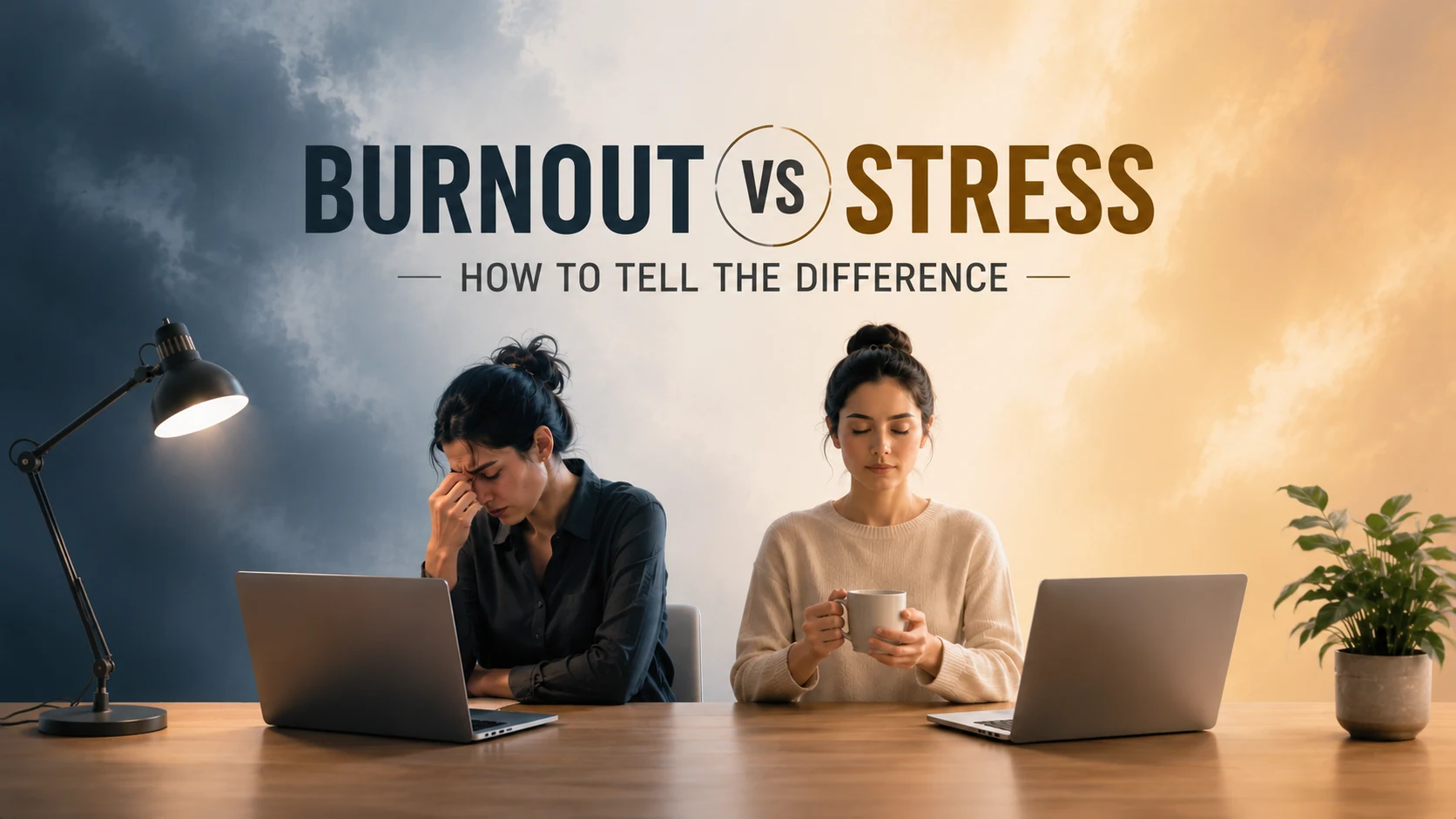
Burnout vs Stress: How to Tell the Difference
"I think I'm just stressed" is one of the most common things people say right before realising they are actually burnt out. The two feel similar on the surface: racing thoughts, poor sleep, irritability, but they are different states with different causes, and more importantly, different solutions.
Treating burnout like ordinary stress, by simply "pushing through" or taking a short weekend off, often makes it worse. Understanding which one you are actually dealing with is the first step toward genuinely recovering.
This article breaks down exactly how burnout and stress differ, the warning signs of each, why the distinction matters for recovery, and practical steps to address both.
What Is Stress?
Stress is your body's natural response to a perceived demand or threat, whether that is a tight work deadline, a difficult conversation, or financial pressure. It triggers the release of cortisol and adrenaline, preparing your body to react quickly.
Stress is not inherently bad. In short bursts, it can sharpen focus and improve performance, a state sometimes called "eustress" or positive stress. Problems arise when stress becomes chronic, when your body stays in that alert state for weeks or months without enough recovery time in between.
Key feature of stress: it is usually tied to a specific, identifiable cause, a project, an exam, a deadline, and it tends to ease once that cause is resolved or removed.
What Is Burnout?
Burnout is a state of physical, emotional, and mental exhaustion caused by prolonged, unresolved stress, typically related to work or caregiving, though it can occur in other chronic high demand situations too. The World Health Organisation officially classifies burnout as an occupational phenomenon resulting from chronic workplace stress that has not been successfully managed.
Unlike ordinary stress, burnout does not necessarily go away once you remove the immediate trigger. It builds gradually, often over months, and tends to involve three core features.
- Exhaustion: Feeling depleted, both physically and emotionally, even after rest.
- Cynicism or detachment: A growing sense of negativity, numbness, or disconnect from work or responsibilities you used to care about.
- Reduced sense of accomplishment: A feeling of ineffectiveness or that nothing you do makes a meaningful difference, even when you are objectively performing well.
Key feature of burnout: it persists even during downtime. A weekend off or a single good night's sleep does not meaningfully resolve it, because burnout is not just tiredness, it is a deeper depletion.
Burnout vs Stress: A Side by Side Comparison
Cause
Stress: usually a specific, identifiable trigger. Burnout: prolonged, unresolved stress over time.
Duration
Stress: short term, tied to the triggering event. Burnout: long term, develops gradually over months.
Energy Level
Stress: high alert, anxious energy. Burnout: depleted, flat, exhausted.
Emotional Response
Stress: worry, urgency, overengagement. Burnout: cynicism, detachment, numbness.
Recovery
Stress: often improves once the trigger resolves. Burnout: does not resolve with rest alone, needs deeper changes.
Sense of Control
Stress: usually feels manageable, even if difficult. Burnout: often feels hopeless or out of control.
Physical Symptoms
Stress: tense muscles, rapid heartbeat, restlessness. Burnout: chronic fatigue, frequent illness, sleep disruption.
Engagement
Stress: still emotionally invested in the outcome. Burnout: reduced caring, even about things that used to matter.
How to Tell If You Are Stressed or Burnt Out: A Quick Self Check
Ask yourself these questions.
- Does a weekend or short break genuinely make you feel recharged, or do you return to work feeling just as drained?
- Do you still care about the outcome of your work or responsibilities, even if you are anxious about it, or do you feel numb and detached from it?
- Is there a specific cause you can point to, or does the exhaustion feel constant and hard to pin down?
- Are you still performing at your usual standard, even under pressure, or has your sense of effectiveness genuinely dropped?
If your answers point toward persistent exhaustion, detachment, and a break not actually helping, burnout is more likely than ordinary stress.
Why the Distinction Actually Matters
Confusing burnout for ordinary stress leads to mismatched solutions.
If you treat burnout like stress, you might try to simply "push through" a busy period, expecting things to calm down once the deadline passes. But because burnout's root cause is chronic and systemic, not a single event, this approach often leads to deeper exhaustion rather than relief.
On the other hand, treating ordinary stress like burnout, for example assuming you need a complete lifestyle overhaul for a temporary, identifiable stressor, can lead to unnecessary anxiety about your own resilience.
Important: Getting the diagnosis right, even informally, changes what kind of recovery actually works. Burnout and stress need different approaches.
Related reading: mental fatigue.
What Causes Burnout to Develop?
Burnout rarely appears overnight. It typically builds from a combination of the following.
- Chronic work overload without adequate time or resources to manage it.
- Lack of control over how, when, or where work gets done.
- Insufficient recognition or reward for effort, whether financial or simply acknowledgment.
- Poor workplace community or lack of support from colleagues and managers.
- Mismatch between personal values and work demands, such as being asked to act in ways that conflict with your own ethics or priorities.
- Unclear expectations that make it hard to know what success even looks like.
This is why burnout is increasingly understood as something that needs to be addressed at the level of workload, environment, and systems, not solved purely through individual willpower or a single vacation.
How to Recover From Burnout
Recovery from burnout takes longer than recovery from ordinary stress, and usually requires changes at more than one level.
Point 1: Acknowledge it honestly. Many people push through burnout for months because they assume they are just "being lazy." Naming it accurately is the first step toward addressing it properly. Point 2: Address the root workload or environment, where possible. This might mean having a direct conversation with a manager or redistributing responsibilities. Point 3: Rebuild basic physical foundations. Sleep, nutrition, and movement are often the first things to slip during burnout. Point 4: Reintroduce small wins. Deliberately setting and completing small, achievable tasks can slowly rebuild a sense of effectiveness. Point 5: Seek professional support if needed. A therapist or counsellor can help address emotional detachment that self help alone may not fully resolve. Point 6: Set boundaries around recovery time. Genuine recovery requires protected time away from the source of chronic stress.
How to Manage Ordinary Stress Before It Becomes Burnout
Since burnout often develops from prolonged, unmanaged stress, addressing stress early is one of the best forms of prevention.
- Identify your specific stressors rather than treating "stress" as one vague feeling. Naming the actual cause makes it easier to address directly.
- Use short term coping tools, like deep breathing, brief walks, or stepping away from a task for ten minutes, to lower acute stress before it accumulates.
- Protect your sleep, since poor sleep amplifies the body's stress response. Learn more about how sleep affects weight loss and hormones in women.
- Build regular movement into your week. Exercise is one of the most well researched ways to lower baseline stress hormone levels over time.
- Check in with yourself weekly, asking honestly whether your stress is resolving after the trigger passes, or building up over time, which is an early sign of burnout forming.
For more on this, read our article on stress eating.
The Role of Exercise in Preventing Both Stress and Burnout
Regular physical activity lowers baseline cortisol levels, improves sleep quality, and increases mood regulating brain chemicals like serotonin and dopamine. All three of these directly counter the biological mechanisms behind both chronic stress and burnout.
Importantly, the type of exercise matters less than consistency. A short, regular routine, even 20 to 30 minutes a few times a week, tends to be more protective against burnout than occasional intense exercise that adds its own physical stress without enough recovery time. Read more in strength training for beginners at home for a sustainable way to start.
If you find yourself going through the motions without feeling rested, can stress make pmos symptoms worse is also worth a read for the hormonal side of chronic stress.
For more on this, read our article on exercise for anxiety.
How fitnoa Can Support Recovery From Stress and Burnout
Since both stress and burnout are closely tied to overload, lack of structure, and depleted physical resources, fitnoa is built to address several of these factors directly.
Live fitness sessions with expert trainers: Having a trainer guide your session removes the mental load of planning a workout yourself, which matters when burnout has already left you with limited decision making energy.
Goal-based fitness programs, including general fitness and weight loss plans: Structured, clear programs reduce the uncertainty and overwhelm that can make starting a wellness routine feel like just another task on an already overloaded list.
Detailed fitness reports after every session: Burnout often comes with a reduced sense of accomplishment. Seeing concrete progress data, performance, calories burned, reps completed, helps rebuild that sense of effectiveness in a measurable way.
Yoga and bodyweight sessions: These lower intensity options support nervous system recovery without adding the physical strain that high intensity workouts can place on an already depleted body. See morning yoga routine for beginners at home in india to start gently.
Personalised nutrition and diet plans: Burnout often disrupts appetite and eating patterns. Nutrition guidance alongside fitness coaching helps rebuild physical foundations that support genuine recovery.
If you would like expert support with this, take a look at fitnoa's yoga and holistic wellness program.
Key Takeaways
- Stress is usually short term and tied to a specific cause, while burnout is a deeper, prolonged exhaustion that does not resolve with rest alone.
- Burnout involves three core features: exhaustion, cynicism or detachment, and a reduced sense of accomplishment.
- A genuine break improving how you feel suggests stress, while persistent exhaustion despite rest suggests burnout.
- Burnout typically requires addressing root causes like workload and environment, not just individual self care.
- Regular, consistent exercise helps prevent both stress and burnout by lowering cortisol and supporting better sleep and mood regulation.
- Structured support like fitnoa can reduce decision fatigue and help rebuild a sense of accomplishment during recovery.
Related reads you may find helpful
Frequently asked questions
Everything you need to know
Recover Without Adding to the Overload
Whether you're dealing with everyday stress or genuine burnout, fitnoa offers low intensity yoga and bodyweight sessions guided by real trainers, so you can stay gently active without another decision to make. Let fitnoa handle the planning while you focus on recovery.