
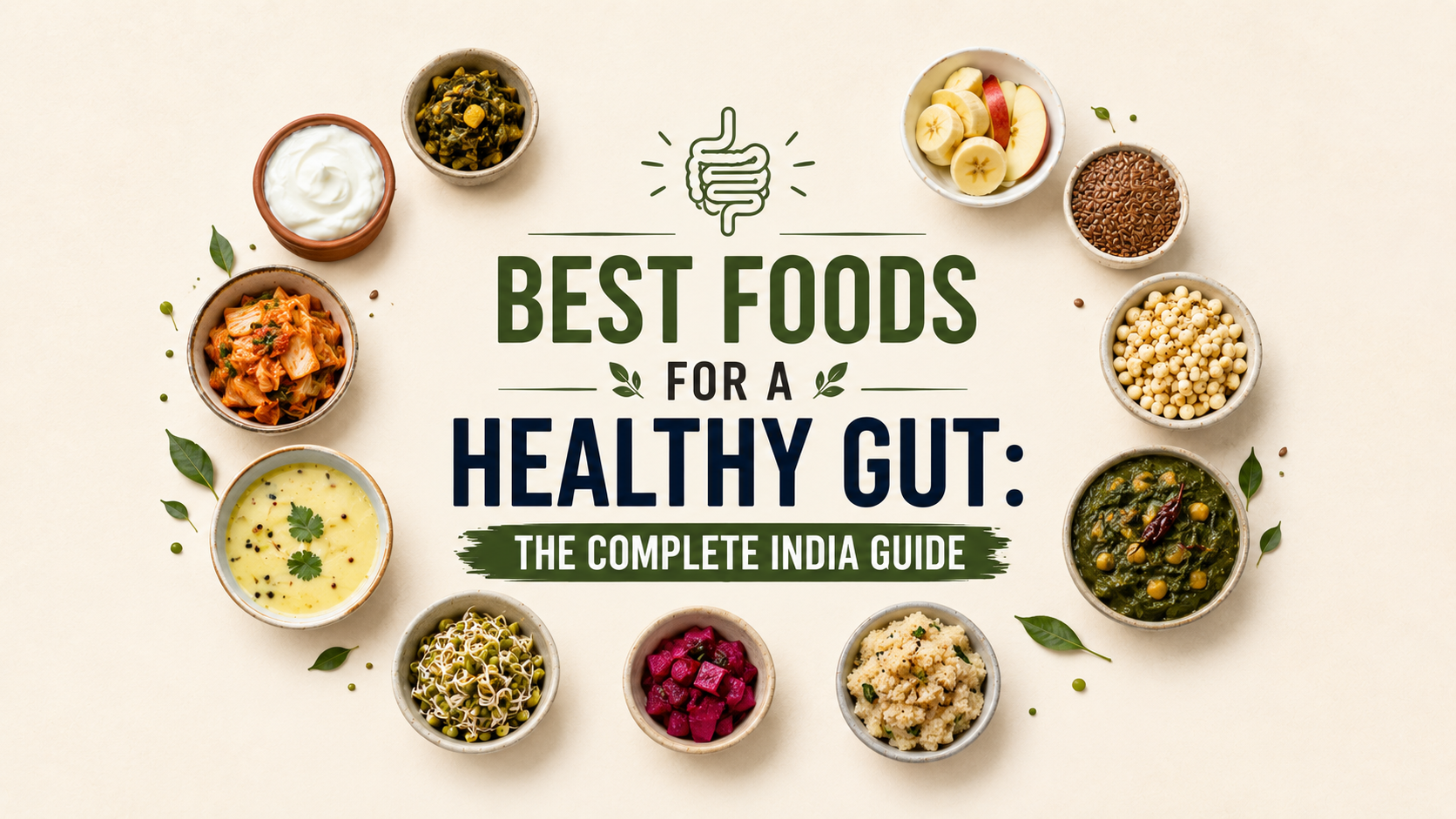
Best Foods for a Healthy Gut: The Complete India Guide
The Traditional Indian Diet Was Built for Gut Health
Here is something most people do not realise: the traditional Indian diet is extraordinarily well-suited for gut health.
Dal. Curd. Idli. Sabzi packed with vegetables. Whole grains. Fermented pickles. Spices like turmeric, ginger, and cumin. These are not just cultural staples. They are some of the most gut-friendly foods on the planet, supported by a growing body of modern science.
The problem is that the modern Indian diet has drifted away from these traditional foods and toward packaged snacks, refined flour, and sugar-heavy convenience foods that actively harm gut bacteria.
Understanding Probiotics and Prebiotics
Before diving into the food list, it helps to understand the difference between two terms you will see repeatedly.
Probiotics are live beneficial bacteria and yeasts that, when consumed, add directly to your gut microbiome. Think of them as reinforcements for your army of good bacteria.
Prebiotics are types of dietary fibre that your gut bacteria feed on. They are the food supply for your existing good bacteria, helping them grow and thrive.
Best Probiotic Foods in India
Curd (Dahi)
Curd is the single most accessible and effective probiotic food in India. It is made by fermenting milk with Lactobacillus and Streptococcus thermophilus bacteria, both of which survive the journey through your stomach and reach the intestines where they provide real benefit.
Benefits: Improves digestion, reduces bloating, supports immunity, helps with lactose intolerance symptoms, and contributes to serotonin production through the gut-brain axis.
How to eat it: Fresh homemade curd is best. Add it to meals, eat it as raita, or blend with water for chaas. Avoid flavoured commercial yogurts with added sugar.
Target: 1 cup (200 to 250ml) daily.
Buttermilk (Chaas)
Thin, spiced buttermilk is a traditional post-meal drink across India, and it is genuinely therapeutic for gut health. It contains live cultures from curd plus digestive spices like jeera and curry leaves.
Blend curd with water, a pinch of black salt, roasted jeera powder, and fresh coriander. Drink after lunch for optimal digestive benefit.
Idli and Dosa
The batter for idli and dosa is made from fermented rice and urad dal. The fermentation process creates lactic acid bacteria that are excellent for gut health, and these dishes are also easier to digest than unfermented rice dishes because fermentation partially breaks down complex starches.
The probiotic benefit is in fresh, home-fermented batter. Commercially available ready-to-cook batter often does not have the same live culture content.
Kanji
Kanji is a traditional fermented drink made from black carrots or beetroot. It is incredibly rich in probiotics and has been consumed for gut health in North India for centuries, while also acting as a powerful antioxidant and anti-inflammatory drink.
Combine water, black carrots or beetroot, black salt, mustard seeds, and red chilli powder in a clay or glass jar. Leave to ferment at room temperature for 2 to 3 days, then drink a small glass daily.
Important: The probiotic benefit of fermented foods like idli batter, dhokla, and kanji comes specifically from fresh, naturally fermented preparations. Commercially processed or shelf-stable versions often lack the same live bacterial content, so homemade or freshly made versions are significantly more beneficial.
Fermented Rice (Pazhaya Sadam or Panta Bhat)
Soaking leftover cooked rice overnight in water allows fermentation to occur. This practice, common in South India, Odisha, and parts of West Bengal, produces a food extremely rich in beneficial bacteria. Research from India has shown fermented rice to have a dramatically higher probiotic count than fresh rice.
Mix fermented rice with a little curd, salt, and onion for a traditional breakfast or light meal.
Homemade Pickle (Achaar, in Moderation)
Traditional homemade pickles made in sun-dried oil with salt and spices, not vinegar-based commercial varieties, contain naturally occurring beneficial bacteria. They are high in sodium, so eat in small amounts as a condiment rather than a main food.
Dhokla and Handvo
These Gujarati fermented snacks are made from fermented chickpea or mixed lentil and rice batters. They are rich in probiotics from the fermentation process and are an excellent alternative to refined flour snacks.
Best Prebiotic Foods in India
These foods feed your existing good gut bacteria and help them multiply.
Dal and Legumes
Dal is one of the best prebiotic foods available in India. The fibre in lentils (moong, masoor, toor, urad, and chana dal) is particularly rich in fructooligosaccharides and galactooligosaccharides, two types of prebiotic fibre that selectively feed beneficial bacteria.
Eating dal at least once daily is one of the single most gut-friendly habits you can build. To support this habit alongside a fitness routine, see why diet plans fail without proper fitness guidance.
Rajma and Chana (Legumes)
Kidney beans and chickpeas are excellent sources of resistant starch and prebiotic fibre. Resistant starch passes through the small intestine undigested and reaches the colon where gut bacteria ferment it, producing short-chain fatty acids that strengthen the gut lining and reduce inflammation.
Raw Garlic and Onion
Garlic and onion contain inulin and fructooligosaccharides, powerful prebiotic fibres. Garlic is especially potent, and even small amounts used in daily cooking contribute to feeding beneficial bacteria. Raw garlic provides more prebiotic benefit than cooked.
Banana
Slightly underripe bananas are an excellent source of resistant starch. Ripe bananas contain more sugar but still provide meaningful prebiotic fibre, alongside potassium that supports smooth muscle function in the digestive tract.
Oats
Oats contain beta-glucan, a type of soluble fibre with strong prebiotic properties. Beta-glucan feeds beneficial bacteria like Bifidobacterium and Lactobacillus, and oats also slow digestion, preventing blood sugar spikes that can promote dysbiotic bacteria.
- Bajra, jowar, and ragi: Traditional Indian millets rich in fibre, vitamins, and prebiotic compounds, significantly more gut-friendly than refined wheat or polished white rice
- Spring onion (hara pyaaz): Among the highest prebiotic vegetable sources, widely available and easy to add to salads, sabzi, and chutneys
- Amla (Indian gooseberry): A uniquely Indian superfood rich in vitamin C, tannins, and polyphenols that feed beneficial bacteria and reduce gut inflammation
Anti-Inflammatory Spices for Gut Health
Traditional Indian spices do significantly more than add flavour. Many have direct gut health benefits.
Turmeric (haldi): Curcumin reduces gut inflammation, supports the integrity of the gut lining, and has been shown to modulate the gut microbiome in ways that increase beneficial bacteria. Always combine with black pepper and fat for proper absorption.
Ginger (adrak): Accelerates gastric emptying, reducing bloating and nausea, while having potent anti-inflammatory effects on the gut lining and supporting beneficial bacteria growth.
Cumin (jeera): One of the most effective digestive spices. It stimulates the secretion of digestive enzymes, reduces bloating and gas, and has antimicrobial properties that help maintain the balance between beneficial and harmful gut bacteria.
Fennel (saunf): Relaxes the smooth muscles of the digestive tract, reducing cramping and bloating. The tradition of eating saunf after meals is genuinely therapeutic for digestive health.
Hing (asafoetida): Reduces gas, bloating, and cramping by relaxing the digestive smooth muscles and acting as a mild antimicrobial.
Coriander (dhania): Fresh coriander and coriander seeds both have antimicrobial properties against common gut pathogens and are rich in antioxidants that reduce gut inflammation.
Foods to Avoid for Better Gut Health
The gut-damaging foods most common in the modern Indian diet:
- Packaged biscuits and namkeen: Contain emulsifiers, preservatives, and trans fats that harm the gut lining and disrupt microbiome balance
- Maida-based products: Refined white flour lacks fibre, feeds dysbiotic bacteria, and disrupts the tight junctions in the gut lining over time
- Refined vegetable oils: High omega-6 oils used in most packaged and restaurant food promote gut inflammation
- Commercial soft drinks and packaged juices: High sugar with zero fibre is the ideal food for harmful bacteria
- Excess alcohol: Disrupts the gut lining and significantly reduces microbiome diversity
- Artificial sweeteners: Research suggests certain artificial sweeteners negatively affect gut bacteria even at doses considered safe
A Sample Gut-Healthy Indian Meal Plan
Day 1
- Breakfast: Moong dal cheela (2) with fresh coriander and ginger, plus 1 cup fresh curd
- Mid-morning: 1 banana and a small cup of green tea
- Lunch: Toor dal with haldi and jeera tadka, bajra roti, mixed sabzi, and cucumber raita
- Evening snack: Kanji or a glass of chaas, plus roasted chana
- Dinner: Idli (4 pieces) with sambar and coconut chutney, plus a side of sauteed greens
Day 2
- Breakfast: Fermented rice with curd and onion, or oats with banana and a teaspoon of amla powder
- Mid-morning: A handful of walnuts and 1 cup green tea
- Lunch: Rajma with ghee and hing tadka, brown rice, spinach sabzi, and chaas
- Evening snack: Dhokla (2 to 3 pieces) with fresh coriander chutney
- Dinner: Moong dal khichdi with ginger and jeera tempering, plus a small side of homemade pickle and sauteed methi
Simple Habits to Support Your Gut Daily
- Eat at regular times: Your gut bacteria have their own circadian rhythms, and consistent meal timing supports a more stable microbiome
- Chew food thoroughly: Digestion begins in the mouth. Rushed eating puts more burden on gut bacteria to do work that should have happened earlier
- Avoid eating late at night: The gut lining repairs itself primarily during sleep, and late-night eating disrupts this process
- Stay hydrated: Adequate water intake supports the mucus lining of the gut and keeps stool moving through the intestines
- Do not overuse antibiotics: When antibiotics are necessary, take the full prescribed course and follow with at least 4 weeks of probiotic-rich foods to help restore the microbiome
Why fitnoa Works for Gut Health and Nutrition
Physical activity directly improves gut microbiome diversity, with studies showing that even moderate exercise meaningfully increases the abundance of beneficial bacteria. Every fitnoa session contributes to your gut health alongside your fitness goals.
- Varied live workouts across yoga, cardio, strength training, and bodyweight exercises, all contributing to a healthier, more diverse gut microbiome
- AI posture tracking with a live trainer: For yoga sessions specifically, correct alignment in poses that involve twisting and core engagement directly stimulates digestive organs and supports gut motility
- Detailed post-session reports that help you maintain the consistency gut health improvement requires, since regular ongoing exercise delivers compounding benefits to your microbiome over time
- Complete privacy: Only you and your trainer can see each other during sessions, removing the social anxiety that can itself disrupt gut health through chronic stress
- Personalised nutrition plans that include fibre targets, fermented food recommendations, and anti-inflammatory eating built around your preferences, food culture, and health history
- One accessible price combining live fitness coaching and personalised nutrition support, since the combination of regular exercise and a targeted nutrition plan is far more effective for gut health than either alone
Key Takeaways
- The traditional Indian diet is naturally rich in gut-healthy foods including curd, dal, fermented idli and dosa, jeera, ginger, and turmeric
- Probiotics from curd, idli, kanji, and chaas directly add good bacteria to your gut
- Prebiotics from dal, rajma, oats, banana, garlic, and onion help existing bacteria thrive
- Indian spices including turmeric, ginger, cumin, fennel, and hing have direct gut health benefits supported by science
- Foods to limit include maida-based products, packaged snacks with additives, refined oils, sugar-heavy drinks, and excess alcohol
- Eating at regular times, chewing food thoroughly, staying hydrated, and avoiding late meals all support gut health daily
- Combining probiotic and prebiotic foods consistently, not just occasionally, produces the best results for microbiome health
Related reads you may find helpful
- What Is Gut Health and Why Does It Affect Everything From Weight to Mood?
- Why Diet Plans Fail Without Proper Fitness Guidance
- How Much Protein Do Women Actually Need Per Day?
- Best Anti-Inflammatory Foods for Joint Pain and Inflammation
- The Only Home Workout Plan Indian Women Actually Stick To (No Equipment Needed)
Frequently asked questions
Everything you need to know
Build a Gut-Healthy Routine With Expert Guidance
Eating the right foods is only part of the picture. fitnoa pairs personalised nutrition plans built around fibre, fermented foods, and your food culture with live expert fitness coaching that supports your gut microbiome through regular movement. Try your first class completely free.