
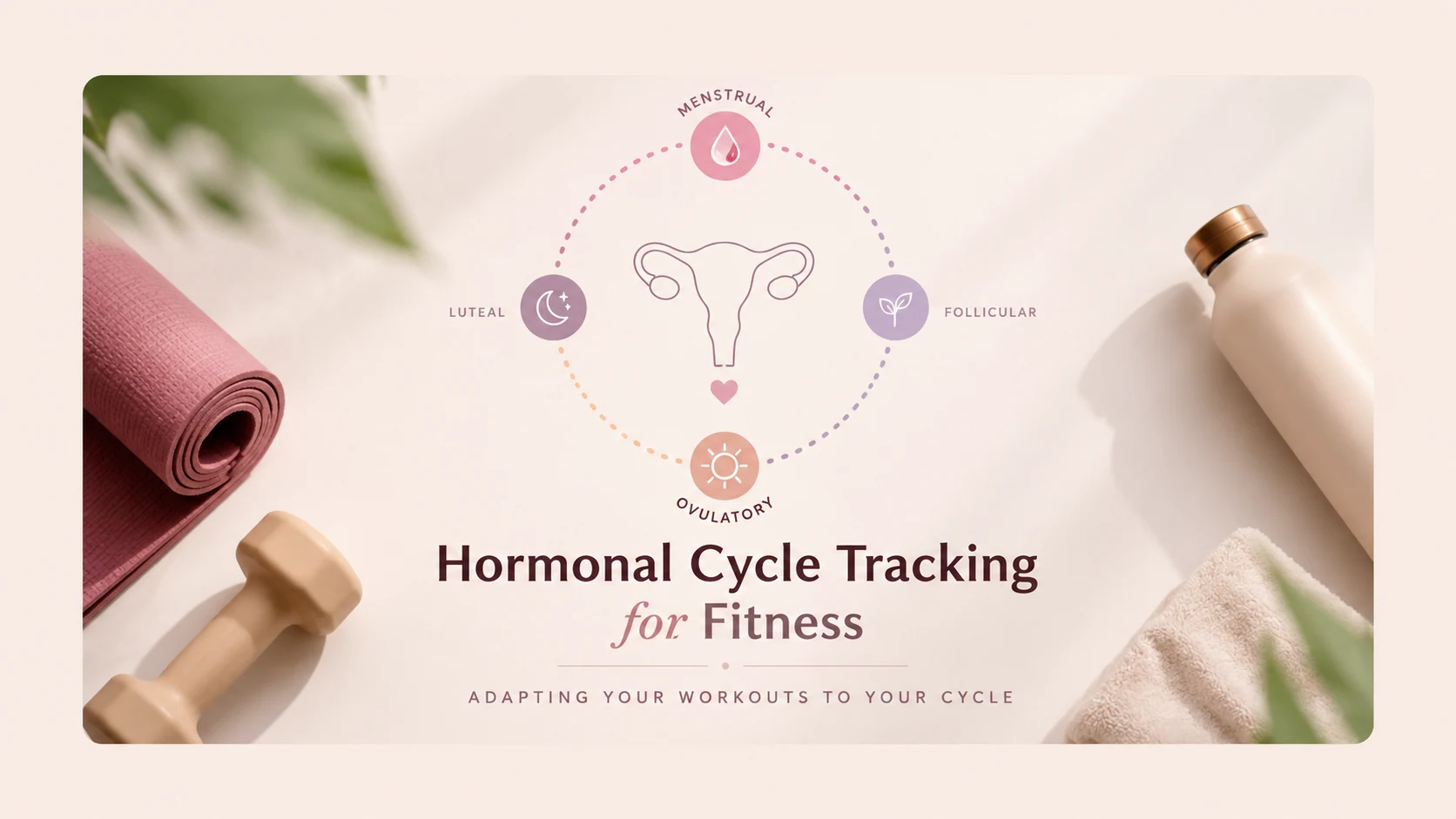
Hormonal Cycle Tracking for Fitness: Adapting Your Workouts to Your Cycle
You've probably noticed something strange: some weeks you feel like you can conquer the world, and other weeks your energy completely tanks. The same workout that felt amazing last week now feels impossible.
You're not weak. You're not lazy. Your hormones are changing, and your body is literally becoming stronger or weaker at different times of the month.
This isn't just about feeling good. It's about science. Your menstrual cycle directly affects your muscle strength, endurance, recovery ability, and even your body composition. When you work out WITH your cycle instead of against it, you see better results with less burnout.
This is called cycle syncing, and it's one of the most powerful tools women have to optimize fitness, prevent injury, and finally feel good during their period.
Understanding Your Menstrual Cycle
Your menstrual cycle isn't just about your period. It's a full month of hormonal changes that affect your entire body, including your muscles, energy levels, mood, and recovery.
A normal cycle is about 28 days, though it can range from 21 to 35 days. Each day brings different hormone levels that influence your fitness performance.
Here's what most fitness guides miss: ignoring your cycle is like ignoring your body's natural training periodization. It's leaving massive results on the table.
Women who train according to their cycle see:
- Better workout performance during high-energy phases
- Faster recovery
- Fewer injuries from overtraining during low-energy phases
- Better body composition results
- Improved mood and mental health
For more on this, read our article on cycle-aware training.
The Four Phases and How They Affect Your Body
Phase 1: Menstruation (Days 1-5)
During your period, estrogen and progesterone are at their lowest. This is when many women feel tired, experience cramps, and have lower pain tolerance.
BUT your pain tolerance actually helps with intense training because your body is more resistant to feeling pain. Many women find that pushing slightly harder during this phase actually makes cramps better.
Your metabolism is slightly lower, so longer cardio feels harder. Energy is lowest this week.
Phase 2: Follicular Phase (Days 6-14)
This is the party phase. Estrogen rises, and FSH (follicle-stimulating hormone) climbs. Energy skyrockets.
Your body is more efficient at converting carbs to energy. Your pain tolerance stays high. You're faster, stronger, and more coordinated.
This is when you should do your most intense training, hit PRs (personal records), and do your heaviest lifting. Your body is literally built for this in week 2.
Phase 3: Ovulation (Days 15-17)
Right around ovulation, there's a surge of LH and FSH. Some women feel a burst of energy during these 2-3 days.
Your metabolism spikes, which is why you might feel hungrier. Your testosterone is also at its highest during this phase (yes, women have testosterone, and it peaks during ovulation).
This is another good time for strength training and HIIT, though energy starts to decline toward the end.
Phase 4: Luteal Phase (Days 18-28)
Progesterone rises, estrogen drops, and your metabolism increases. This is the opposite of what most people think.
During the luteal phase, your body actually burns MORE calories, but you also need more calories. You might feel hungrier, and that's normal. Your body needs fuel.
Energy is lower, recovery is slower, and you might feel more anxious or mood-focused. This is not the time for intense training. Strength training still works, but moderate intensity is better.
Workouts that feel good now: strength training with longer rest periods, yoga, walking, swimming, Pilates.
Important: During Menstruation and Early Follicular, focus on what your body needs, not what you think you "should" do. If you need rest, take it.
What Workouts Work Best in Each Phase
Menstruation: Moderate Intensity
During your period, you're recovering from your luteal phase. Your pain tolerance is high, but your energy is low.
Best workouts:
- Strength training with lighter weights and higher reps
- Moderate cardio like walking or cycling
- Yoga and stretching, especially for cramps
- Pilates for core strength without high impact
Avoid: Long, intense cardio sessions that require high glycogen stores.
Follicular Phase: Go Hard
This is your peak performance window. Push here. Do your hardest workouts now.
Best workouts:
- Heavy strength training
- HIIT and circuit training
- Sprint workouts
- Boxing or martial arts
- Long runs if you enjoy them
Goal: Hit PRs, try new things, and build strength. Your body is ready.
Ovulation: Still Strong
You're still in a good phase for intensity, though energy might dip slightly toward the end.
Best workouts:
- Strength training (moderate to heavy)
- HIIT (shorter sessions)
- Cardio with intervals
- Sports and competitive activities
Focus: Challenge yourself but listen to your body as the phase progresses.
Luteal Phase: Strength with Recovery
Energy is lower, but your metabolism is higher. Don't skip workouts, but change the style.
Best workouts:
- Strength training (moderate weight, more rest between sets)
- Yoga and Pilates
- Walking and swimming
- Low-impact cardio
- Stretching and mobility work
Focus: Recovery, consistency, and mind-body connection rather than performance.
How to Track Your Cycle
You don't need expensive apps or complicated methods. Here are simple ways to track:
Period Tracking Apps
Apps like Period Tracker, Clue, or Flo automatically predict phases based on your period dates. Most are free and very accurate after 2-3 cycles.
Calendar Method
Simply mark the first day of your period on a calendar. Count forward 28 days to predict your next period. Count backward from day 1 to identify phases.
Observing Your Body
After a few months of tracking, you'll notice patterns: when you have energy, when you feel emotional, when your workouts hurt, etc.
Basal Body Temperature
Your temperature rises slightly in the luteal phase. Taking your temperature when you wake up helps confirm ovulation, though this requires consistency.
Important Note:
If you have an irregular cycle (21-35 days is still normal), tracking is even more important. Hormonal birth control changes your cycle, so adjust your tracking accordingly.
You may also like our guide on signs of hormonal imbalance.
Nutrition Changes for Each Phase
Your calorie and nutrient needs change throughout your cycle.
Menstruation
Eat normally but focus on iron-rich foods (spinach, beans, lean meat) to replace blood loss. Magnesium helps with cramps. Dark chocolate, pumpkin seeds, and almonds are good sources.
Follicular Phase
Your metabolism is lower, so you might need slightly fewer calories. Focus on carbs and lean protein. Your body efficiently uses carbs for energy right now.
Ovulation and Luteal Phase
Your metabolism increases about 100-300 calories per day during the luteal phase. Eat more, especially more protein and healthy fats. More carbs during the luteal phase can help with mood.
Cravings for chocolate and salty foods during the luteal phase are real, not a sign of weakness. Your body needs more electrolytes and feels better with more fuel.
Tip: Common Nutrition Mistakes by Phase
- Mistake 1: Eating the same calories during luteal when your metabolism is higher. Then feeling exhausted.
- Mistake 2: Restricting during menstruation when you need more iron and nutrients.
- Mistake 3: Not eating enough carbs during follicular when your body can use them efficiently.
- Mistake 4: Forgetting that stress affects your cycle. Extreme stress can suppress hormones and throw off your cycle.
Related reading: how sleep affects weight and hormones.
Common Mistakes in Cycle Syncing
Mistake 1: Stopping Workouts Entirely During Low-Energy Phases
You don't stop training during the luteal phase, you just change the intensity. Consistency is still important.
Mistake 2: Being Too Rigid About the Plan
Your cycle is a guide, not a prison. If you feel great on a day when you "should" feel bad, do a harder workout. Listen to your body.
Mistake 3: Not Eating Enough During the Luteal Phase
This is where most women fail. They try to eat the same calories during the luteal phase when their metabolism is higher. Then they feel exhausted and hungry, and they blame themselves.
Eat more during your luteal phase. Your body needs it.
Mistake 4: Forgetting That Stress Affects Your Cycle
Extreme stress, overtraining, and poor sleep can throw off your cycle. Cycle syncing is one part of a bigger picture that includes sleep, nutrition, and stress management.
Mistake 5: Starting Cycle Syncing and Expecting Instant Results
Give it 2-3 cycles to see patterns. Your first month might feel awkward as you figure out your specific cycle response.
Real-World Example: A Month of Cycle-Synced Training
Week 1 (Menstruation, Days 1-5)
Sarah's period starts on Monday. She takes Monday and Tuesday off, resting and using heat pads for cramps.
Wednesday, she does a gentle 20-minute yoga session. Thursday and Friday, she does strength training but with 40% lighter weights and slower movements. Cramps decrease with movement.
Nutrition: She eats extra spinach, lean meat, and dark chocolate. Total calories stay normal, but iron intake is high.
Week 2 (Follicular, Days 6-14)
By day 6, Sarah feels amazing. She starts her heaviest lifting phase. She hits a new deadlift PR on day 10. She adds HIIT sessions on days 7 and 12.
She feels powerful, strong, and confident.
Nutrition: She eats normal calories, with emphasis on lean protein and complex carbs for energy.
Week 3 (Ovulation, Days 15-17)
Energy is still good but starting to decline. Sarah continues strength training but reduces HIIT slightly. She does one final heavy lifting session but feels herself getting tired.
Nutrition: She notices she's hungrier. She adds an extra snack and more carbs.
Week 4 (Luteal, Days 18-28)
Energy drops significantly. Sarah switches to lighter strength training, longer rest periods, and more yoga. She does one 30-minute walk each day.
She feels grumpy on day 24, so she adds an extra yoga session. By day 27, she's back to expecting her period, and the cycle starts again.
Nutrition: She eats significantly more, especially protein and fats. She stops fighting cravings and adds more food consciously.
Learn how fitnoa's PCOS and PCOD management program can help.
Related reads you may find helpful
Frequently asked questions
Everything you need to know
Train With Your Cycle, Not Against It
fitnoa's personalized fitness programs adapt to your cycle with real trainers who understand hormonal fitness. Get detailed reports after every session to track your energy patterns. Try a free class today and start training smarter.