
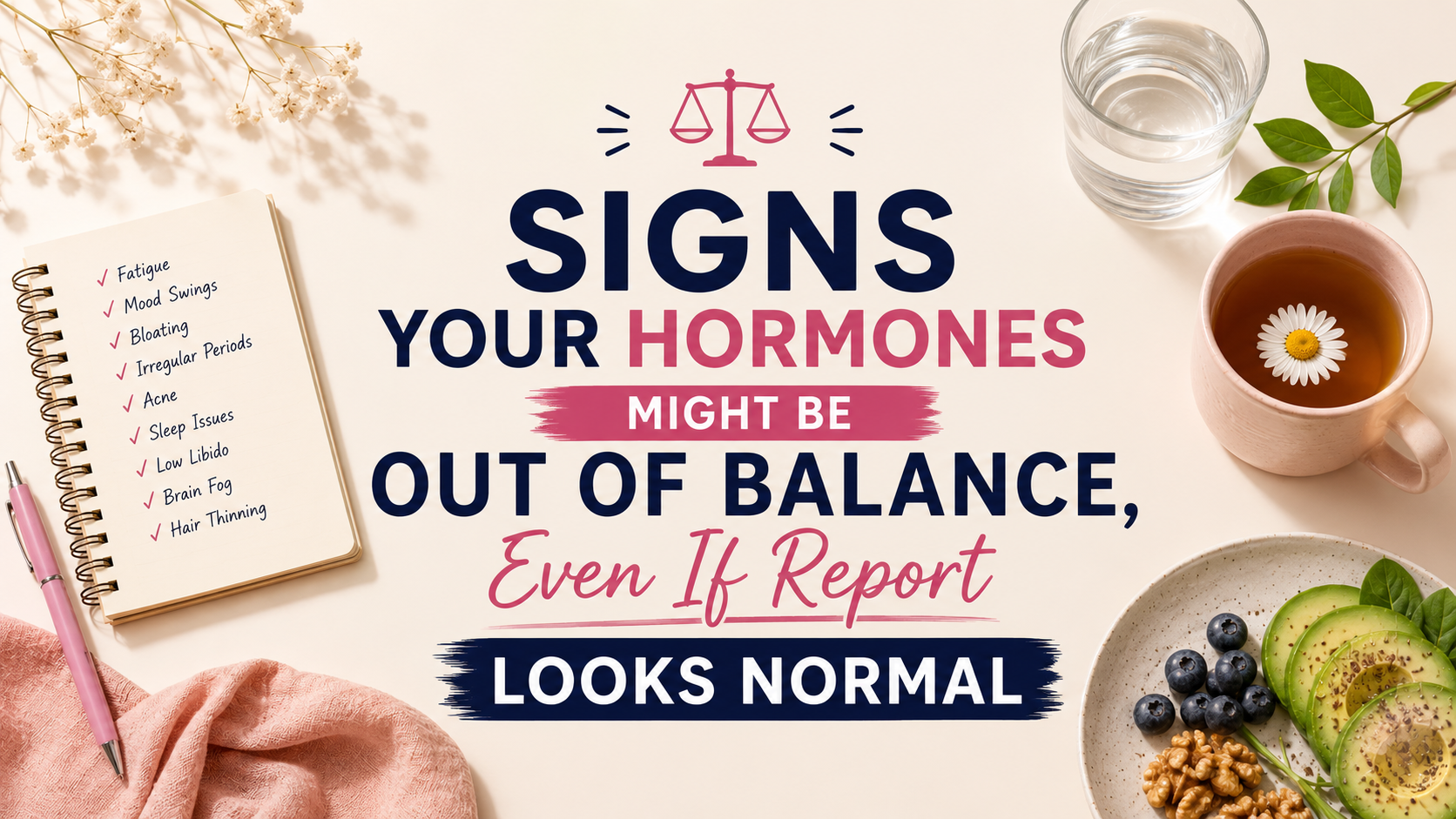
Signs Your Hormones Might Be Out of Balance (Even If Your Reports Look "Normal")
"Your Reports Are Normal." But You Don't Feel Normal.
It's one of the most frustrating experiences in women's healthcare.
You've been exhausted for months. Your skin won't clear up. Your weight fluctuates in ways that don't make sense. Your mood feels like it has a mind of its own. Your periods are irregular, painful, or both.
You go to the doctor. They run blood tests. And they tell you: "Everything looks normal."
And yet you still feel off.
If this sounds familiar, you are not imagining it. You may be experiencing hormonal imbalance that standard testing frequently misses including early or atypical presentations of PMOS (Polyendocrine Metabolic Ovarian Syndrome). Here's what to watch for.
Why "Normal" Reports Can Be Misleading
Standard blood panels typically check hormones at a single point in time but hormones fluctuate constantly throughout the day and across the menstrual cycle. A TSH result taken in the morning may look different from one taken in the afternoon. Insulin resistance may not show up as elevated blood glucose until it's well established.
Additionally, "normal range" in most labs is calculated statistically it reflects where most of the population falls, not necessarily what's optimal for you. A result at the low end of normal might be entirely inadequate for your body's needs.
12 Signs Your Hormones May Be Out of Balance
1. Persistent Fatigue — Especially in the Afternoon
Not the tiredness that comes from a late night. This is a deep, grinding exhaustion that doesn't respond to rest and often intensifies between 2pm and 4pm, a classic blood sugar dip window.
Fatigue is one of the most common and under-recognised symptoms of insulin resistance and adrenal dysregulation.
2. Irregular, Missed, or Unpredictable Periods
Cycles that vary significantly in length (fewer than 21 days or more than 35), periods that disappear for months, or very heavy or very light flow all suggest that the hormonal cascade governing your menstrual cycle is disrupted. This is a hallmark of PMOS.
3. Acne Along the Jawline and Chin
Persistent acne along the jawline and chin is strongly associated with androgen excess elevated testosterone or DHEA-S. This type of acne is typically deep, cystic, and doesn't respond well to topical treatments alone.
4. Hair Thinning at the Crown or Temples
If you're noticing more hair in your brush, a widening parting, or a less dense hairline at the temples, androgenic alopecia may be a factor. This is often dismissed as "stress" but is a significant hormonal signal.
5. Unexplained Weight Gain — Especially Around the Abdomen
Weight that clusters around the belly, love handles, and lower back — even without significant dietary changes is strongly associated with insulin resistance and cortisol dysregulation. The body stores fat differently when insulin signalling is impaired.
6. Difficulty Losing Weight Despite Consistent Effort
If insulin resistance is present, your body is in a chronic fat-storage state regardless of caloric input. This is why standard "eat less, move more" advice doesn't work for so many women with PMOS, it doesn't address the underlying hormonal mechanism.
Important: Difficulty losing weight with PMOS isn't a willpower issue. It's a metabolic one. The right approach targets insulin sensitivity, not just calorie restriction.
7. Mood Swings, Irritability, and Anxiety
Oestrogen has a significant impact on serotonin and dopamine, the neurotransmitters that regulate mood. When oestrogen fluctuates irregularly, mood instability follows. Elevated androgens and cortisol also contribute to anxiety and low emotional resilience.
8. Brain Fog
Difficulty concentrating, forgetfulness, and mental sluggishness are common in insulin resistance (the brain depends on stable glucose for optimal function) and thyroid dysregulation, both of which co-occur frequently with PMOS.
9. Sleep Problems
Difficulty falling asleep, waking between 2–4am, or never feeling rested despite adequate hours all point to cortisol dysregulation, blood sugar instability, or progesterone imbalance. Night-time cortisol spikes are a common feature of hormonal disruption.
10. Skin Darkening Around the Neck, Underarms, or Groin
Dark, velvety patches on the skin in these areas known as acanthosis nigricans are a direct physical sign of elevated insulin levels and one of the clearest visual indicators of insulin resistance.
11. Excessive Hair Growth on the Face or Body
Chin hairs, upper lip growth, or excess abdominal hair are driven by elevated androgens and are a direct symptom of PMOS. They often co-occur with scalp hair thinning, as the same androgens that promote body hair suppress scalp hair growth.
12. Intense Sugar or Carbohydrate Cravings
When blood sugar is unstable, the brain sends powerful signals for fast-release glucose. Intense cravings for sugar or starchy foods between meals are a strong indication that blood sugar regulation is impaired.
The Tests That Matter — And What They Don't Always Capture
If you recognise several of the signs above, a more thorough hormonal and metabolic workup is worth requesting from your doctor.
- Fasting insulin: Not just fasting glucose, insulin resistance can be present with "normal" blood sugar
- HbA1c: A long-term blood sugar marker that standard panels often skip
- Full hormonal panel: LH, FSH, testosterone (total and free), DHEA-S, prolactin, oestradiol, AMH
- Thyroid function: TSH, free T3, free T4, and thyroid antibodies, thyroid dysfunction co-occurs frequently with PMOS
- Inflammatory markers: CRP (C-reactive protein) to assess chronic low-grade inflammation
- Vitamin D and B12: Commonly deficient in PMOS, significantly affecting energy and mood
Ideally, hormonal testing should be done on specific days of your menstrual cycle Day 2–5 for LH/FSH, and mid-luteal phase for progesterone for accurate interpretation.
What Can You Do About It?
If you suspect your hormones are out of balance even without a formal PMOS diagnosis the evidence for lifestyle intervention is strong. You don't need to wait for a diagnosis to start.
Movement as Medicine
Regular, appropriate physical activity is one of the most direct ways to improve insulin sensitivity. Strength training builds the metabolically active muscle tissue that helps your body regulate blood sugar. Learn more about getting started safely with weight training at home without injuries.
Yoga and low-impact cardio reduce cortisol and support hormonal rhythms. Explore how yoga affects blood sugar for a deeper look at the evidence.
Nutritional Foundations
Prioritising blood sugar stability — through regular meals with adequate protein, fibre-rich vegetables, and reduced refined carbohydrates directly addresses the insulin-androgen cascade that drives so many PMOS symptoms.
Sleep Prioritisation
Even one or two nights of poor sleep significantly worsens insulin sensitivity and cortisol patterns. Consistent sleep timing, reducing blue light exposure in the evening, and managing pre-bed stress are all measurable, impactful interventions.
Stress Management
Cortisol and insulin are deeply interconnected. Managing chronic stress through mindful movement, breathwork, journalling, or structured relaxation is a non-negotiable part of PMOS support, not a nice-to-have.
A Platform Built for This
Navigating hormonal imbalance is significantly easier with the right support system.
fitnoa is built specifically for women's hormonal and metabolic health including those managing PMOS or navigating undiagnosed hormonal symptoms. It offers:
- PMOS-focused fitness plans structured around hormonal health, not generic programming
- Full movement spectrum — yoga, strength, cardio, low-impact, and mobility sessions
- AI posture tracking to ensure workouts are effective and safe
- Private mode sessions — just you and your trainer, in a confidential, comfortable environment
- End-session progress reports so you can see what's working and build consistency with confidence
- Customised nutrition plans tailored to your specific goals, health markers, and lifestyle
Whether you have a formal PMOS diagnosis or are simply noticing that your body isn't responding the way it should, fitnoa offers the structure and guidance to start making a real difference.
Conclusion: Trust What Your Body Is Telling You
Hormonal imbalance doesn't always announce itself clearly on a blood report. It announces itself in how you feel every day in your energy, your skin, your mood, your sleep, and your relationship with your body.
If you're experiencing several of the signs in this article, it's worth advocating for a more thorough evaluation and investing in lifestyle practices that support your metabolic and hormonal health, regardless of what the reports show.
Related reads you may find helpful
Frequently asked questions
Everything you need to know
Your Body Is Trying to Tell You Something, Let's Listen
If you're experiencing the signs of hormonal imbalance, the right movement and nutrition plan can make a real difference, even before a formal diagnosis. fitnoa's PMOS-focused programmes are built specifically for women's hormonal and metabolic health. Try your first class for free and see what working with your hormones actually feels like.