
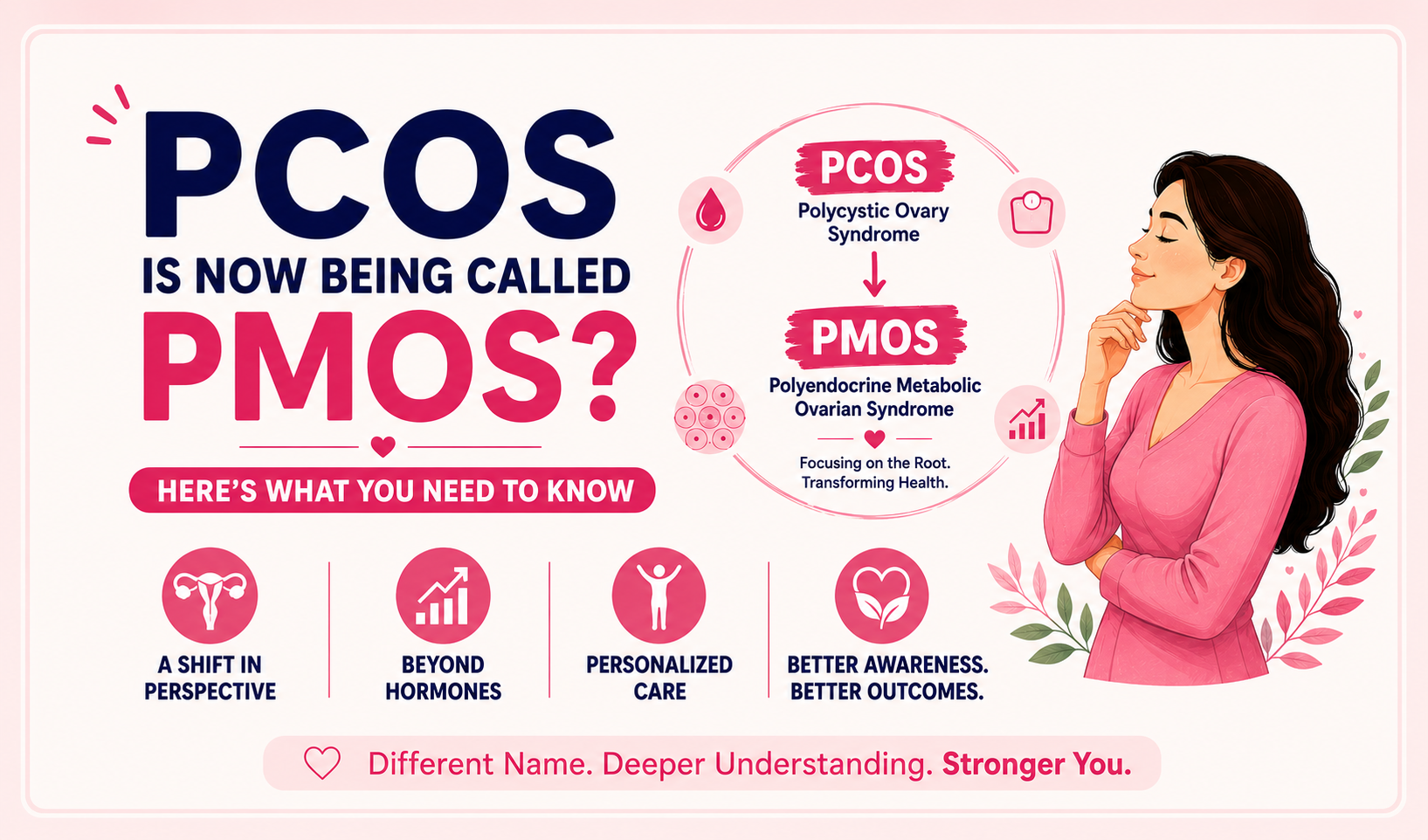
PCOS Is Now Being Called PMOS: What Changed and Why It Matters
The Name Change That's Reshaping Women's Health
If you've been living with a PCOS diagnosis or suspect you might have it, you may have recently heard a new term: PMOS, short for Polyendocrine Metabolic Ovarian Syndrome.
And no, it's not just a rebrand for the sake of it.
This shift is backed by a growing body of research suggesting that the old name, Polycystic Ovary Syndrome was never quite accurate. The new name reflects what the condition actually is: a complex, whole-body hormonal and metabolic disorder that affects far more than your ovaries.
For millions of women who have felt dismissed or misdiagnosed, this name change could be the beginning of a very different conversation about their health.
What Was Wrong with "PCOS" in the First Place?
The term Polycystic Ovary Syndrome has been in use since the 1930s. For decades, women were told their condition was defined by cysts on their ovaries, small, fluid-filled follicles visible on ultrasound.
Here's the problem: not every woman with PCOS has cysts. And many women who do have ovarian cysts have no symptoms at all.
The so-called "cysts" aren't even cysts in the traditional medical sense, they're immature follicles that haven't been released properly due to hormonal disruption. More importantly, focusing on the ovaries alone missed the bigger story: that this is a systemic condition rooted in hormonal dysregulation, insulin resistance, and metabolic dysfunction.
So, What Is PMOS?
Polyendocrine Metabolic Ovarian Syndrome is a proposed reclassification that captures the broader reality of this condition. The key word is polyendocrine, meaning it involves multiple hormone-producing systems in the body.
PMOS recognises that women with this condition typically experience:
- Insulin resistance — cells don't respond properly to insulin, driving elevated blood sugar and fat storage
- Androgen excess — elevated male hormones causing acne, hair thinning, and facial hair growth
- Disrupted ovulation — irregular or absent periods, difficulty conceiving
- Metabolic imbalance — weight gain around the abdomen, fatigue, and sluggish metabolism
- Hypothalamic-pituitary dysregulation — disruption at the brain-level hormonal control system
- Chronic inflammation — affecting mood, energy, gut health, and skin
Why Does the Name Change Actually Matter?
Language in medicine shapes everything, how doctors diagnose, how patients understand their bodies, and how conditions are treated.
1. Better Diagnosis
Under the old PCOS framework, many women were only diagnosed if they had ovarian cysts on ultrasound. With PMOS, the focus shifts to metabolic and hormonal markers, meaning more women may be correctly identified and supported earlier.
2. A More Complete Treatment Approach
When the condition is understood as metabolic and hormonal, treatment stops being just about "fixing your periods." It opens the door to lifestyle medicine, nutrition therapy, and fitness-based interventions, all of which are showing significant promise in clinical literature.
3. Validation for Women Who've Been Dismissed
Important: One of the most painful parts of living with PCOS/PMOS is being told your bloodwork looks "normal" or that you just need to "lose some weight." The PMOS framework validates that this condition is genuinely complex, systemic, and not just in your head.
Symptoms That Go Far Beyond Your Ovaries
Common symptoms include:
- Irregular, missed, or very heavy periods
- Persistent acne, especially along the jawline and chin
- Hair thinning or hair fall from the scalp
- Excess hair growth on the face, chest, or abdomen
- Unexplained weight gain, especially around the belly
- Fatigue that doesn't improve with rest
- Brain fog and difficulty concentrating
- Mood swings, anxiety, and low mood
- Bloating and digestive discomfort
- Difficulty losing weight despite consistent effort
- Sleep disturbances and poor sleep quality
- Low libido
Many women describe a frustrating pattern: symptoms that flare unpredictably, don't respond to standard advice, and affect nearly every aspect of daily life.
The Metabolic Connection: Why Insulin Resistance Is Central
One of the most important insights in the PMOS framework is the central role of insulin resistance.
Approximately 70–80% of women with PCOS/PMOS have some degree of insulin resistance, meaning their cells are less sensitive to insulin, which drives the pancreas to produce more of it. High circulating insulin then stimulates the ovaries to produce excess androgens, disrupting ovulation and triggering many classic symptoms.
This is why metabolic health is now considered so central to managing PMOS. When insulin sensitivity improves through nutrition, movement, sleep, and stress management, many symptoms improve alongside it.
The Role of Lifestyle: Why Movement and Nutrition Are No Longer "Optional"
For years, women with PCOS were told to "exercise more and eat less" advice that was often unhelpful and sometimes made things worse by spiking cortisol, worsening inflammation, and triggering disordered eating.
The emerging understanding of PMOS changes this conversation. Research increasingly supports:
- Resistance training: Improves insulin sensitivity and supports healthy muscle mass
- Low-impact movement: Yoga, walking, and swimming reduce cortisol and support hormonal balance
- Anti-inflammatory nutrition: Whole foods, fibre, and healthy fats to reduce systemic inflammation
- Blood sugar stability: Balanced meals and mindful eating patterns to prevent insulin spikes
- Sleep optimisation: Regulates hormones that govern appetite, stress, and metabolism
- Stress management: Cortisol directly worsens insulin resistance and androgen levels
Curious how yoga specifically fits in? Explore how yoga affects blood sugar and yoga vs gym for weight loss for a deeper look.
fitnoa: Fitness Designed for Hormonal Health
Most generic fitness platforms weren't built with PMOS in mind, high-intensity programmes that spike cortisol, one-size-fits-all nutrition plans, and no understanding of how the menstrual cycle affects exercise capacity are the norm.
fitnoa is different.
Built specifically around women's hormonal and metabolic health, fitnoa offers:
- PMOS-focused fitness plans — structured training that works with your hormones, not against them
- Full movement spectrum — yoga, cardio, strength training, mobility, and low-impact options for every phase of your cycle
- AI-powered posture tracking — real-time form correction to keep movement safe and effective
- Private mode sessions — one-on-one sessions in a judgment-free space
- End-session reports — detailed tracking of consistency and progress over time
- Customised nutrition plans — tailored to your body goals, health reports, and lifestyle
fitnoa doesn't promise a cure. What it offers is something more sustainable: a science-backed, lifestyle-centred approach to living well with PMOS.
A New Era for Hormonal Health
The shift from PCOS to PMOS is about more than semantics. It's about finally seeing this condition for what it is: a whole-body, systemic challenge that deserves a whole-body, systemic response.
For women who have spent years navigating contradictory advice and limited support, this reframing offers something powerful: clarity.
Understanding that your insulin resistance, mood swings, fatigue, and irregular cycles are all part of the same metabolic picture doesn't make the condition heavier. It makes it more manageable, because it becomes something you can address holistically.
Conclusion: Your Hormones, Your Whole Body
PMOS is not a life sentence. It is a signal from your endocrine system, your metabolism, your body that something needs attention.
The most powerful tools for answering that signal aren't only medical prescriptions. They're sustainable lifestyle practices: consistent movement, balanced nutrition, quality sleep, and stress management.
If you're ready to build a routine that works for your hormones not against them, explore fitnoa's PMOS-focused fitness and wellness programmes today.
Related reads you may find helpful
Frequently asked questions
Everything you need to know
Take Control of Your Hormonal Health
Living with PMOS doesn't have to mean going it alone. Fitnoa offers expert-guided, hormone-aware fitness and nutrition programmes designed specifically for women navigating hormonal and metabolic challenges. Your first class is on us, come see the difference.