
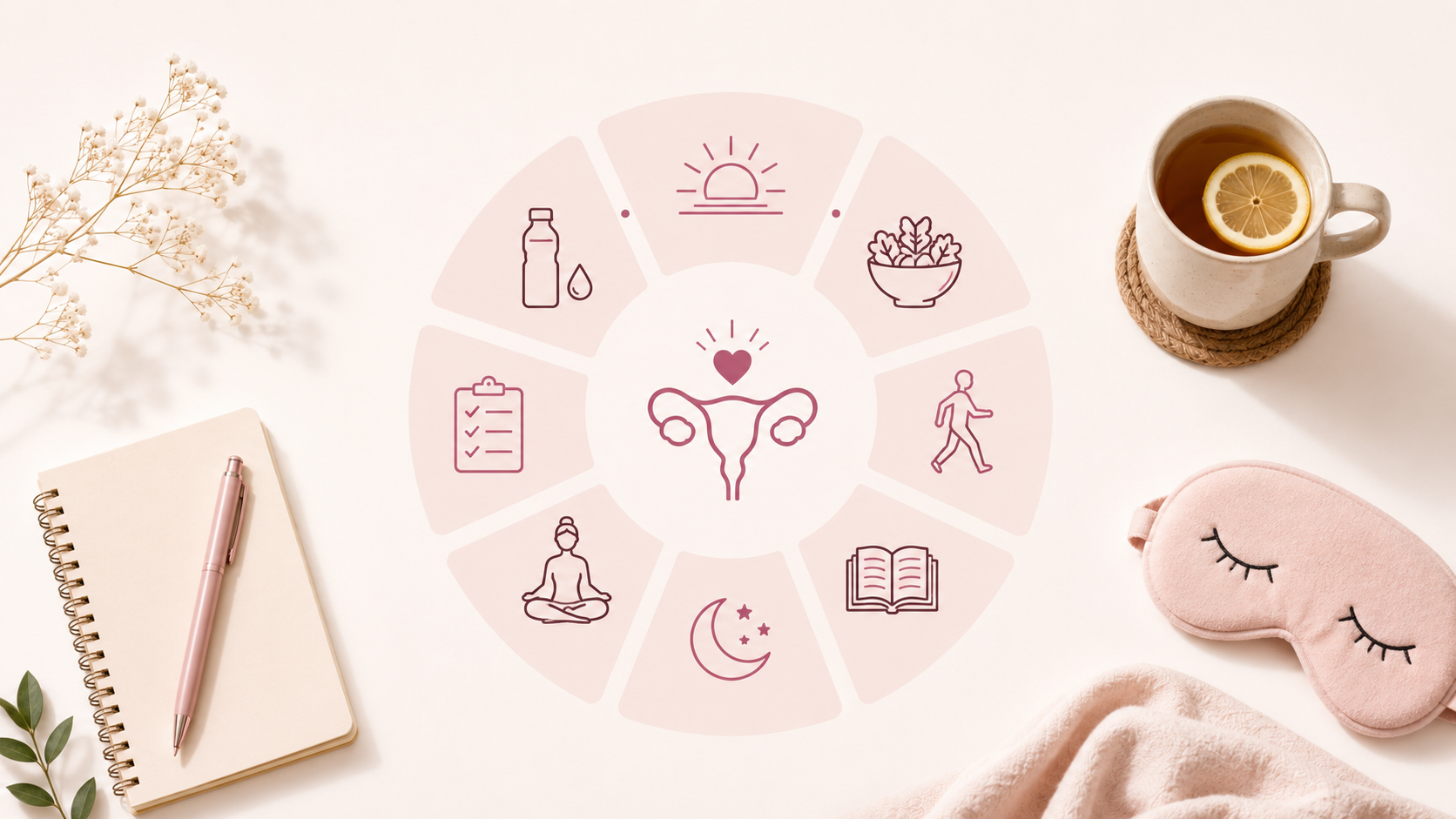
What a PMOS Friendly Daily Routine Actually Looks Like
Why Routine Is Medicine for PMOS
If there's one thing research on PMOS management makes abundantly clear, it's this: consistency matters more than intensity.
The women who see the most meaningful improvement in their hormonal health, energy, mood, and symptoms are rarely those who attempt the most dramatic interventions. They're the ones who build a steady, sustainable daily structure, morning habits that stabilise blood sugar, movement that supports insulin sensitivity, and sleep routines that protect hormonal rhythms.
A PMOS-friendly routine doesn't require dramatic sacrifice or relentless willpower. It requires structure, knowledge, and the right support. Here's what that looks like in practice.
Morning: The Foundation of Hormonal Health
Wake at a Consistent Time (Even on Weekends)
Your cortisol rhythm, the natural rise and fall of your stress hormone across the day is anchored by your sleep-wake cycle. Irregular wake times disrupt this rhythm, which in turn disrupts insulin sensitivity and mood.
Waking at roughly the same time every day, including weekends, is one of the lowest-effort, highest-impact habits for hormonal health.
Get Natural Light Within 30 Minutes of Waking
Morning sunlight sets your circadian clock, suppresses residual melatonin, and supports the cortisol awakening response, a natural, healthy cortisol peak that energises you for the day. Step outside for 5–10 minutes, or sit near a bright window, within 30 minutes of waking.
Don't Skip Breakfast But Make It Count
For women with PMOS and insulin resistance, skipping breakfast is a common instinct but often counterproductive. An overnight fast is already long enough; extending it further can raise cortisol and destabilise blood sugar before your day has even begun.
- Protein first: Eggs, Greek yoghurt, paneer, tofu, or nuts slow glucose absorption and support satiety
- Add fibre: Vegetables, oats, seeds, or legumes feed gut bacteria and stabilise blood sugar
- Include healthy fat: Avocado, olive oil, or nuts support cellular insulin signalling
- Minimise refined carbs: Avoid sugary cereal, refined flour, or sweet drinks on an empty stomach
A good example: scrambled eggs with sautéed vegetables and whole grain toast, or overnight oats with seeds, berries, and Greek yoghurt.
Morning Movement (When Energy Allows)
For many women with PMOS, morning is an ideal time for movement, particularly in the follicular phase (the two weeks after menstruation begins) when oestrogen and energy tend to be higher.
That said, forcing high-intensity exercise when your body isn't ready raises cortisol and can worsen the hormonal picture. Know your pattern, and schedule movement when your energy genuinely supports it.
Midday: Blood Sugar Management and Momentum
A Balanced Lunch Not a Desk Snack
Skipping lunch or eating a carbohydrate-heavy meal without protein triggers a blood sugar spike followed by an energy crash, the classic 2pm slump that's particularly pronounced in women with insulin resistance.
A PMOS-supportive lunch includes a substantial protein source (chicken, fish, dal, legumes, paneer, or tofu), plenty of non-starchy vegetables, and complex carbohydrates, brown rice, whole wheat roti, quinoa, or sweet potato, paired with protein, not eaten alone.
A Short Walk After Eating
A 10–15 minute walk after a meal is one of the most evidence-backed tools for managing post-meal blood sugar spikes. Muscle contraction during walking helps cells absorb glucose without requiring as much insulin, directly addressing the insulin resistance mechanism.
Even in an office or home setting, a short post-meal walk is achievable and highly beneficial.
Important: A post-meal walk doesn't need to be intense, even a gentle 10-minute stroll after lunch significantly blunts the blood sugar spike that follows eating. This is one of the simplest PMOS interventions available.
Mindful Breaks to Manage Cortisol
Cortisol peaks naturally in the early afternoon for many women with HPA dysregulation. Building short, deliberate breaks into the midday — breathing exercises, stepping away from screens, or a brief stretching session, actively counteracts cortisol accumulation that worsens insulin resistance over the course of the day.
Afternoon: Movement, Nutrition, and Recovery
A Protein or Fat-Based Snack if Needed
The classic "3pm crash" is a blood sugar event. If you experience consistent afternoon energy dips, a small, protein-forward snack stabilises blood sugar without causing a new spike.
Good options: a handful of nuts, Greek yoghurt, a boiled egg, or a small portion of roasted chickpeas. Avoid sugary snacks, energy drinks, or caffeine as your primary afternoon strategy, these provide a temporary lift followed by a deeper crash.
Afternoon Training (for Some Women, the Optimal Window)
For women who experience more fatigue in the morning, or who are in the luteal phase of their cycle (the two weeks before menstruation), afternoon training is often more sustainable.
Core strength work, yoga, or moderate cardio in the late afternoon can align well with natural energy patterns. For a comparison of how different training styles affect hormonal health, see yoga vs gym for weight loss.
Evening: Winding Down Hormones
Dinner: The Anti-Inflammatory Plate
Evening is not the time for restrictive eating. A full, balanced, anti-inflammatory dinner supports overnight metabolic function, sleep quality, and the hormonal repair that happens during rest.
PMOS-supportive dinner principles:
- Prioritise vegetables, aim for half the plate
- Include lean or plant-based protein
- Add healthy fats, olive oil, seeds, or avocado
- Include complex carbohydrates if desired, for many women with PMOS, carbohydrates at dinner can support sleep quality by assisting serotonin production
- Avoid very large, high-sugar, or highly refined evening meals, which cause overnight blood sugar instability
An Evening Walk or Stretching Session
Light movement in the evening, a post-dinner walk, yoga nidra, restorative stretching, or a gentle yoga flow supports digestion, reduces cortisol, and prepares the body for sleep.
This is not the time for high-intensity training.
Digital Wind-Down
Blue light from screens suppresses melatonin, the hormone that initiates sleep. Reducing screen exposure in the hour before bed and creating a consistent pre-sleep routine (reading, gentle stretching, journalling, or breathwork) dramatically improves sleep quality.
For women with PMOS, protecting sleep is protecting hormonal health.
Consistent Sleep Time
Aiming for 7–9 hours of sleep, in a cool and dark room, at consistent times, is one of the highest-value investments in hormonal health available. Just as consistent wake times anchor the morning cortisol rhythm, consistent sleep times anchor the melatonin and growth hormone rhythms that govern overnight repair.
Weekly: The Bigger Structure
A PMOS-supportive weekly movement pattern might look like:
- 2–3 strength training sessions — progressive, with recovery days between
- 1–2 yoga or mobility sessions — restorative and cortisol-reducing
- Daily low-intensity movement — walking, stretching, light activity
- At least 1 full rest day — actual recovery, not guilt-laden inactivity
This structure is built to improve insulin sensitivity, reduce cortisol, support hormonal balance, and build the kind of sustainable consistency that drives long-term symptom improvement. For safe strength training guidance, see weight training at home without injuries.
How fitnoa Makes This Sustainable
Building a PMOS-friendly routine sounds straightforward on paper. In practice, it requires guidance, accountability, and a programme that accounts for the fluctuating nature of hormonal imbalance.
fitnoa provides the infrastructure:
- PMOS-focused fitness plans structured around weekly progression and cycle phase support
- Full movement spectrum including yoga, strength, cardio, low-impact, and mobility sessions for every phase of your month
- AI posture tracking to keep workouts effective and safe
- Private mode sessions to train in a focused, one-on-one environment that supports consistency without comparison
- End-session reports that make progress visible, building motivation to keep going
- Customised nutrition plans built around your specific body goals, health markers, and lifestyle — not a generic template
A PMOS-friendly routine isn't about perfection. It's about building a structure that consistently supports your hormones, your metabolism, and your quality of life.
Conclusion: Structure Is Not Restriction
A well-designed daily routine for PMOS isn't a straitjacket, it's a scaffold. It's the structure that allows your hormonal system to find its rhythm, your blood sugar to stabilise, your cortisol to settle, and your body to start working with you rather than against you.
It doesn't have to be perfect every day. The point is the pattern over time and having the right support to build and maintain it.
Related reads you may find helpful
Frequently asked questions
Everything you need to know
Build the Daily Routine Your Hormones Have Been Waiting For
Knowing what a PMOS-supportive routine looks like is one thing, building it sustainably is another. fitnoa's PMOS-focused fitness and nutrition programmes give you the structure, expert guidance, and cycle-aware support to make it stick. Try your first class for free and start building habits that work with your hormones.