
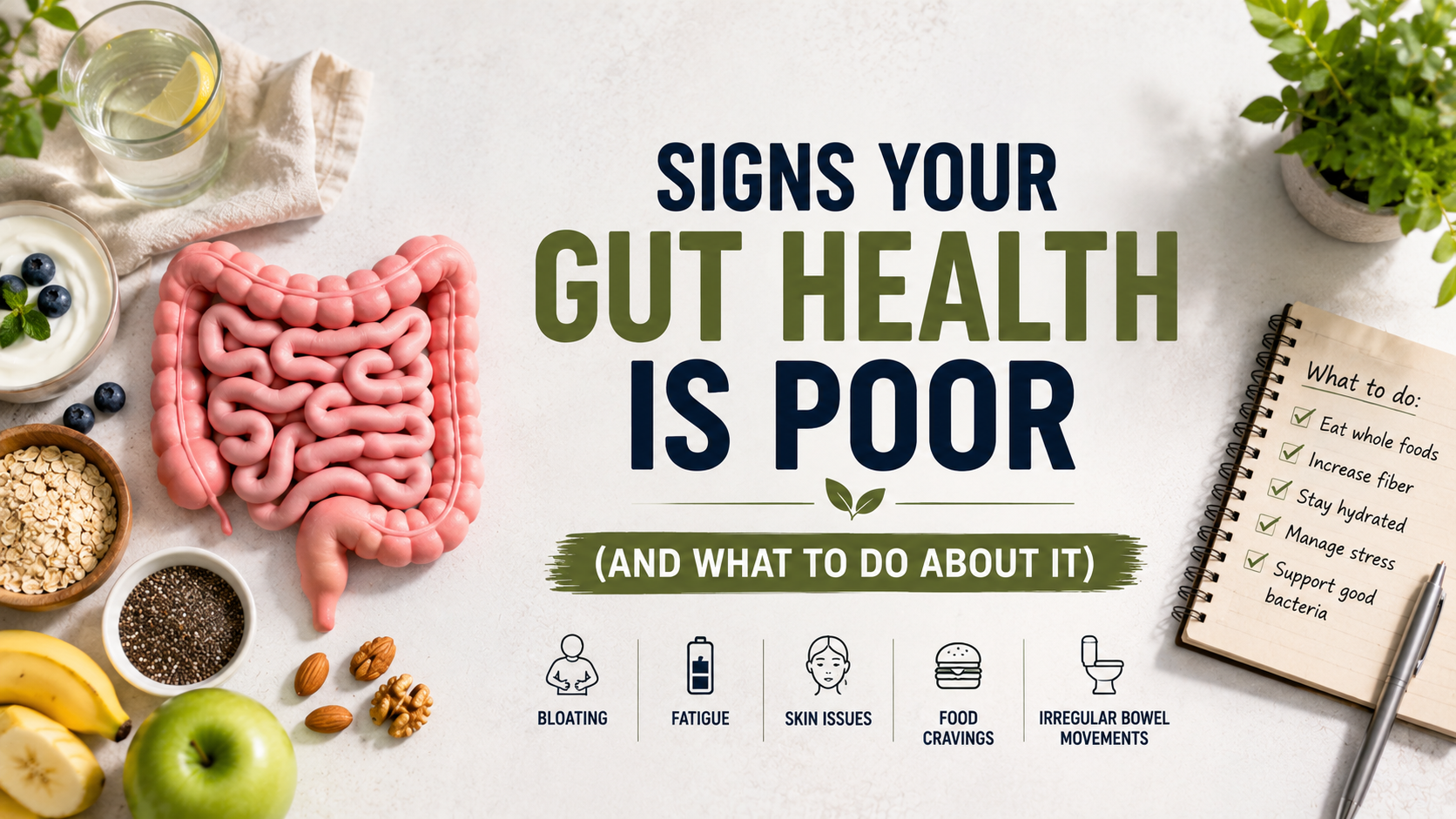
Signs Your Gut Health Is Poor (And What to Do About It)
One Underlying Issue, Many Different Symptoms
Bloating after almost every meal. Skin breakouts that will not go away no matter what cream you try. Afternoon energy crashes. Sugar cravings you cannot seem to control.
These might feel like separate, unrelated problems. In reality, they are often connected by a single underlying issue: poor gut health.
Most people only think about their gut when they have an obvious digestive problem like diarrhoea or constipation. But gut health issues show up in dozens of ways that have nothing to do with your stomach directly.
Digestive Signs of Poor Gut Health
These are the most obvious signs, but many people normalise them rather than addressing them.
Frequent Bloating
If you regularly feel bloated, especially after meals, this is one of the clearest indicators of an imbalanced gut microbiome. Bloating happens when gut bacteria, particularly less beneficial strains, produce excess gas during digestion.
Irregular Bowel Movements
Healthy digestion typically means having a bowel movement once or twice daily, without excessive straining, and with a well-formed consistency. Chronic constipation, frequent loose stools, or unpredictable alternating patterns all suggest gut imbalance.
Acidity and Heartburn
While acidity has multiple causes, an imbalanced gut microbiome contributes to poor digestive function, slower gastric emptying, and increased acid reflux symptoms in many people.
Food Intolerances That Seem to Be Increasing
If you have noticed you are becoming sensitive to foods you used to tolerate well, such as dairy or gluten, this can be a sign that your gut lining has become more permeable, allowing partially digested food particles to trigger immune responses that present as intolerance symptoms.
Skin Signs Linked to Gut Health
The gut-skin axis is a genuine, well-researched connection.
Persistent Acne
Adult acne, particularly along the jawline and cheeks, has been strongly linked to gut dysbiosis in multiple studies. When the gut lining becomes inflamed, inflammatory markers circulate throughout the body and frequently manifest as skin breakouts.
Eczema and Skin Rashes
Eczema flare-ups are associated with reduced gut microbiome diversity, particularly lower levels of certain beneficial bacteria strains. Adults with chronic eczema often see improvement when gut health is addressed alongside topical treatment.
Dull, Lacklustre Skin
Beyond specific conditions, generally dull or tired-looking skin can reflect poor nutrient absorption from an unhealthy gut, since key skin-supporting nutrients like vitamin A, vitamin C, and zinc require proper gut function to be absorbed effectively.
Energy and Mood Signs
These symptoms are often the most confusing because they seem completely disconnected from digestion.
Chronic Fatigue
If you are sleeping enough but still feel exhausted, your gut may not be efficiently extracting nutrients and energy from your food. An imbalanced microbiome reduces the efficiency of nutrient absorption, leaving you fatigued despite eating adequately.
Brain Fog
Difficulty concentrating, feeling mentally sluggish, or struggling to think clearly are commonly reported by people with gut dysbiosis. This connects to the gut-brain axis: inflammatory signals from an unhealthy gut can affect cognitive function.
Anxiety and Mood Swings
Many people notice mood improvements when they address underlying gut health issues, even without changing anything else in their life. To understand the broader connection between hormones and mood, see PMOS and the hormonal symptoms nobody talks about.
Intense Sugar Cravings
Harmful gut bacteria thrive on sugar. When these bacteria are overrepresented in your microbiome, some research suggests they may influence cravings, essentially signalling your brain to seek out the fuel they need to survive.
Important: If fatigue, brain fog, or mood swings have become a daily pattern, they are not something to simply push through. These are signals worth investigating, and gut health is one of the most overlooked and addressable root causes.
Immune System Signs
Getting Sick Frequently
Since 70 to 80 percent of your immune system is located in your gut, a disrupted microbiome directly weakens immune function. If you are catching colds, infections, or illnesses more often than people around you, gut health may be a contributing factor.
Slow Recovery From Illness
Beyond getting sick more often, taking longer than expected to recover from common illnesses can indicate that your immune system is not functioning optimally, often connected to gut health.
New or Worsening Allergies
An overactive immune response, which manifests as allergies, is associated with reduced gut bacterial diversity. Some research suggests that restoring gut health can reduce the severity of certain allergic responses over time.
Weight-Related Signs
Unexplained Weight Gain or Difficulty Losing Weight
Your microbiome composition affects how many calories you extract from food and how your appetite hormones function. If you are doing everything "right" with diet and exercise but still struggling with weight, gut health is worth investigating. Read more in what is gut health and why does it affect everything from weight to mood.
Persistent Bloating That Looks Like Weight Gain
Many women mistake chronic bloating for actual fat gain. Addressing gut health can significantly reduce this type of bloating, even without any change in actual body fat.
Sleep-Related Signs
Difficulty Falling or Staying Asleep
Your gut bacteria help regulate the production of melatonin precursors. An imbalanced microbiome can disrupt this process, contributing to difficulty falling or staying asleep.
Waking Up Tired Despite Adequate Sleep Hours
If you are sleeping 7 to 8 hours but still waking up exhausted, poor gut health affecting nutrient absorption and inflammation levels may be part of the picture.
What Causes These Symptoms?
Understanding the root causes helps you address the problem rather than just the symptoms.
- Diet high in processed foods, sugar, and refined carbohydrates: Feeds harmful bacteria while starving beneficial ones
- Chronic stress: Disrupts the gut-brain axis and increases intestinal permeability
- Antibiotic use: Kills beneficial bacteria along with harmful ones
- Poor sleep: Disrupts the natural circadian rhythms of gut bacteria
- Sedentary lifestyle and low fibre intake: Both reduce microbiome diversity and starve beneficial bacteria of their primary food source
How to Start Fixing Poor Gut Health
Step 1: Remove the biggest offenders first. Start by reducing ultra-processed foods, added sugar, and refined carbohydrates. This single change often produces noticeable improvement within 1 to 2 weeks.
Step 2: Add fermented foods daily. Include at least one serving of curd, buttermilk, idli, or another fermented food every day to introduce beneficial bacteria. For a complete list of options, see best foods for a healthy gut, the complete India guide.
Step 3: Increase fibre gradually. Add fibre-rich foods like dal, vegetables, and whole grains gradually rather than all at once, since a sudden large increase can temporarily worsen bloating as your gut adjusts.
Step 4: Prioritise sleep and stress management. Since both directly affect gut bacteria, improving sleep quality and managing daily stress are not optional extras. They are core parts of gut healing.
Step 5: Move your body regularly. Regular exercise, even moderate walking, measurably improves gut microbiome diversity over a period of weeks.
Step 6: Be patient and consistent. Meaningful microbiome shifts take 4 to 8 weeks of consistent effort. Quick fixes are not realistic, but consistent daily habits produce real, lasting change.
When to See a Doctor
While many gut health issues respond well to dietary and lifestyle changes, certain symptoms warrant medical evaluation:
- Blood in stool
- Unintentional, significant weight loss
- Severe or persistent abdominal pain
- Symptoms that do not improve after 6 to 8 weeks of consistent lifestyle changes
- Family history of inflammatory bowel disease or other digestive conditions
A doctor can rule out conditions like irritable bowel syndrome, inflammatory bowel disease, celiac disease, or other issues that require specific medical treatment beyond general gut health improvement.
Why fitnoa Works for Addressing Gut Health Symptoms
Since regular movement is one of the most effective tools for improving gut microbiome diversity and reducing bloating, every fitnoa session contributes directly to resolving common gut health symptoms.
- Varied live workouts across yoga, cardio, strength training, and bodyweight exercises, all supporting a healthier gut microbiome
- AI posture tracking with a live trainer: For symptoms like fatigue and brain fog often linked to poor gut health, having a trainer adjust your session intensity based on how your body is responding ensures you work at the right level for your current energy
- Detailed post-session reports that help you and your trainer notice patterns, such as improved energy or performance as your gut health symptoms improve
- Complete privacy: Only you and your trainer can see each other during sessions, which is especially valuable if bloating or other symptoms make you self-conscious about exercising in front of others
- Personalised nutrition plans that address the specific dietary patterns contributing to bloating, fatigue, or other symptoms, replacing them with gut-supportive alternatives suited to your taste and lifestyle
- One accessible price combining live fitness coaching and personalised nutrition guidance, since addressing gut health symptoms effectively requires both together
Key Takeaways
- Poor gut health shows up through digestive symptoms like bloating, irregular bowel movements, and acidity
- Skin issues including acne and eczema are strongly linked to gut dysbiosis through the gut-skin axis
- Fatigue, brain fog, anxiety, and sugar cravings can all be connected to an imbalanced gut microbiome
- Frequent illness and slow recovery suggest weakened immune function tied to gut health
- Unexplained weight gain or difficulty losing weight despite healthy habits may have a gut health component
- Fixing poor gut health involves removing processed foods, adding fermented foods, increasing fibre gradually, managing stress, sleeping well, and exercising regularly
- See a doctor if you notice blood in stool, unintentional weight loss, or severe persistent pain
Related reads you may find helpful
Frequently asked questions
Everything you need to know
Get to the Root of Your Symptoms, Not Just the Surface
If bloating, fatigue, or stubborn weight have been frustrating you despite your best efforts, gut health could be part of the picture. fitnoa pairs personalised nutrition built around your symptoms with live expert fitness coaching that supports your gut microbiome through regular movement. Try your first class completely free.