
What Is Garbh Sanskar? Meaning, Practices, When to Start and What Science Says
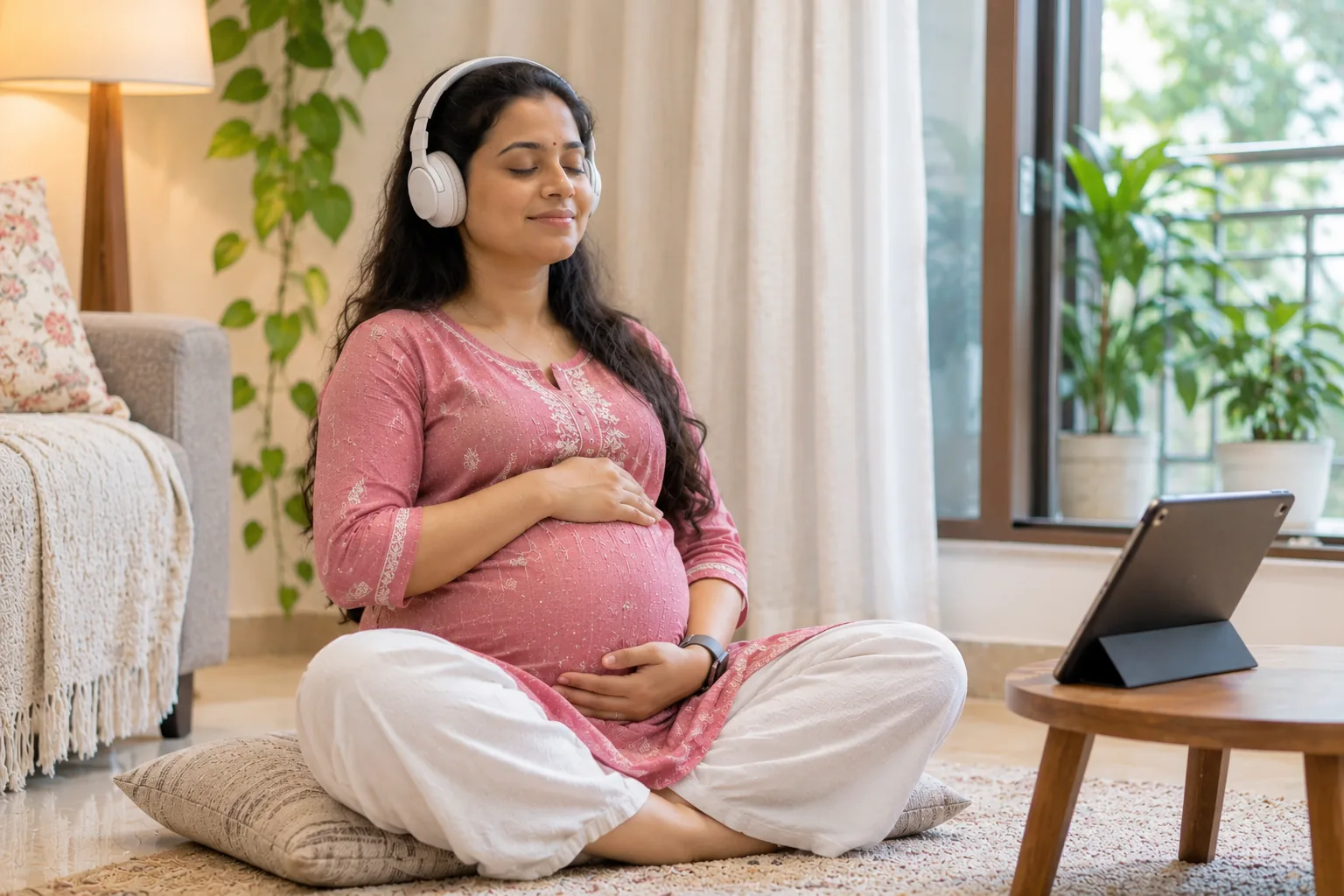
Garbh sanskar means "education in the womb". It's a traditional Indian practice, rooted in Ayurveda, of caring for a mother's mind, body and emotions during pregnancy so her baby develops in a calm, positive environment. It usually includes soothing music and mantras, talking to your baby (garbh samvad), positive thinking and reading, a fresh and balanced diet, and gentle prenatal yoga and meditation. You can start as soon as you know you're pregnant, and many families begin while planning a pregnancy.
Most Indian women hear about garbh sanskar from a grandmother or mother-in-law. It's often linked to the story of Abhimanyu from the Mahabharata, who is said to have learned how to enter the chakravyuh while still in his mother's womb. Today, hospitals like Fortis and Sri Sri Ayurveda write about it, apps teach it, and many prenatal programmes include it.
Important: Garbh sanskar supports your emotional wellbeing. Keep up all your regular check-ups, scans and your doctor's advice alongside it.
What exactly is garbh sanskar?
Vikaspedia, the government's knowledge portal, describes it as one of the 16 sanskars in Indian tradition. Ayurvedic garbh sanskar focuses on health: a healthy diet, regular exercise, positive thoughts and harmony at home. Sri Sri Ayurveda Hospital adds the Ayurvedic view of balancing the three doshas (vata, pitta and kapha) for a healthy pregnancy and smooth delivery.
The core practices of garbh sanskar
Fortis Healthcare lists these as the main practices:
- Positive thinking and emotional balance. The mother's state of mind is considered most important.
- Healthy diet (aahar). Fresh, sattvic, home-cooked food.
- Music and sound (garbh sangeet). Calm classical or instrumental music and gentle chants.
- Mindful reading. Inspirational books and stories with positive values.
- Gentle yoga and meditation. For a calm mind, better circulation and an active body.
- Talking to your baby (garbh samvad). Speaking, singing or reading to your baby every day.
When should you start garbh sanskar?
Mamily's guide recommends starting as soon as you know you're pregnant, since the first trimester is when your baby's organs and nervous system begin forming. Some families begin before conception. It's never too late, though. Even a few weeks of daily practice in the third trimester can help you feel calmer before delivery.
How to do garbh sanskar at home
A simple daily routine many women follow:
| Time | Practice |
|---|---|
| Morning | 10 minutes of calm music or chanting, then a short walk |
| Mid-day | 15 minutes of reading something uplifting |
| Afternoon | Write a few lines in a journal or a letter to your baby |
| Evening | Gentle prenatal yoga or stretching, then 5 minutes of slow breathing |
| Before bed | Talk to your baby about your day, then a short guided relaxation |
Keep it light and enjoyable. Fifteen to twenty minutes a day you actually enjoy is better than an hour you dread.
You may also like our guide: Is Prenatal Yoga Safe? Expert Guidelines for Every Trimester
Can you do garbh sanskar before conceiving?
Yes. Many families start a few months before trying for a baby, with a healthy diet, regular exercise, less stress and positive habits. This overlaps with standard preconception advice, like taking folic acid and getting fit.
What does science say about garbh sanskar?
Some parts have support:
- Babies hear in the womb. Sri Sri Ayurveda notes that a baby can hear and respond to sound from around the fifth month, and research on fetal hearing supports this.
- Stress matters. A mother's stress levels can affect her pregnancy, and relaxation, meditation and prenatal yoga are known to reduce stress.
- Movement helps. Gentle exercise in pregnancy is linked to better mood, sleep and lower risk of gestational diabetes.
Other claims, like garbh sanskar deciding a baby's intelligence, personality or gender, aren't backed by evidence. The most useful way to see it is as a set of habits that help you feel calm, connected and cared for.
Is garbh sanskar only for Hindus?
The practices come from Hindu and Ayurvedic tradition, but the core ideas of calm, music, healthy food, gentle movement and talking to your baby suit anyone. Choose the parts that feel right for you.
The body side of garbh sanskar
Yoga and gentle exercise are part of almost every garbh sanskar programme, and that's the part that needs the most care. Pregnancy loosens your joints, and poses done wrong can strain your back or pelvis.
fitnoa's prenatal programme focuses on that body-and-mind side: live, trimester-safe yoga where an AI watches your posture and alerts your instructor when you need a correction, plus support from perinatal therapists for your emotional wellbeing and a clinical nutritionist for your diet. Private Mode means only your trainer can see you.
Related reads you may find helpful
Frequently asked questions
Everything you need to know
Calm Mind, Strong Body
fitnoa's prenatal programme pairs live, trimester-safe yoga with perinatal therapists and a clinical nutritionist. Our AI watches your posture in every class, and Private Mode means only your trainer can see you. Book your free trial session.