
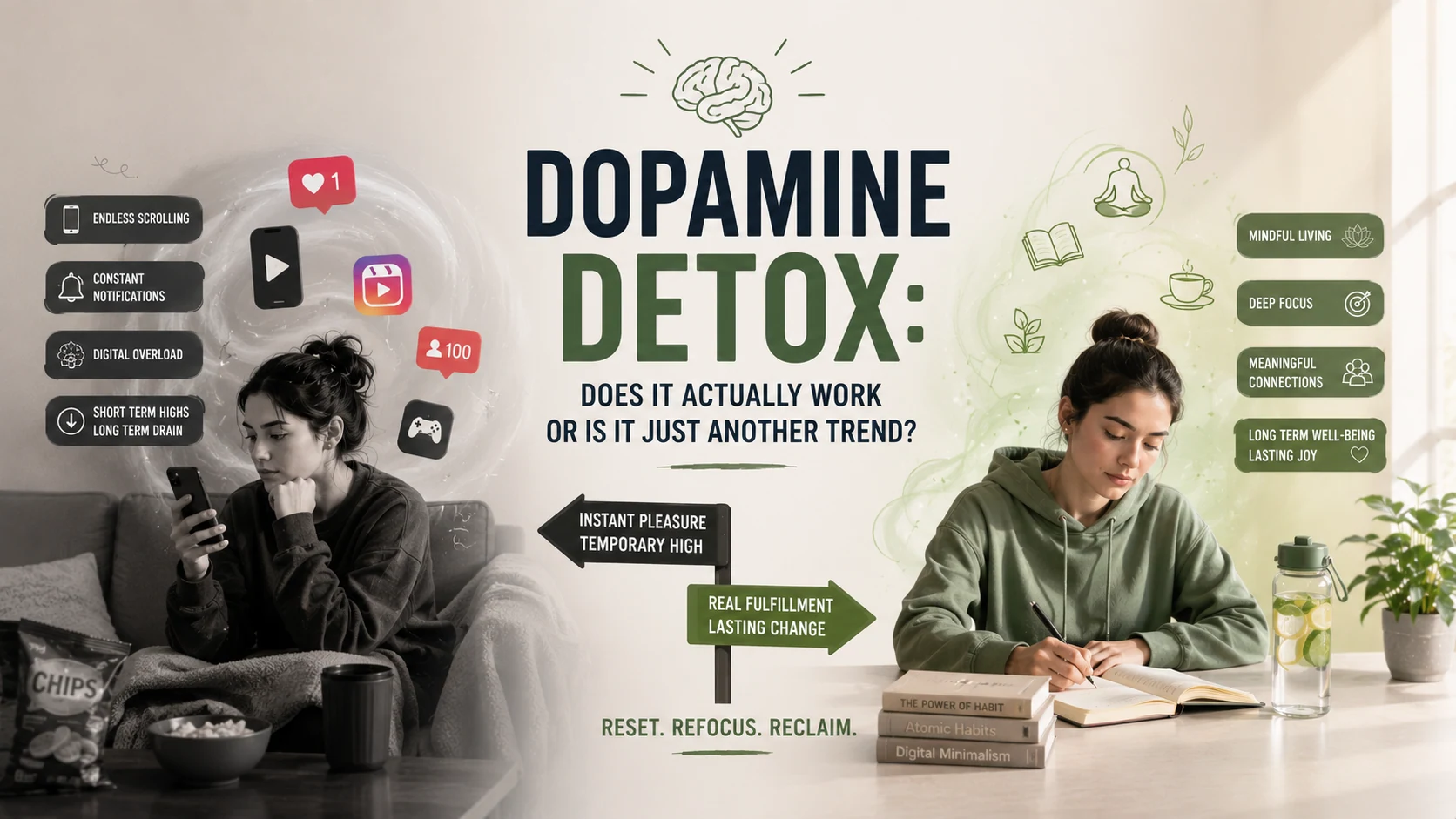
Dopamine Detox: Does It Actually Work or Is It Just Another Trend?
If you have spent any time on social media in the last couple of years, you have probably seen someone talk about doing a "dopamine detox", deleting apps, avoiding screens, sitting in silence, all in the name of resetting their brain.
It sounds appealing. But is there real science behind it, or is this just another wellness trend dressed up in neuroscience language?
The truth sits somewhere in between. The underlying idea has some genuine basis in how the brain's reward system works, but the popular version of "dopamine detoxing" often misunderstands what dopamine actually does. This article breaks down what is real, what is exaggerated, and what you can actually do that is backed by evidence.
What Is Dopamine, Actually?
Dopamine is a neurotransmitter, a chemical messenger in the brain, that plays a central role in motivation, reward, and reinforcement learning. It is often called the "feel good" chemical, but that is a bit of an oversimplification.
Dopamine is less about the feeling of pleasure itself and more about anticipation and motivation, the drive that pushes you to seek out a reward in the first place. This is why dopamine rises before you eat a meal you are craving, not just after, and why it spikes when you are anticipating a notification, not necessarily when you actually see it.
This distinction matters because it explains why constant notifications, scrolling, and quick rewards can make you feel restless and unsatisfied rather than genuinely happy. You are getting repeated hits of anticipation without the deeper satisfaction that comes from completing meaningful, effortful activities.
What Is a "Dopamine Detox" Supposed to Do?
The popular idea behind a dopamine detox is that constant exposure to highly stimulating activities, social media, video games, junk food, endless notifications, overstimulates your brain's reward system. Over time, this is thought to raise your threshold for pleasure, making ordinary, low stimulation activities like reading or having a conversation feel boring by comparison.
The proposed solution is to deliberately avoid these high stimulation activities for a period of time, anywhere from a few hours to a few days, allowing your brain's reward system to reset and become more responsive to smaller, everyday pleasures again.
Is There Real Science Behind This, or Is It Exaggerated?
This is where nuance matters. Some parts of the idea are grounded in real neuroscience, while other parts are oversimplified or not entirely accurate.
What's Actually True
Dopamine sensitivity can change with overstimulation. Research on reward systems, including studies on behavioural addictions like compulsive gambling and excessive screen use, shows that repeated, intense stimulation can lead to a phenomenon where the brain needs more stimulation to feel the same level of reward.
Reducing constant stimulation can improve focus and mood for many people. Even without invoking dopamine specifically, taking a break from constant notifications and infinite scrolling content genuinely reduces mental clutter and improves the ability to concentrate on a single task.
Behaviour change through avoidance is a real, evidence based technique. Deliberately stepping away from a habit you want to reduce, sometimes called stimulus control, is a legitimate strategy used in behavioural therapy for various habits, not just screen use.
What's Misleading or Oversimplified
You cannot actually "deplete" or "detox" dopamine. Dopamine is not a toxin that builds up in your system and needs flushing out. It is a chemical messenger that your brain produces and uses continuously. The term "detox" is more of a marketing metaphor than an accurate description of the biology.
A single day of avoidance does not meaningfully "reset" your brain's reward system. Genuine changes in how sensitive your reward system is tend to develop over weeks or months of consistent habits, not from one weekend without your phone.
Some versions of dopamine detoxing go too far. Extreme versions promoted online suggest avoiding eye contact, conversation, or even eating, framing nearly all stimulation as harmful. This is not supported by evidence and can edge toward unhealthy avoidance rather than genuine balance.
Important: Dopamine is not a toxin that builds up and needs removing. It is a chemical messenger your brain produces and uses continuously, and the term "detox" is more marketing language than accurate biology.
Dopamine Detox: Popular Belief vs What Evidence Actually Supports
Dopamine Builds Up and Needs Detoxing
Popular belief: yes, like a toxin needing removal. What evidence supports: no, dopamine is a normal, continuously used chemical messenger, not a toxin.
One Day Without Screens Resets Your Brain
Popular belief: yes, fully resets reward sensitivity. What evidence supports: some short term relief from overstimulation, but lasting change needs weeks of consistent habits.
Avoiding All Stimulation, Including Conversation, Is Beneficial
Popular belief: often promoted as ideal. What evidence supports: not supported, and can resemble unhealthy avoidance rather than balance.
Reducing Notifications and Compulsive Scrolling Improves Focus
Popular belief: yes. What evidence supports: yes, well supported by research on attention and habit formation.
Gradual Habit Change Is More Effective Than a Single Detox Day
Popular belief: often overlooked in trend culture. What evidence supports: strongly supported by behavioural science.
So Does Dopamine Detoxing "Work"?
If your goal is genuinely reducing time spent on compulsive, low value digital habits and replacing them with more intentional activities, the underlying behaviour change can absolutely work, and is backed by solid evidence on habit formation.
If you are expecting a single day of avoidance to literally "reset your dopamine levels" in a measurable biological sense, that specific framing is not accurate. What actually helps is consistent, gradual reduction in compulsive stimulation, not a one time detox ritual.
In other words, the behaviour underneath the trend has merit. The branding and biological explanation around it is often oversimplified.
How to Approach This in a Way That Actually Helps
Rather than a strict, all or nothing "detox," a more sustainable approach focuses on gradually rebalancing your relationship with high stimulation activities.
Point 1: Identify your specific compulsive triggers. Pinpoint what actually feels compulsive for you, whether that is short video content, social media notifications, or something else specific. Point 2: Build in deliberate gaps, not a single dramatic detox day. Short, regular breaks, like a screen free hour each evening, tend to create more lasting change. Point 3: Replace, don't just remove. Replace scrolling with a short walk, a phone call, or a physical activity that offers a different, slower kind of reward. Point 4: Reintroduce low stimulation activities gradually. This discomfort tends to fade within a week or two of regular practice. Point 5: Use physical activity as a genuine reset tool. Exercise increases dopamine through a natural, effortful process, creating more stable, longer lasting satisfaction.
You may also like our guide on mental fatigue.
Common Mistakes People Make With Dopamine Detoxing
- Treating it as an all or nothing event rather than an ongoing habit shift, which leads to a single intense effort followed by reverting fully to old patterns.
- Avoiding genuinely healthy stimulation, like social interaction or enjoyable hobbies, under the mistaken belief that all stimulation is harmful.
- Expecting instant, dramatic results after a single short detox period, leading to disappointment and giving up on the underlying habit change.
- Ignoring the replacement step, leaving a void where the old habit used to be, which usually leads to relapse out of boredom.
- Using detox language to avoid addressing the root cause, such as stress or poor sleep, that may actually be driving the compulsive behaviour.
If stress or poor sleep feel like they might be behind your screen habits, how sleep affects weight loss and hormones in women is worth a look.
Why Exercise Is a More Reliable "Reset" Than a Digital Detox Alone
Physical activity offers many of the benefits people hope to get from a dopamine detox, but through a more evidence backed mechanism.
Exercise increases dopamine, serotonin, and norepinephrine naturally, while also requiring sustained effort, which research suggests builds a more stable, less compulsive form of reward over time compared to passive, high frequency digital stimulation.
This is part of why combining a reduction in compulsive screen habits with an increase in physical activity tends to produce better, longer lasting results than either change alone. If you're looking for a place to start, strength training for beginners at home is a good entry point.
Related reading: exercise for depression and how fitness improves focus and memory.
How fitnoa Supports a Healthier Relationship With Stimulation and Reward
Since real, lasting change in how your brain responds to reward comes from building sustainable habits rather than short term detox rituals, fitnoa offers structured, real activity that supports this naturally.
Live fitness sessions with expert trainers: Replacing passive scrolling time with an engaging, real time guided session gives your brain a healthier, effort based source of reward rather than another quick, low effort stimulus.
AI posture tracking with real-time rep counting: This adds an element of structured feedback and small wins during your workout, similar to the kind of steady, earned reward that builds genuine, lasting motivation rather than compulsive checking behaviour.
Detailed fitness reports after every session: Reviewing your performance, calories burned, and reps completed gives you a satisfying, concrete sense of progress, a healthier substitute for the quick hits of validation that come from likes or notifications.
Goal-based fitness programs: Working toward a structured, longer term goal builds the kind of delayed, earned satisfaction that tends to be more stable and fulfilling than instant digital gratification.
Personalised nutrition and diet plans: Since highly processed, sugary foods can also overstimulate the brain's reward system, nutrition guidance alongside fitness support helps address this from a dietary angle as well. See what to eat before and after workouts for better results for more.
Learn how fitnoa's yoga and holistic wellness program can help.
Key Takeaways
- Dopamine is a chemical messenger involved in motivation and anticipation, not a toxin that needs to be "detoxed."
- Repeated overstimulation from constant notifications and scrolling can genuinely affect reward sensitivity, but a single detox day does not meaningfully reset this.
- Lasting change comes from gradual, consistent habit shifts, not a one time, all or nothing detox event.
- Replacing compulsive digital habits with engaging, effortful activities like exercise tends to work better than simple avoidance alone.
- Avoiding all stimulation, including healthy social interaction, is not supported by evidence and can resemble unhealthy avoidance.
- Platforms like fitnoa can support this shift by offering structured, engaging activity that provides a healthier, more stable source of motivation and reward.
Related reads you may find helpful
- How Sleep Affects Weight Loss and Hormones in Women
- Strength Training for Beginners at Home: Complete Guide (No Gym Needed)
- What to Eat Before and After Workouts for Better Results
- Why You're Not Seeing Results From Your Workouts (And How to Fix It)
- The Only Home Workout Plan Indian Women Actually Stick To (No Equipment Needed)
Frequently asked questions
Everything you need to know
Trade Scrolling for a Real Reward
If you're trying to step away from compulsive screen habits, fitnoa gives you a structured, effort based activity to turn to instead, complete with live trainers and detailed progress reports. Build a habit that actually leaves you feeling satisfied, not just distracted.