
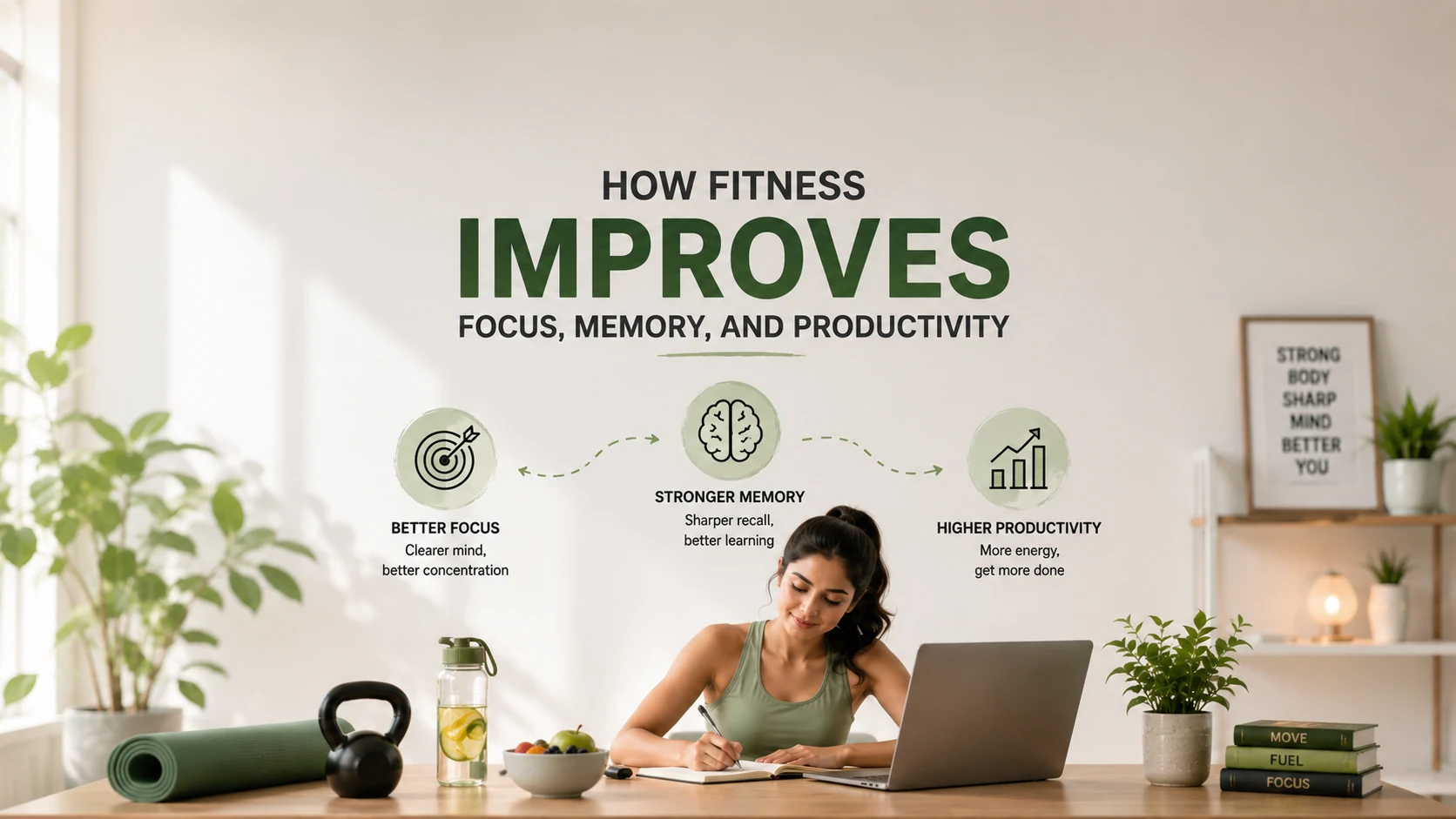
How Fitness Improves Focus, Memory, and Productivity
If you have ever struggled to concentrate after a long day of sitting at a desk, the solution might be the opposite of what feels intuitive. Instead of pushing through with more coffee or another hour at your screen, a short workout could actually be the more effective fix.
This is not just a feel good claim. There is solid research connecting physical fitness to sharper focus, stronger memory, and measurably better productivity at work or in studies. This article explains exactly how this connection works, what kind of exercise helps most, and how to fit it realistically into a busy schedule.
Why Does Physical Fitness Affect Mental Performance?
It might seem strange that something physical, like a workout, could influence something as mental as focus or memory. But the brain and body are far more connected than most people realise, and several clear biological mechanisms explain this link.
Exercise Increases Blood Flow and Oxygen to the Brain
Your brain uses a disproportionately large share of your body's oxygen and energy, despite being a relatively small organ. Physical activity improves circulation throughout the body, including blood flow to the brain, which supports better cell function and alertness almost immediately after a session.
It Boosts Neurotransmitters That Regulate Focus
Exercise increases the availability of neurotransmitters like dopamine and norepinephrine, brain chemicals directly involved in attention and concentration. This is part of why a short walk or workout can feel similar to a mental "reset" when you are struggling to focus.
It Reduces Mental Fatigue From Prolonged Sitting
Long periods of sitting are linked to reduced blood flow and a general dip in alertness, sometimes described as a post lunch or mid afternoon slump. Standing up and moving, even briefly, counters this effect directly. Read more in sitting all day? here's what it's really doing to your body.
It Supports Better Sleep, Which Is Essential for Memory
Memory consolidation, the process of converting short term information into lasting memory, happens largely during sleep. Since regular exercise improves sleep quality, it indirectly but significantly supports memory formation as well. Learn more in how sleep affects weight loss and hormones in women.
It Lowers Chronic Stress, Which Otherwise Impairs Memory and Focus
High, prolonged levels of cortisol, the stress hormone, are known to impair memory and reduce the brain's ability to focus on complex tasks. Exercise helps regulate cortisol, protecting cognitive performance over time.
What Does the Research Actually Show?
Multiple studies across different age groups and settings have found consistent links between physical activity and cognitive performance.
- Students who exercise regularly tend to show better academic performance and concentration compared to sedentary peers.
- Working adults who engage in regular physical activity report higher productivity and fewer days of reduced performance due to fatigue or poor concentration.
- Short bouts of exercise, even a 10 to 15 minute walk, have been shown to produce measurable, short term improvements in attention and working memory.
- Long term, consistent exercisers tend to show better preserved memory and cognitive function as they age, compared to those who are largely sedentary.
Related reading: how exercise builds the brain.
How Soon Can You Expect to Feel Sharper After Exercising?
This is one of the more encouraging aspects of the research. You do not need to wait weeks to notice a difference.
- Within minutes to an hour after exercise, many people experience improved focus and alertness, thanks to increased blood flow and a temporary rise in mood regulating neurotransmitters.
- Over several weeks of consistent activity, more lasting improvements in memory and sustained attention tend to develop, supported by structural brain changes linked to regular exercise.
- Over months, regular exercisers often report a noticeably different baseline level of mental clarity and resilience to mental fatigue compared to before they started.
Important: Frequency matters more than single session length. Several shorter sessions spread across the week support cognitive performance better than one long session followed by several sedentary days.
Best Types of Exercise for Focus, Memory, and Productivity
Brisk Walking
Quick boost in alertness and mood, low effort to start. Best for midday focus resets and breaking up long work sessions.
Aerobic Exercise (Running, Cycling)
Strong, well researched memory and attention benefits. Best for long term cognitive health and exam or project preparation. See walking vs running for weight loss to compare the two.
Strength Training
Supports sustained attention and mental resilience. Best for building long term focus stamina. Try strength training for beginners at home.
Short High Intensity Bursts
Rapid increase in alertness, useful before demanding tasks. Best for pre meeting or pre exam mental sharpening.
Yoga and Stretching
Reduces stress related mental fog, improves present moment focus. Best for recovering from mental fatigue or overwhelm. See morning yoga routine for beginners at home in india.
Real Life Example
A student preparing for exams might use a brisk 15 minute walk before a study session to improve initial focus, then take short stretching breaks every hour to maintain attention rather than pushing through several hours without movement. A working professional, similarly, might find that a lunchtime walk improves afternoon productivity more reliably than an extra cup of coffee.
How Much Exercise Is Needed for These Benefits?
You do not need extreme amounts of exercise to see cognitive benefits.
- Short term focus boosts can come from as little as 10 to 20 minutes of moderate activity.
- Sustained, longer term benefits to memory and productivity are generally linked to around 150 minutes of moderate exercise per week, consistent with broader health guidelines.
- Frequency matters more than single session length. Several shorter sessions spread across the week tend to support cognitive performance better than one long session followed by several sedentary days.
Common Mistakes That Undermine the Focus and Productivity Benefits of Exercise
Point 1: Exercising only on weekends and remaining sedentary on weekdays, missing the more immediate, day to day cognitive benefits that come from regular activity. Point 2: Treating exercise and rest as opposites. Overtraining without adequate recovery can actually impair focus and increase mental fatigue. Point 3: Skipping movement breaks during long work or study sessions. Sitting for several hours without a break reduces blood flow and alertness, even if you exercised earlier that day. Point 4: Relying on stimulants instead of movement when energy dips, which can mask fatigue temporarily without addressing the underlying issue. Point 5: Ignoring sleep while focusing only on exercise. Without adequate sleep, even a consistent exercise routine will not fully translate into its potential focus benefits.
If you have been pushing hard without seeing the results you expect, why you're not seeing results from your workouts may help you spot what's missing.
For more on this, read our article on mental fatigue.
Practical Tips to Use Fitness for Better Focus and Productivity
- Use short movement breaks during long work or study sessions. A five minute walk or stretch every 60 to 90 minutes can meaningfully restore focus.
- Exercise before high focus tasks when possible. A short walk or light workout before an important meeting, exam, or deep work session can sharpen attention right when you need it most.
- Be consistent rather than occasional. Three to five moderate sessions a week will likely support your focus and memory more reliably than one intense weekend workout.
- Combine movement with natural light exposure, such as walking outdoors, since daylight exposure independently supports alertness and mood.
- Track your energy patterns, and place your workouts at times of day when you notice the biggest dips in focus, using exercise strategically rather than only as an afterthought.
For more on this, read our article on staying active with a desk job.
How fitnoa Helps You Build Fitness Habits That Support Mental Performance
Since consistency and timing both matter for the cognitive benefits of exercise, fitnoa is designed to make regular movement easier to fit into a working routine.
Live fitness sessions with expert trainers: Scheduled, guided sessions make it easier to commit to regular exercise rather than relying on unpredictable motivation, which supports the consistency needed for lasting focus and memory benefits.
Goal-based fitness programs, including general fitness plans: A structured plan removes the need to figure out your own routine, freeing up mental energy that would otherwise go into planning, energy you can instead direct toward work or study.
Detailed fitness reports after every session: Reviewing your performance and progress over time helps you notice patterns, including how your energy and focus improve on days you exercise, reinforcing the habit with clear evidence.
Yoga, cardio, strength training, and bodyweight options: Having access to lower intensity options like yoga makes it easier to fit in a quick session even on a demanding workday, supporting the mental reset benefits of movement without requiring a major time commitment.
Personalised nutrition and diet plans: Since nutrition also significantly affects focus and energy levels, having dietary guidance alongside fitness coaching supports mental performance from more than one angle. See what to eat before and after workouts for better results to learn more.
To put this into practice with live expert guidance, explore fitnoa's yoga and holistic wellness program.
Key Takeaways
- Exercise improves focus, memory, and productivity by increasing blood flow, boosting key neurotransmitters, reducing stress hormones, and improving sleep quality.
- Short term focus benefits can appear within minutes to an hour after exercise, while deeper memory benefits build over weeks of consistent activity.
- Around 150 minutes of moderate exercise per week, spread across several sessions, supports the strongest long term cognitive benefits.
- Movement breaks during long work or study sessions help counter the alertness dip caused by prolonged sitting.
- Combining regular exercise with good sleep and nutrition produces the most reliable improvements in mental performance.
- Structured platforms like fitnoa can help build the consistency needed to genuinely benefit from exercise's effects on focus and productivity.
Related reads you may find helpful
- Sitting All Day? Here's What It's Really Doing to Your Body
- How Sleep Affects Weight Loss and Hormones in Women
- Strength Training for Beginners at Home: Complete Guide (No Gym Needed)
- Walking vs Running for Weight Loss: Which Burns More Fat?
- Why You're Not Seeing Results From Your Workouts (And How to Fix It)
Frequently asked questions
Everything you need to know
Sharper Focus Starts With Movement
If coffee isn't cutting it anymore, a short guided session might be the real fix. fitnoa offers live, scheduled workouts and quick yoga options that fit right into a busy day, helping you build the consistency that actually sharpens focus and memory.