
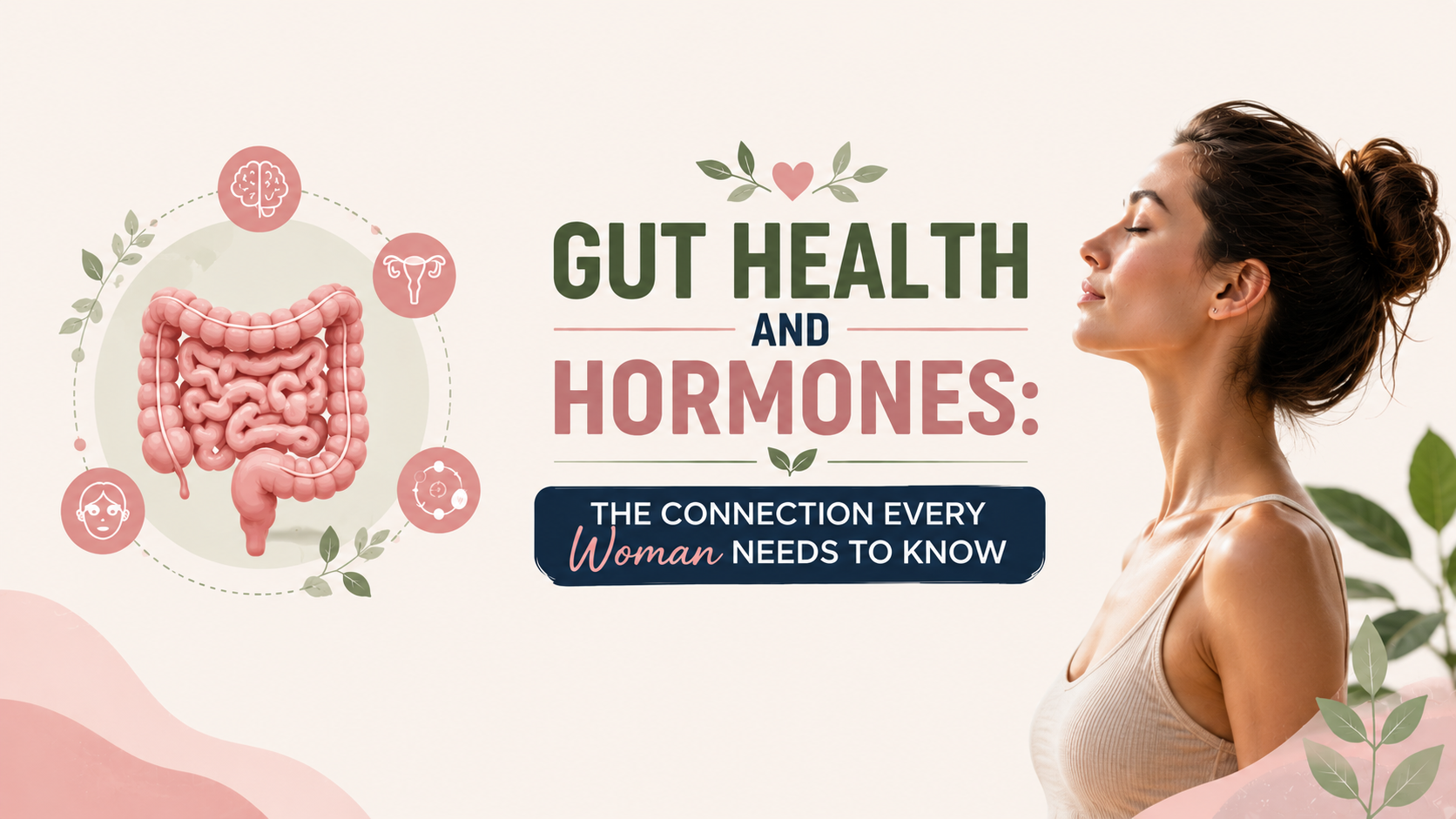
Gut Health and Hormones: The Connection Every Woman Needs to Know
The Connection You Have Already Noticed
If you have ever noticed your digestion changes around your period, or that gut issues seem to flare up during particularly stressful or hormonally turbulent times, you have already experienced the gut-hormone connection firsthand.
This is not a coincidence. Your gut and your hormones are in constant, two-way communication. Your gut bacteria help process and regulate oestrogen. Your hormones influence your gut bacteria composition. And when either system is out of balance, the other tends to follow.
For Indian women dealing with PMOS, irregular cycles, or general hormonal symptoms, understanding this connection opens up an entirely new avenue for addressing the root cause rather than just managing symptoms.
The Estrobolome: Your Gut's Role in Hormone Regulation
Scientists use the term estrobolome to describe the collection of gut bacteria specifically involved in metabolising and regulating oestrogen.
Here is how it works: after your liver processes oestrogen for elimination, it sends the processed oestrogen to your gut to be excreted. Certain gut bacteria produce an enzyme called beta-glucuronidase, which can "reactivate" some of this oestrogen, allowing it to be reabsorbed back into circulation rather than eliminated.
When your gut microbiome is balanced, this process runs smoothly, maintaining healthy oestrogen levels. When your microbiome is imbalanced, with too much beta-glucuronidase activity from harmful bacteria overgrowth, excess oestrogen can be reabsorbed, contributing to a state called oestrogen dominance.
Oestrogen dominance is associated with heavier or more painful periods, increased PMS symptoms, breast tenderness, mood swings, and weight gain particularly around the hips and thighs.
Conversely, an unhealthy gut can also impair oestrogen recycling in ways that lead to oestrogen deficiency symptoms, including irregular cycles and reduced bone density.
How Gut Health Affects Estrogen Levels
Beyond the estrobolome mechanism, gut health affects oestrogen in several other ways.
Inflammation and hormone receptor sensitivity: Chronic gut inflammation increases systemic inflammatory markers, which can reduce the sensitivity of hormone receptors throughout the body. This means even if your hormone levels are technically normal on a blood test, your cells may not be responding to those hormones effectively.
Nutrient absorption for hormone production: Your hormones are built from nutrients you consume, including healthy fats, certain amino acids, and micronutrients like zinc, magnesium, and B vitamins. Poor gut health impairs the absorption of these nutrients, indirectly affecting your body's ability to produce and regulate hormones properly.
Liver function and gut health: Your liver and gut work closely together in hormone metabolism. A compromised gut lining increases the burden on your liver to filter out toxins and bacterial byproducts, potentially reducing its capacity to efficiently process hormones.
Gut Health and PMOS
As fitnoa has covered extensively, PMOS involves complex hormonal and metabolic dysfunction. Gut health is increasingly recognised as a meaningful piece of this picture. Read more in PCOS is now being called PMOS for the full background on this reclassification.
The Gut-PMOS Connection
Research comparing women with PMOS to those without consistently finds differences in gut microbiome composition, including reduced overall bacterial diversity, lower levels of certain beneficial bacteria associated with healthy metabolic function, and higher levels of bacteria associated with inflammation.
Insulin Resistance and Gut Bacteria
Since insulin resistance is central to PMOS, and gut bacteria directly influence insulin sensitivity through several mechanisms, including the production of short-chain fatty acids that improve glucose metabolism, addressing gut health can be a meaningful complementary strategy alongside standard PMOS management approaches. Read more in the link between PMOS, insulin resistance, and weight gain.
Important: Gut health support is a complementary approach to PMOS, not a replacement for medical management. Continue working with your doctor for diagnosis and treatment, and view gut health as one additional tool alongside, not instead of, professional care.
Inflammation in PMOS
PMOS is associated with chronic low-grade inflammation. Since gut health and systemic inflammation are closely linked, improving gut health through diet and lifestyle changes may help reduce this inflammatory burden, potentially easing some PMOS symptoms over time.
Gut Health and Your Menstrual Cycle
Many women notice their digestion changes throughout their cycle, and this is not imagination.
Why digestion changes around your period: Prostaglandins, hormone-like compounds that trigger uterine contractions during your period, can also affect the smooth muscles of your intestines, leading to changes in bowel habits, often looser stools, in the days before and during menstruation.
Progesterone, which is high during the luteal phase after ovulation and before your period, has a relaxing effect on smooth muscle, which can slow digestion and contribute to constipation and bloating in the days leading up to your period.
Gut health and PMS severity: Some research suggests that women with healthier, more diverse gut microbiomes report less severe PMS symptoms, potentially due to better hormone metabolism and lower baseline inflammation.
Gut Health, Cortisol, and Hormonal Balance
Cortisol, your primary stress hormone, has a significant relationship with both gut health and reproductive hormones.
Chronic stress and the resulting elevated cortisol disrupt gut bacteria composition and increase intestinal permeability. This creates a cycle: stress harms gut health, and poor gut health can further dysregulate the stress response, since your gut produces neurotransmitters that influence your brain's stress regulation.
- Stress harms gut bacteria directly: Chronic cortisol elevation increases intestinal permeability and disrupts microbiome composition
- Poor gut health worsens stress regulation: The neurotransmitters your gut produces feed back into your brain's stress response, creating a self-reinforcing cycle
- Reproductive hormones get deprioritised: During periods of chronic stress, the body prioritises cortisol production, which can come at the expense of reproductive hormone balance
The practical result for many women is that chronic stress contributes to both gut issues and reproductive hormone imbalances simultaneously. For more on this connection, see can stress make PMOS symptoms worse.
Gut Health During Perimenopause and Menopause
As oestrogen naturally declines during perimenopause and menopause, gut health takes on additional importance.
Oestrogen's protective role: Oestrogen has a generally protective effect on gut barrier integrity and microbiome diversity. As oestrogen declines during menopause, many women notice new or worsening digestive symptoms, including increased bloating, changes in bowel habits, and greater sensitivity to certain foods.
Weight changes and gut health: The hormonal shifts of menopause are also associated with weight gain, particularly around the abdomen. Since gut bacteria influence weight regulation, supporting gut health during this transition may help manage some of the metabolic changes associated with menopause.
Bone health connection: Oestrogen decline during menopause increases the risk of bone density loss. Interestingly, certain gut bacteria are now being studied for their role in calcium absorption and bone health, adding another dimension to the importance of gut health during this life stage.
How to Support Gut Health for Hormonal Balance
Eat fibre to support healthy oestrogen elimination. Adequate fibre intake helps bind to excess oestrogen in the digestive tract, supporting its proper elimination rather than reabsorption. Aim for 25 to 30 grams of fibre daily from dal, vegetables, fruits, and whole grains.
Include cruciferous vegetables. Vegetables like cabbage, cauliflower, and broccoli contain compounds, including indole-3-carbinol, that support healthy oestrogen metabolism in the liver.
Support your gut bacteria with fermented foods. Curd, buttermilk, and other fermented foods directly support a healthier estrobolome, which in turn supports more balanced oestrogen metabolism. For a complete guide to these foods, see best foods for a healthy gut, the complete India guide.
Manage stress consistently. Since cortisol affects both gut health and reproductive hormones, regular stress management practices including yoga, meditation, and adequate sleep are not optional extras when it comes to hormonal balance. They are foundational.
Reduce alcohol intake. Alcohol disrupts both gut bacteria and liver function, both of which play roles in hormone metabolism.
Stay consistent with anti-inflammatory eating. Reducing processed foods, added sugar, and refined carbohydrates while increasing whole foods, healthy fats, and anti-inflammatory spices like turmeric supports both gut health and hormonal balance together, since the two systems are so closely intertwined.
Why fitnoa Works for Gut Health and Hormonal Balance
Since both gut health and hormonal balance respond positively to regular movement, particularly yoga's combination of physical activity and stress reduction, your fitnoa sessions support both systems simultaneously.
- Dedicated PMOS programme that addresses the interconnected hormonal, metabolic, and gut health factors involved, built around your specific hormonal profile and goals
- AI posture tracking with a live trainer: For women managing PMOS or hormonal symptoms, correct form during yoga and strength training ensures you get the maximum benefit from sessions designed to support hormonal health, including reduced cortisol and improved insulin sensitivity
- Detailed post-session reports that help you identify patterns over time, including how performance and energy may fluctuate across the menstrual cycle
- Complete privacy: Only you and your trainer can see each other during sessions, creating a comfortable environment to work around hormonal symptoms like bloating or fatigue without self-consciousness
- Personalised nutrition plans that integrate dietary strategies supporting both gut health and hormonal balance, including fibre targets, fermented foods, cruciferous vegetables, and anti-inflammatory eating
- One accessible price combining live fitness coaching and personalised nutrition guidance, providing integrated support for the complex, interconnected nature of gut and hormonal health
Key Takeaways
- The estrobolome, a collection of gut bacteria, plays a direct role in regulating how oestrogen is metabolised and eliminated from your body
- Imbalanced gut bacteria can contribute to oestrogen dominance or oestrogen deficiency, both of which cause hormonal symptoms
- Women with PMOS often show reduced gut microbiome diversity, connecting gut health to insulin resistance and inflammation in PMOS
- Digestive changes around your period are normal and connected to prostaglandins and progesterone fluctuations
- Chronic stress disrupts both gut health and reproductive hormone balance simultaneously
- Oestrogen decline during menopause reduces gut protective effects, making gut health support increasingly important during this transition
- Fibre, fermented foods, cruciferous vegetables, and stress management are the most effective tools for supporting gut health and hormonal balance together
Related reads you may find helpful
- PCOS Is Now Being Called PMOS: What Changed and Why It Matters
- The Link Between PMOS, Insulin Resistance, and Weight Gain
- Can Stress Make PMOS Symptoms Worse? What Every Woman Should Know
- What Is Gut Health and Why Does It Affect Everything From Weight to Mood?
- Best Foods for a Healthy Gut: The Complete India Guide
Frequently asked questions
Everything you need to know
Support Your Gut and Your Hormones Together
Gut health and hormonal balance are deeply connected, and addressing them separately rarely works. fitnoa's dedicated PMOS programme pairs live fitness coaching with personalised nutrition built around fibre, fermented foods, and anti-inflammatory eating. Try your first class completely free.