
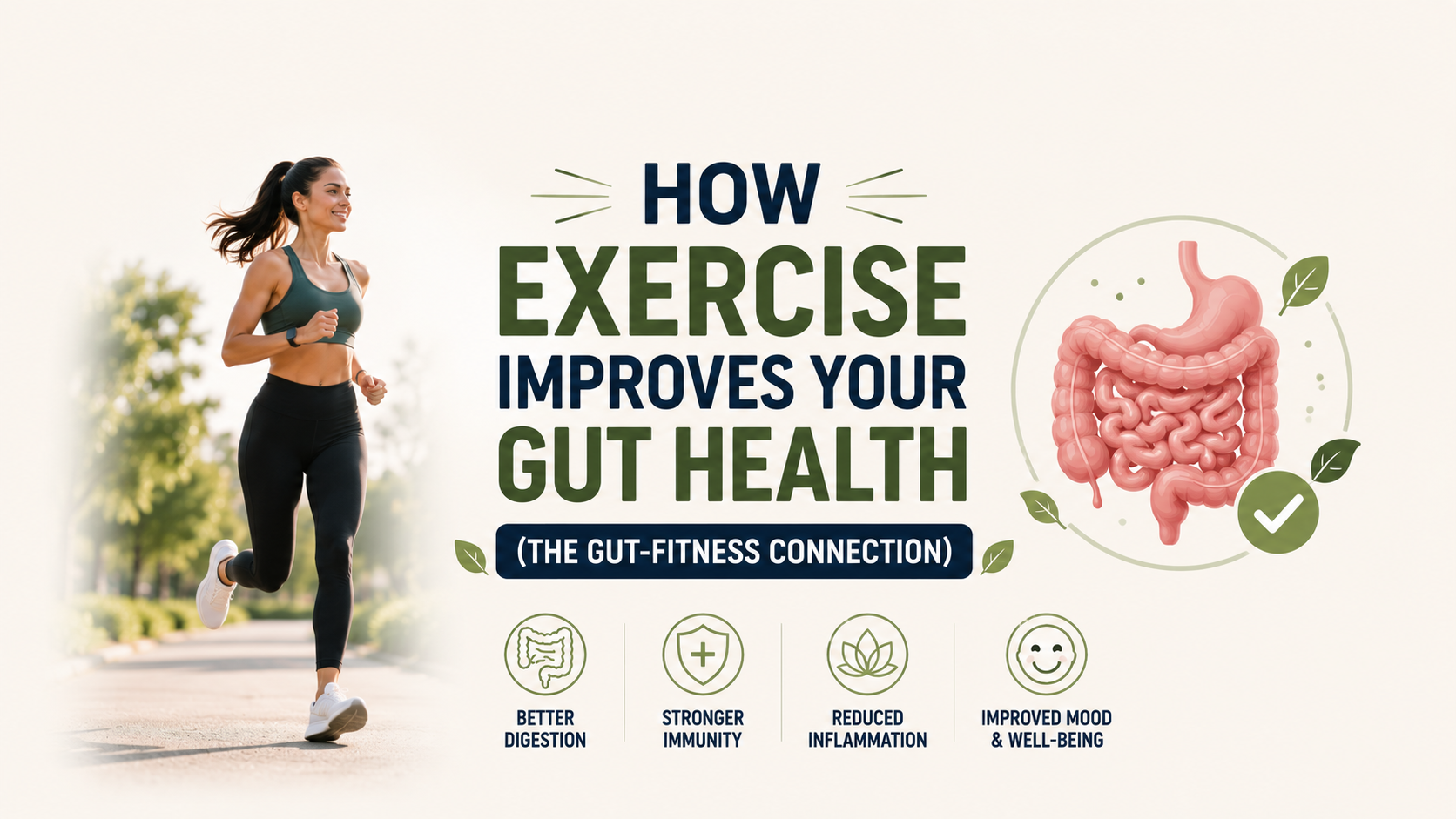
How Exercise Improves Your Gut Health (The Gut-Fitness Connection)
Your Workout Is Changing More Than Your Muscles
Most people think of exercise purely in terms of calories burned and muscles built. But there is a less talked about benefit happening deep inside your digestive system every time you move your body: your gut bacteria are changing too.
Research over the past decade has revealed a genuinely fascinating connection between physical activity and gut health. Regular exercise does not just make you fitter. It actively reshapes your gut microbiome in ways that improve digestion, reduce inflammation, and support nearly every other area of health connected to your gut.
The Science: How Exercise Changes Gut Bacteria
Multiple studies have compared the gut microbiomes of athletes versus sedentary individuals, and the findings are consistent: physically active people have significantly more diverse gut microbiomes.
One frequently cited study examined professional rugby players and found they had substantially higher levels of beneficial bacteria, including species linked to reduced inflammation and improved metabolic health, compared to non-athletes with similar diets.
But you do not need to be a professional athlete to see benefits. Research on moderate exercise in non-athletic populations also shows measurable improvements in microbiome diversity within just 6 weeks of consistent activity.
Why Does Exercise Affect Gut Bacteria?
Several mechanisms are involved. Increased blood flow to the gut supports the health of the gut lining and the cells that interact with your microbiome. Changes in gut transit time mean faster movement of food through your digestive system, which is associated with a healthier balance of gut bacteria and reduced opportunity for harmful bacteria to overgrow.
Reduced inflammation throughout the body, including in the gut, creates a more favourable environment for beneficial bacteria to thrive. And stress hormone regulation matters too, since chronic stress disrupts gut bacteria through the gut-brain axis, and exercise is one of the most effective tools for lowering cortisol.
Exercise and Gut Inflammation
Chronic low-grade gut inflammation is at the root of many gut health issues, from bloating to more serious conditions. Regular moderate exercise reduces several markers of gut inflammation, including C-reactive protein, calprotectin (a marker specifically associated with intestinal inflammation), and pro-inflammatory cytokines that can damage the gut lining over time.
This anti-inflammatory effect is one reason why people who exercise regularly often report fewer digestive complaints, even without making significant dietary changes. For a deeper look at the signals of gut imbalance, see signs your gut health is poor, and what to do about it.
Important: While moderate exercise reduces inflammation, excessive high-intensity exercise without adequate recovery can temporarily increase gut permeability and inflammation, particularly in endurance athletes. Balance matters more than maximum intensity when it comes to gut health.
Exercise and Digestive Symptoms
Beyond the microbiome itself, exercise has direct effects on common digestive complaints.
Reducing bloating: Movement helps move trapped gas through the digestive tract. A short walk after meals is one of the simplest and most effective remedies for post-meal bloating.
Improving constipation: Regular physical activity stimulates the natural contractions of the intestines (peristalsis), helping move stool through the digestive tract more efficiently. Studies consistently show that increasing physical activity improves symptoms in people with chronic constipation.
Reducing acid reflux: For some people, regular moderate exercise combined with weight management reduces the frequency and severity of reflux symptoms. However, intense exercise immediately after eating can worsen reflux, so timing matters.
Supporting healthy digestion of fibre: As you increase fibre intake to support gut health, your digestive system needs to adapt. Regular movement supports this process, reducing the temporary bloating that can occur when significantly increasing fibre intake. Learn more in best foods for a healthy gut, the complete India guide.
Best Types of Exercise for Gut Health
Walking, especially after meals, is one of the most accessible and effective exercises for gut health. A 10 to 15 minute walk after eating reduces bloating, supports healthy blood sugar levels, and stimulates digestion.
Yoga combines physical movement with stress reduction, addressing gut health from two angles simultaneously. Certain poses specifically massage and stimulate the digestive organs, while the breathing and relaxation components reduce the cortisol that disrupts gut bacteria.
Moderate cardio such as cycling, swimming, and dancing has been shown to improve microbiome diversity without the excessive stress response that very high intensity training can sometimes trigger.
Strength training, while less studied specifically for gut health compared to cardio, contributes to overall metabolic health, reduces visceral fat (which is itself inflammatory), and supports the stress-reduction benefits that indirectly help gut bacteria.
Yoga Poses Specifically for Digestion
Pawanmuktasana (Wind-Relieving Pose)
This pose is literally named for its ability to release trapped gas and improve digestion.
- Lie on your back and bring one knee toward your chest, clasping your hands around your shin
- Hold for 30 to 60 seconds, gently rocking side to side if comfortable
- Switch legs, then bring both knees to your chest together
Ardha Matsyendrasana (Seated Spinal Twist)
This twisting pose physically massages the abdominal organs, stimulating digestive function.
- Sit with legs extended, then bend one knee and place that foot outside the opposite thigh
- Twist your torso toward the bent knee, placing one hand behind you for support
- Hold for 30 to 45 seconds, breathing deeply, then switch sides
Malasana (Garland Pose, Deep Squat)
A deep squat position that opens the hips and gently compresses the lower abdomen, supporting bowel movement.
- Stand with feet slightly wider than hip width, then lower into a deep squat, keeping your heels on the floor if possible
- Bring your palms together and use your elbows to gently press your knees outward
- Hold for 30 to 60 seconds
- Apanasana (knees-to-chest pose): Hug both knees to your chest and hold for 60 seconds, breathing deeply into your belly to compress the abdomen and release trapped gas
- Supta Matsyendrasana (reclined spinal twist): Lie on your back with knees bent, drop both knees to one side while keeping shoulders flat, hold for 60 to 90 seconds, then switch sides for a gentler digestive massage
- Practice timing: These poses work best when done either first thing in the morning on an empty stomach or in the evening, at least an hour after eating
How Much Exercise Do You Need for Gut Benefits?
Research suggests that moderate, consistent exercise produces the best gut health outcomes. The minimum effective amount is 30 minutes of moderate activity at least 3 times per week, which shows measurable improvement in gut markers within 6 weeks. The optimal amount is 150 minutes per week of moderate activity, combined with 2 to 3 strength sessions, which produces the most consistent and significant microbiome improvements.
Very high volumes of intense exercise without adequate recovery, common in endurance training, can actually increase gut permeability and disrupt the microbiome rather than improve it. The takeaway: more is not always better. Consistent, moderate activity outperforms occasional intense exercise for gut health specifically.
The Exercise-Gut Timing Connection
Post-meal walks: A walk within 30 minutes after eating is one of the most evidence-backed habits for digestive health. It supports healthy blood sugar response and reduces bloating.
Avoid intense exercise immediately after large meals: Vigorous exercise right after eating diverts blood flow away from digestion toward your working muscles, which can cause discomfort, cramping, or reflux. Wait at least 60 to 90 minutes after a large meal before intense training.
Morning exercise and gut rhythm: Exercising in the morning, particularly if done consistently at the same time, helps regulate your body's circadian rhythm, which in turn supports the natural daily rhythms of your gut bacteria.
Common Mistakes That Can Hurt Gut Health
- Doing extremely intense exercise without proper recovery: Chronic overtraining raises cortisol persistently, which works against gut health rather than supporting it. Build in rest days
- Exercising in a severely under-fuelled state: Not eating enough relative to your activity level stresses the body and can negatively affect gut bacteria, similar to the effects of chronic stress
- Ignoring hydration: Dehydration during exercise affects digestive function and can worsen constipation. Drink adequate water before, during, and after exercise
- Expecting overnight results: Gut microbiome changes from exercise typically take several weeks of consistency to become measurable. Patience is necessary
Why fitnoa Works for Combining Exercise and Gut Health
Since regular movement directly increases gut microbiome diversity and reduces gut inflammation, every fitnoa session supports your digestive health alongside your broader fitness goals.
- Varied live workouts across yoga, cardio, strength training, and bodyweight exercises, all contributing to gut health through different mechanisms
- AI posture tracking with a live trainer: For yoga sessions specifically, correct alignment in twisting and core-engaging poses directly affects how effectively they stimulate digestion, so proper form genuinely matters for the gut health benefits, not just the fitness benefits
- Detailed post-session reports that help you stay accountable to the regular exercise routine that produces measurable gut microbiome improvements over several weeks
- Complete privacy: Only you and your trainer can see each other, even in group classes, creating a low-pressure environment that supports consistency without added social stress
- Personalised nutrition plans built to complement your fitness routine with fibre targets, fermented food recommendations, and anti-inflammatory eating patterns
- One accessible price combining live fitness coaching and personalised nutrition guidance, since gut health responds best to the combination of regular exercise and supportive nutrition together
Key Takeaways
- Regular moderate exercise increases gut microbiome diversity and reduces gut inflammation
- Walking after meals is one of the simplest, most effective habits for reducing bloating and supporting digestion
- Yoga combines physical stimulation of digestive organs with stress reduction, benefiting gut health from two angles
- Specific yoga poses including wind-relieving pose, spinal twists, and deep squats directly support digestive function
- 150 minutes of moderate weekly activity, combined with some strength training, produces the most consistent gut health benefits
- Excessive high-intensity exercise without recovery can increase gut permeability rather than improve it
- Timing matters: walk after meals, but avoid intense exercise immediately after large meals
Related reads you may find helpful
Frequently asked questions
Everything you need to know
Move Your Way to a Healthier Gut
Exercise reshapes your gut microbiome, and fitnoa gives you the live yoga, cardio, and strength sessions that drive this benefit, paired with personalised nutrition support built around fibre and fermented foods. Try your first class completely free and feel the difference for yourself.