
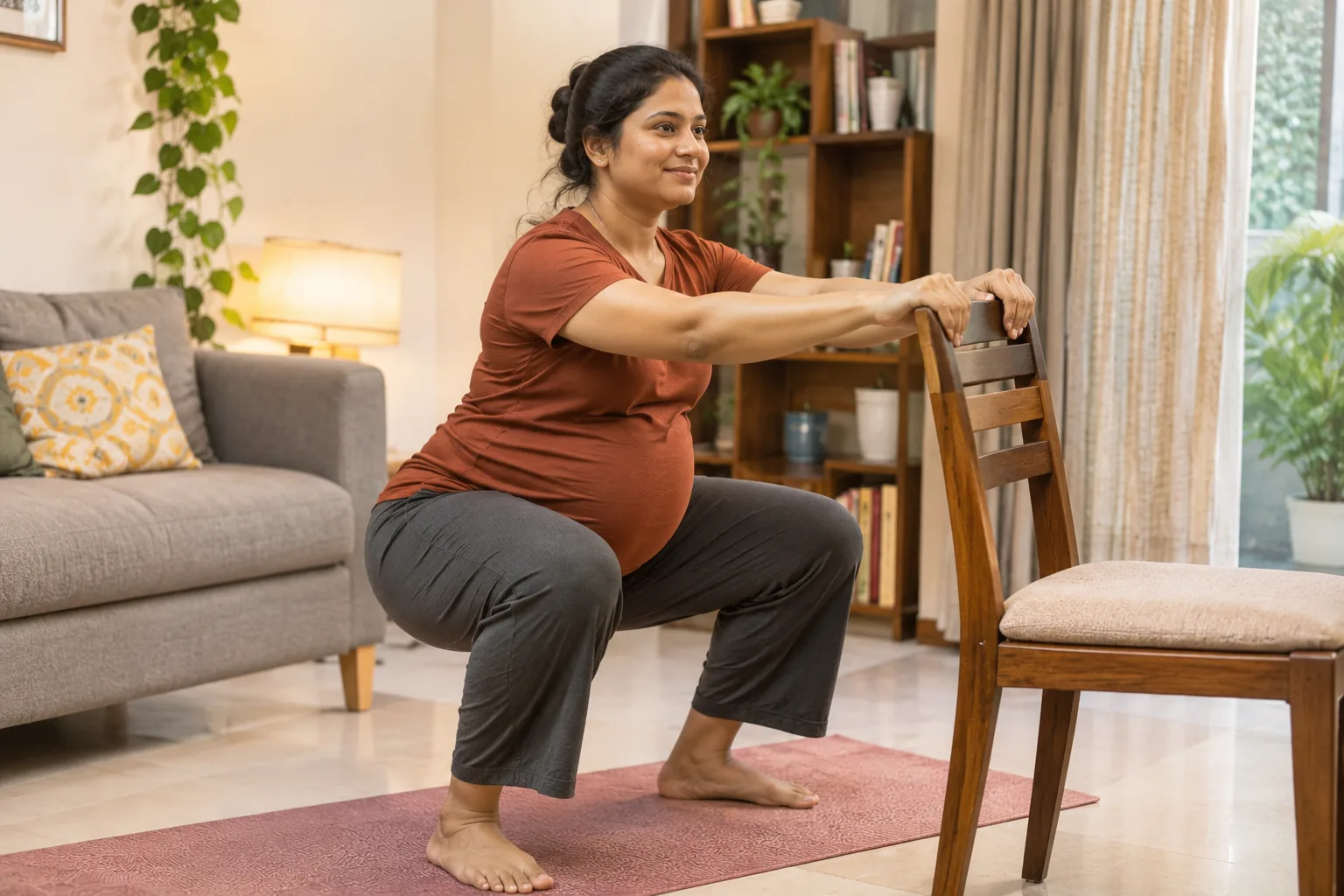
Normal Delivery Tips: 10 Things That Actually Improve Your Chances
The normal delivery tips with the best evidence are simple: stay active with a daily walk and pelvic floor exercises, practise prenatal yoga and breathing, keep your weight gain and iron levels healthy, start perineal massage from about 34 weeks, learn labour positions, and choose a hospital that lets you move and have a companion in labour. None of these can guarantee a normal delivery, since some situations medically need a caesarean, but together they give your body the best chance.
Search for this and you'll find every kind of advice: drink ghee, eat dates, do a hundred squats, walk for hours. Fertilia's OB-GYN, Dr. Suganya Venkat, puts it bluntly: some of it works, and most of it is oversimplified. Here's what the research supports.
Important: A normal delivery isn't always possible or safe. Conditions like placenta praevia, a breech baby or certain previous caesareans may make a C-section the right choice. Follow your doctor's advice.
Why so many women are asking
C-section rates in India have risen sharply. Max Hospital's guide notes that caesareans made up about 8.5% of deliveries until around 2010, and that national survey data shows the rate doubling over a decade. Many C-sections are necessary. Many women also want to know what they can do to improve their odds.
10 normal delivery tips
1. Walk every day
A daily 30-minute walk builds the stamina labour needs. Fertilia cites a trial of 102 women where those who walked from week 34 arrived in labour with a more favourable cervix, were more likely to go into labour on their own and had fewer caesarean and instrumental deliveries.
2. Do pelvic floor exercises
Squeeze as if stopping urine, hold for 5 seconds, release for 5. Repeat 10 times, three times a day, building to 10-second holds. Strong, flexible pelvic floor muscles help in the pushing stage and in recovery.
3. Practise prenatal yoga
Malasana (supported squat), cat-cow and butterfly pose help open the pelvis and may help your baby settle into a good position. Avoid hot yoga, deep backbends and pressure on your belly after 20 weeks.
4. Keep your weight gain healthy
Excess weight gain raises the risk of gestational diabetes and a larger baby, both of which make a caesarean more likely. Eat balanced meals and stay active.
5. Build your iron
A haemoglobin below 11 g/dL counts as anaemia. Going into labour anaemic leaves you exhausted afterwards. Eat palak, methi, jaggery with sesame, dates and beans, and take your iron tablets with lime juice.
6. Eat enough protein
Labour is hard physical work. Include dal, paneer, eggs, curd or chana in every main meal.
7. Start perineal massage from 34 weeks
Fertilia's timeline suggests starting from 34 weeks. It may reduce the chance of tearing or needing stitches. Ask your doctor how to do it.
8. Learn breathing and labour positions
Slow belly breathing helps you stay calm through contractions. A Cochrane review of 30 trials with 9,015 women, cited by Fertilia, found that being upright or mobile in the second stage of labour shortened that stage compared with lying back.
9. Choose your support
At your first hospital visit, ask whether you can have a companion with you in labour, and whether you'll be allowed to move around. Fertilia suggests asking early, while you can still switch.
10. Stop a few habits from 20 weeks
Fertilia recommends stopping lying flat on your back for long and abdominal crunches from 20 weeks, and avoiding high-impact exercise in the third trimester.
You may also like our guide: 7 Month Pregnancy Exercise for Normal Delivery
A timeline for normal delivery preparation
| When | What to do |
|---|---|
| First visit | Ask about labour-room companions and freedom to move |
| From the start | Take folic acid, eat balanced meals, walk if your doctor agrees |
| Second trimester | Build strength with squats, prenatal yoga and pelvic floor work |
| From 20 weeks | Avoid lying flat on your back for long and skip crunches |
| From 34 weeks | Perineal massage, daily walks, breathing practice |
| From 36 weeks | Ask about turning the baby (ECV) if your baby is breech |
Do dates, ghee or pineapple help?
Dates may help a little: a small 2011 study found women who ate six dates a day for four weeks before their due date were more dilated on arrival at hospital. Tommy's says a handful of dates is a healthy snack either way. Ghee in the ninth month and pineapple don't have good evidence behind them.
How can I speed up my normal delivery?
You can't control the speed, but staying upright and moving in early labour, changing positions, staying hydrated, breathing slowly and having good support all help labour progress. Your care team may also suggest medical help if labour stalls.
What is the best time for normal delivery?
Your baby is full term from 37 weeks. Most babies arrive between 37 and 42 weeks. March of Dimes recommends waiting until at least 39 weeks unless there's a medical reason to deliver sooner.
Why guided preparation works better
Notice how many of these tips are about exercise done well: walking, squats, pelvic floor work, yoga and breathing. The trials that showed benefits mostly used supervised programmes, and with good reason. In pregnancy, loosened joints make small form errors more costly.
fitnoa's live prenatal classes cover exactly this preparation, adjusted to your trimester. An AI watches every person's posture and alerts the instructor when someone needs a correction, so you get close attention in a group class. A clinical nutritionist helps with the diet side, from protein to iron.
Related reads you may find helpful
Frequently asked questions
Everything you need to know
Prepare for Labour With Expert Eyes on You
fitnoa's live prenatal classes cover squats, pelvic floor work, prenatal yoga and breathing, with a clinical nutritionist for your diet. Our AI alerts your instructor whenever your posture needs fixing. Book your free trial session.