
Pregnancy Exercise at Home
The best pregnancy exercises to do at home are walking (even indoors), wall push-ups, supported squats, pelvic tilts, cat-cow, side-lying leg lifts, seated knee lifts, step-ups on a low step, kegels and slow core breathing. You only need a mat, a wall and a sturdy chair. If your doctor has cleared you, aim for about 150 minutes of moderate activity a week, for example 30 minutes on 5 days, and build up slowly if you are new to exercise.
Plenty of mothers in India can't get to a gym or class easily, whether it's the heat, work hours, family worries or simply feeling too tired to travel. The good news is that a home routine covers everything you need: a bit of cardio, some strength work for your legs, back and arms, and pelvic floor training.
Important: Check with your doctor before starting. Some pregnancies need a pause on exercise, and your doctor can tell you what is right for you.
Before you start
- Clear a space and use a non-slip mat.
- Keep a sturdy chair or a wall within reach for balance.
- Wear supportive shoes for standing moves.
- Drink water before and after, and exercise in a cool room.
- Breathe out as you do the hard part of each move. Don't hold your breath.
- You should be able to talk while you exercise. If you can't, slow down.
10 safe pregnancy exercises to do at home
1. Indoor walking or marching
Walk around your home or terrace, or march on the spot, for 10 minutes at a time. Three short walks a day add up quickly.
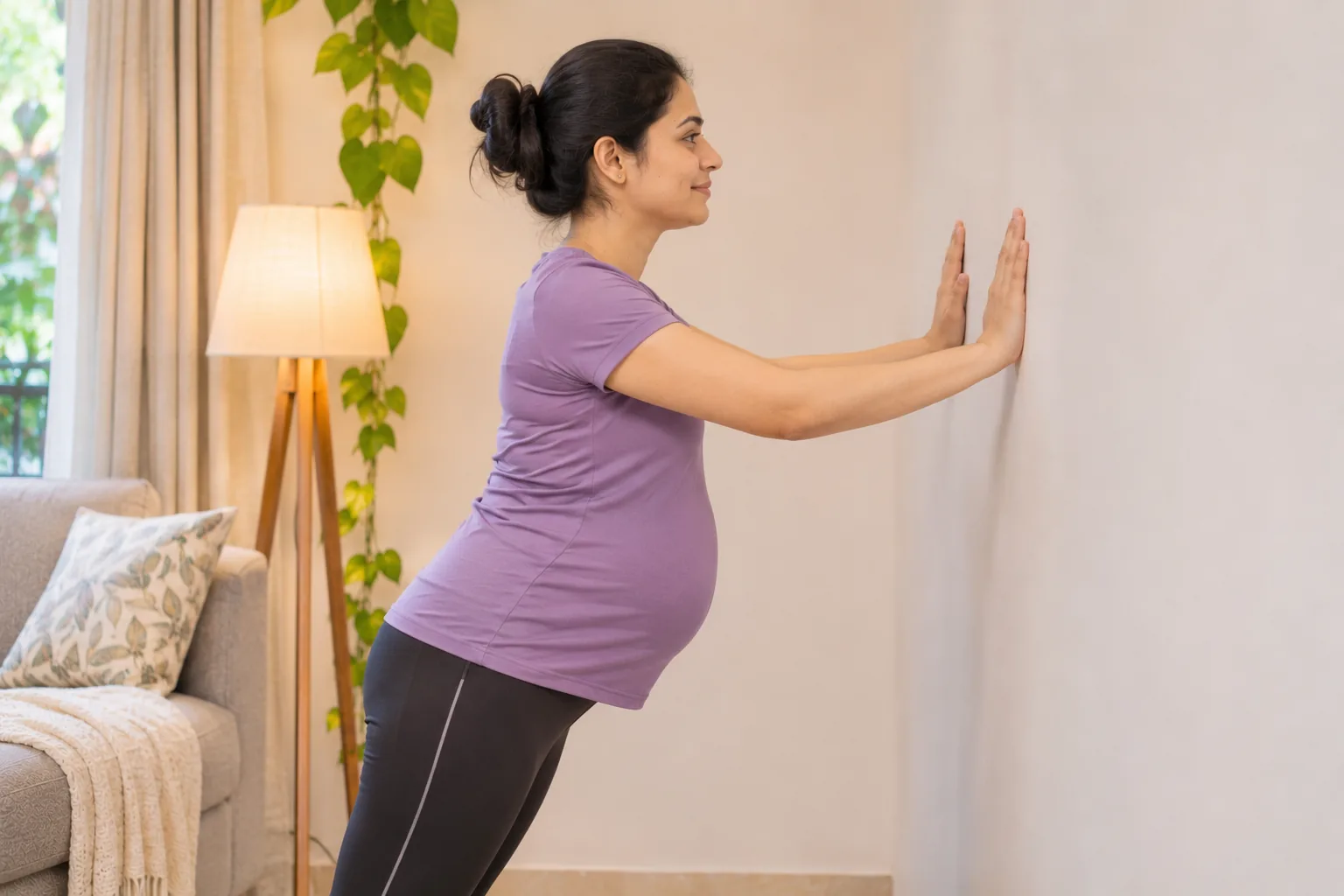
2. Wall push-ups
Strengthens your chest and arms for lifting and carrying your baby later.
- Stand facing a wall, hands on it at shoulder height and a little wider than your shoulders.
- Slowly bend your elbows to bring your chest towards the wall, then push back.
- 10 to 12 reps, 2 sets.
3. Supported squats
Builds leg strength and opens the pelvis, a position many women use in labour.
- Stand with your back to a wall, or hold a chair, feet shoulder-width apart.
- Bend your knees as if sitting down, only as low as feels comfortable.
- Come back up slowly. 8 to 10 reps, 2 sets.
4. Pelvic tilts against a wall
Eases lower back ache.
- Stand with your back against a wall and your knees soft.
- Gently press your lower back towards the wall, hold for 3 seconds, then relax.
- 10 reps.
5. Cat-cow
Keeps your spine mobile and relieves back tension.
- On your hands and knees, breathe in with a flat back, breathe out and round your back up.
- 10 slow rounds.
6. Seated knee lifts
Works your core and hips without lying down.
- Sit near the front of a chair, feet flat.
- Lift one knee a few centimetres, lower it, then switch.
- 8 to 12 reps each side, 2 sets.
7. Side-lying leg lifts
Strengthens the outer hips, which help keep your pelvis steady.
- Lie on your side with a pillow under your head and your bump supported.
- Keep your bottom knee bent and lift your top leg slowly, then lower.
- 10 reps each side.
8. Step-ups
Builds leg strength and stamina.
- Use the bottom step of a staircase, holding the railing.
- Step up with one foot, bring the other up, then step down.
- 10 reps each leg. Skip this one in the third trimester if your balance feels off.
9. Kegels
Strengthens the pelvic floor, which supports your bladder and baby.
- Squeeze the muscles you'd use to stop passing urine for 5 seconds, then fully let go for 5 seconds.
- 10 reps, 3 times a day.
10. Core breathing
Gently trains your deep tummy muscles and pelvic floor.
- Sit tall. Breathe in and let your ribs widen.
- Breathe out slowly and gently draw your belly towards your spine.
- 10 breaths.
You may also like our guide: Home Workout Plan for Indian Women
A simple weekly plan
| Day | What to do | Time |
|---|---|---|
| Monday | Indoor walk, then wall push-ups and squats | 30 min |
| Tuesday | Cat-cow, pelvic tilts, side-lying leg lifts, core breathing | 20 min |
| Wednesday | Indoor walk | 30 min |
| Thursday | Squats, step-ups, seated knee lifts, wall push-ups | 25 min |
| Friday | Indoor walk, then stretches | 30 min |
| Saturday | Prenatal yoga class or video | 30 to 40 min |
| Sunday | Rest, or a short easy walk | 15 min |
Do kegels every day, sitting at your desk or lying in bed.
Adjusting by trimester
- First trimester: keep sessions short when you're tired or nauseous. Avoid overheating.
- Second trimester: a good time to build your routine. From around 16 weeks, avoid long stretches of exercise lying flat on your back.
- Third trimester: slow down, keep a chair close for balance and focus on walking, squats, pelvic tilts and breathing.
Exercises to avoid at home
- Crunches, sit-ups and full planks after the first trimester
- Long stretches of exercise lying flat on your back
- Jumping, skipping and high-impact moves
- Anything with a risk of falling, like standing on unstable surfaces
- Heavy lifting or holding your breath while straining
- Exercising in a hot room
When to skip exercise
Your doctor may advise rest if you have placenta previa after 26 weeks, pre-eclampsia or high blood pressure, signs of preterm labour, a weak cervix or ruptured membranes. Follow your doctor's plan first.
Stop and call your doctor if you notice
- Vaginal bleeding or fluid leaking
- Regular, painful contractions
- Dizziness, chest pain or a headache that won't settle
- Pain or swelling in one calf
- Your baby moving less than usual
Related reads you may find helpful
Frequently asked questions
Everything you need to know
Not Sure You're Doing It Right?
fitnoa's live prenatal classes bring an instructor into your living room. Every move is matched to your trimester, and our AI flags your posture to the instructor in real time. With Private Mode, only your trainer can see you. Book your free trial session.