Pregnancy Yoga for Beginners: How to Start Safely, With 7 Easy Poses
Pregnancy yoga for beginners starts with short, gentle sessions of 15 to 20 minutes, two or three times a week, built around slow breathing, easy stretches and supported poses like cat-cow, cobbler's pose against a wall, a chair-supported squat and side-lying rest. You can start in any trimester once your doctor agrees, and the NHS suggests that anyone new to exercise begins with about 10 minutes a day and builds up. Since you're new to the poses, a live class where a teacher can watch and correct you is the safest way to begin.
Lots of women try yoga for the first time in pregnancy, and that's completely fine. Prenatal yoga is gentler than a regular class, and you don't need to be flexible or fit to start.
Important: Get your doctor's go-ahead first, and tell your teacher you're a beginner so they can show you the easiest version of each pose.
Can I start yoga for the first time while pregnant?
Yes, for most healthy pregnancies. Choose a prenatal class or video over a general yoga class, since general classes include poses that don't suit pregnancy. The NHS advises against taking up a new vigorous activity in pregnancy, but gentle prenatal yoga is a good fit for beginners. If your pregnancy is high risk, ask your doctor what's okay.
When is the best time to start?
- First trimester: gentle breathing and stretching are fine if your doctor agrees. Healthline suggests avoiding intense backbends, deep twists, strong tummy contractions, inversions, jumping and hot yoga at this stage. Nausea and tiredness put many beginners off until later, and some programmes only take you after 12 weeks.
- Second trimester: the easiest time for most beginners. Energy comes back and the bump isn't in the way yet.
- Third trimester: still a good time to start. Classes lean more on breathing, relaxation and labour positions.
7 easy pregnancy yoga poses for beginners
These come up again and again in trusted prenatal yoga guides.
1. Seated breathing
Sit cross-legged on a folded blanket, back tall. Breathe slowly in and out through your nose for 2 minutes. Art of Living recommends alternate nostril breathing (nadi shodhan) once you're comfortable.
2. Cobbler's pose against a wall
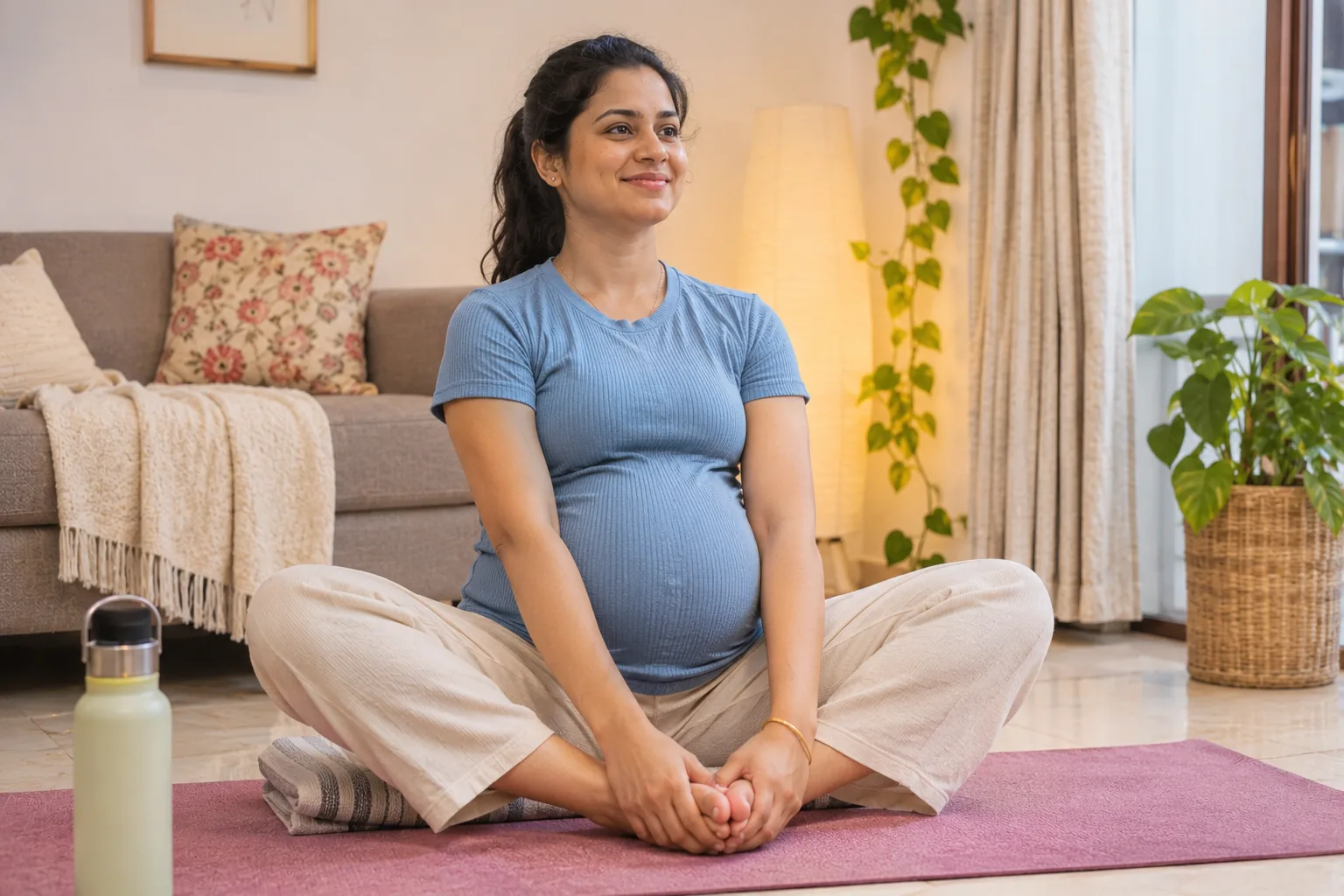
Sit with your back against a wall, soles of the feet together, and let your knees drop gently outward without forcing them. Put cushions under your knees if they don't reach the floor. Stay as long as it feels comfortable.
3. Cat-cow (pelvic tilt)
On hands and knees, tuck your tailbone and round your back as you breathe, then return to a neutral back. Keep your elbows soft and the movement small. 8 to 10 rounds.
4. Chair-supported squat
Face the back of a sturdy chair, feet a bit wider than your hips and toes turned out. Hold the chair, lower your hips as if sitting down and come back up. Five times.
5. Standing side stretch
Stand tall, reach one arm up and lean gently to the other side. Art of Living calls this konasana and says it keeps the spine flexible and can ease constipation. Three breaths each side.
6. Goddess pose
Stand with your feet wide and toes turned out, bend your knees a little and keep your back tall. Hold for a few breaths with a chair nearby for balance.
7. Side-lying rest
Lie on your side with a pillow between your thighs and your head on a cushion. Breathe slowly for 3 to 5 minutes.
You may also like our guide: Is Prenatal Yoga Safe? Expert Guidelines for Every Trimester
How long and how often should a beginner practise?
| Weeks of practice | Session length | Sessions a week |
|---|---|---|
| Weeks 1 and 2 | 15 to 20 minutes | 2 |
| Weeks 3 and 4 | 20 to 30 minutes | 2 to 3 |
| After a month | 30 to 45 minutes | 3 |
Add a daily walk if your doctor agrees. Together they get you towards the NHS's 150 minutes of moderate activity a week.
If you'd like a free class to start with, the NHS has a 45-minute pre and postnatal yoga video made for beginners. You'll need three pillows or cushions, a mat and a blanket.
What should beginners avoid?
- Lying flat on your back for more than a few minutes in later pregnancy
- Lying on your belly and deep twists
- Strong backbends and inversions
- Hot yoga or a very warm room
- Holding your breath
- Pushing into a stretch, since relaxin makes overstretching easy
BabyCenter adds a useful reminder: poses you found easy before pregnancy can strain your body now, so listen to it.
Why beginners need correction the most
When you're new, you don't yet know what a pose should feel like. Your knees may roll inward in a squat, your lower back may sag on all fours, or you may sink into your hips in cobbler's pose. Nobody notices in a video, and in a big group class the teacher might not either.
At fitnoa, an AI watches each person's posture through the whole class and alerts the instructor the moment something slips. So as a beginner, you're corrected from day one, even in a group session. If you feel self-conscious, Private Mode means only your trainer can see you.
What do I need to start?
- A non-slip yoga mat
- Two or three pillows and a folded blanket
- A sturdy chair
- Loose, stretchy clothes
- Water
Stop and call your doctor if you notice
- Vaginal bleeding or fluid leaking
- Regular, painful contractions
- Dizziness, chest pain or a severe headache
- Calf pain or swelling
- Your baby moving less than usual
Related reads you may find helpful
Frequently asked questions
Everything you need to know
Start Right, From Your First Class
fitnoa's live prenatal yoga is beginner-friendly and planned for your trimester. Our AI watches your posture and alerts the instructor when you need a correction, so you learn every pose safely. Book your free trial session.