
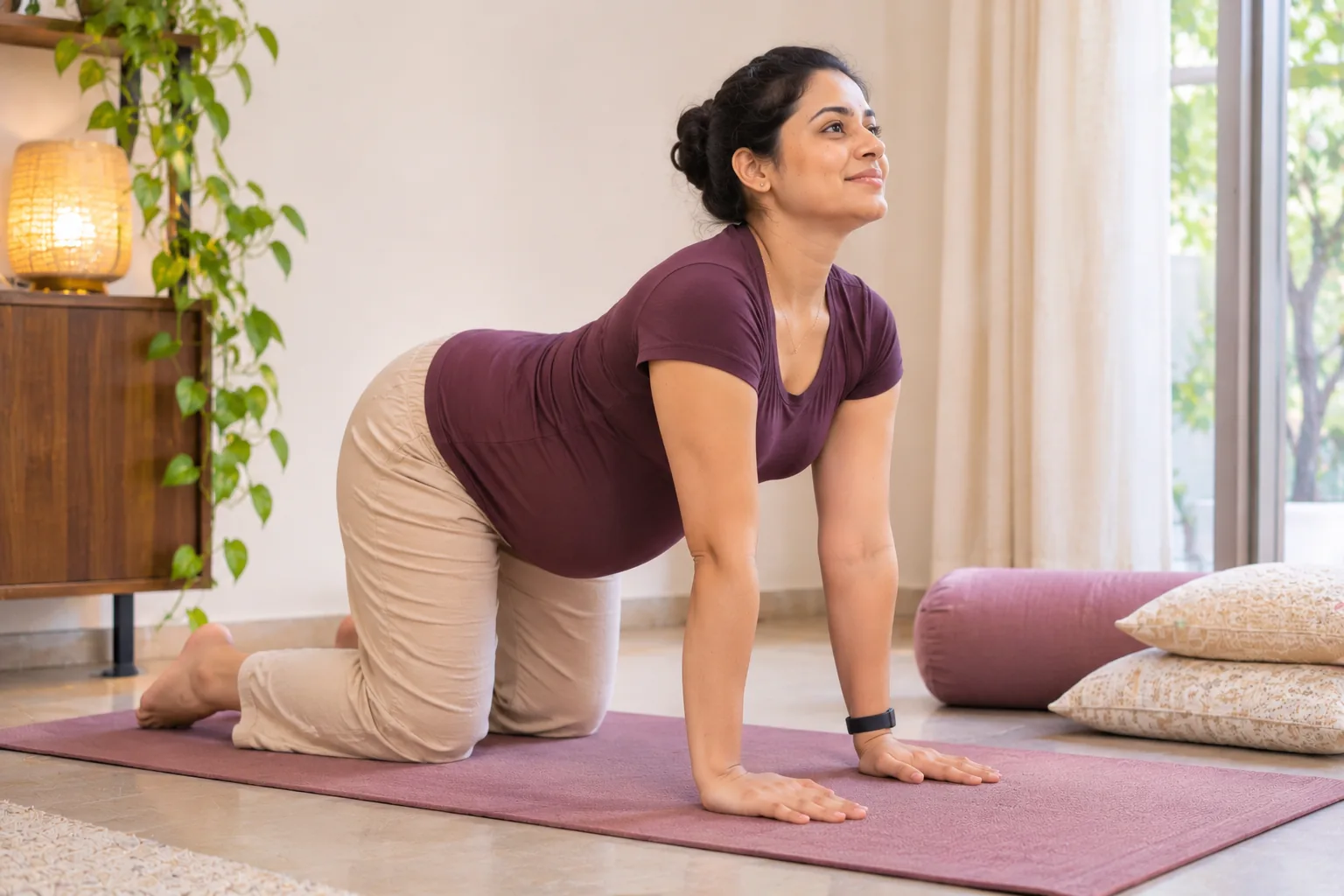
Yoga for Normal Delivery: 8 Poses and Breathing Practices That Help
The best yoga for normal delivery combines hip-opening and pelvic-mobility poses with breathing practice: butterfly pose (baddha konasana), supported squat (malasana), cat-cow, side lunges, child's pose with knees wide, goddess pose and side-lying relaxation, plus slow belly breathing and alternate nostril breathing. Practise two or three times a week from the second trimester, with your doctor's okay, under a prenatal-trained teacher. Yoga can't promise a normal delivery, but it builds the flexibility, strength and calm that labour asks for.
Prenatal Yoga Center puts it honestly: there's no magic wand that guarantees a particular birth, but preparation can tilt the odds in your favour. Most of that preparation is about the pelvis, which is more mobile than many people think, and the pelvic floor, which needs to stretch and release when your baby comes down.
Important: Get your doctor's approval before starting. Skip deep squats and strong hip openers if you have pelvic girdle pain, a low-lying placenta or a baby who isn't head down, unless your doctor says they're fine.
Which yoga is best for normal delivery?
Look for poses that do one of three jobs:
- Open and mobilise the pelvis, such as butterfly, malasana, side lunges and goddess pose
- Relax the pelvic floor and back, such as child's pose and cat-cow
- Train your breath, such as slow belly breathing and nadi shodhan
8 yoga poses for normal delivery
1. Butterfly pose (baddha konasana)
Sit tall, ideally against a wall, with the soles of your feet together. Let your knees fall gently outward with cushions underneath. Breathe slowly for 1 to 2 minutes. It opens the hips and inner thighs and is safe through pregnancy.
2. Supported squat (malasana)
Sit on a yoga block or a stack of books with your feet wider than your hips and toes turned out. Bring your palms together and press your elbows gently against your knees. Hold for 5 breaths. Squatting opens the pelvis, which is why it's such a common labour position.
3. Cat-cow (marjariasana)
On hands and knees, round your back as you breathe out and return to neutral as you breathe in. Art of Living notes it keeps the spine flexible as your back takes more weight, and Prenatal Yoga Center adds that rocking cat-cow is also a useful labour position.
4. Side lunge
Stand with feet wide, hold a chair, and bend one knee while keeping the other leg straight. Prenatal Yoga Center says it releases the inner thighs and opens the pelvis on one side at a time. 5 each side.
5. Child's pose with knees wide
Kneel with your knees wide and fold forward onto a bolster or pillows. Prenatal Yoga Center explains that it lets your back ribs expand for deep breathing, and diaphragmatic breathing helps relax the pelvic floor.
6. Goddess pose
Stand with feet wide and toes turned out, bend your knees slightly and keep your back tall. Hold for 3 to 5 breaths with a chair nearby. It strengthens the legs and opens the hips.
7. Triangle pose (trikonasana), supported
Stand with feet wide, reach one hand down to a chair or block and the other up. Art of Living says it supports balance as your centre of gravity shifts and opens the hips.
8. Side-lying relaxation
Lie on your left side with a pillow between your knees and one under your head. Rest for 5 minutes with slow breathing.
You may also like our guide: Is Prenatal Yoga Safe? Expert Guidelines for Every Trimester
Breathing practices for normal delivery
- Slow belly breathing: in through the nose for four counts, out for six. It calms your nervous system and helps you stay steady through contractions.
- Alternate nostril breathing (nadi shodhan): Art of Living recommends it for pregnancy. Breathe slowly and never hold your breath for long.
- Avoid forceful breathing like kapalabhati and bhastrika, which FabMoms notes aren't recommended in pregnancy.
When to start yoga for normal delivery
Most women start prenatal yoga in the second trimester, around 13 to 14 weeks. Gentle breathing and stretching can begin earlier if your doctor agrees. If you're already in the seventh, eighth or ninth month, you can still start. Classes at that stage focus more on breathing, relaxation and labour positions.
How often should you practise?
Two or three sessions a week of 30 to 45 minutes, plus a daily walk, gets most women to the 150 minutes of moderate activity a week that the NHS and ACOG recommend.
Yoga poses to avoid
- Lying on your belly
- Deep twists and strong backbends
- Long holds lying flat on your back after the first trimester
- Inversions, unless you're very experienced and your teacher agrees
- Hot yoga
- Forceful breathing practices
Why a teacher matters for these poses
Hip openers and squats are where pregnant women most often overdo it. Relaxin makes it easy to sink too deep into butterfly or malasana and strain the joints at the front and back of the pelvis. A good teacher notices and pulls you back.
In a large online class, that's hard. fitnoa's live prenatal classes use AI to watch every person's posture and alert the instructor when someone's alignment slips, so you get close attention in a group class. Private Mode means only your trainer can see you.
Stop and call your doctor if you notice
- Vaginal bleeding or fluid leaking
- Regular, painful contractions
- Pelvic pain that doesn't settle
- Dizziness, chest pain or a severe headache
- Your baby moving less than usual
Related reads you may find helpful
Frequently asked questions
Everything you need to know
Prenatal Yoga With Real-Time Correction
fitnoa's live prenatal yoga includes hip openers, pelvic mobility and breathing for labour, adjusted to your month. Our AI alerts the instructor whenever your posture needs fixing. Book your free trial session.