
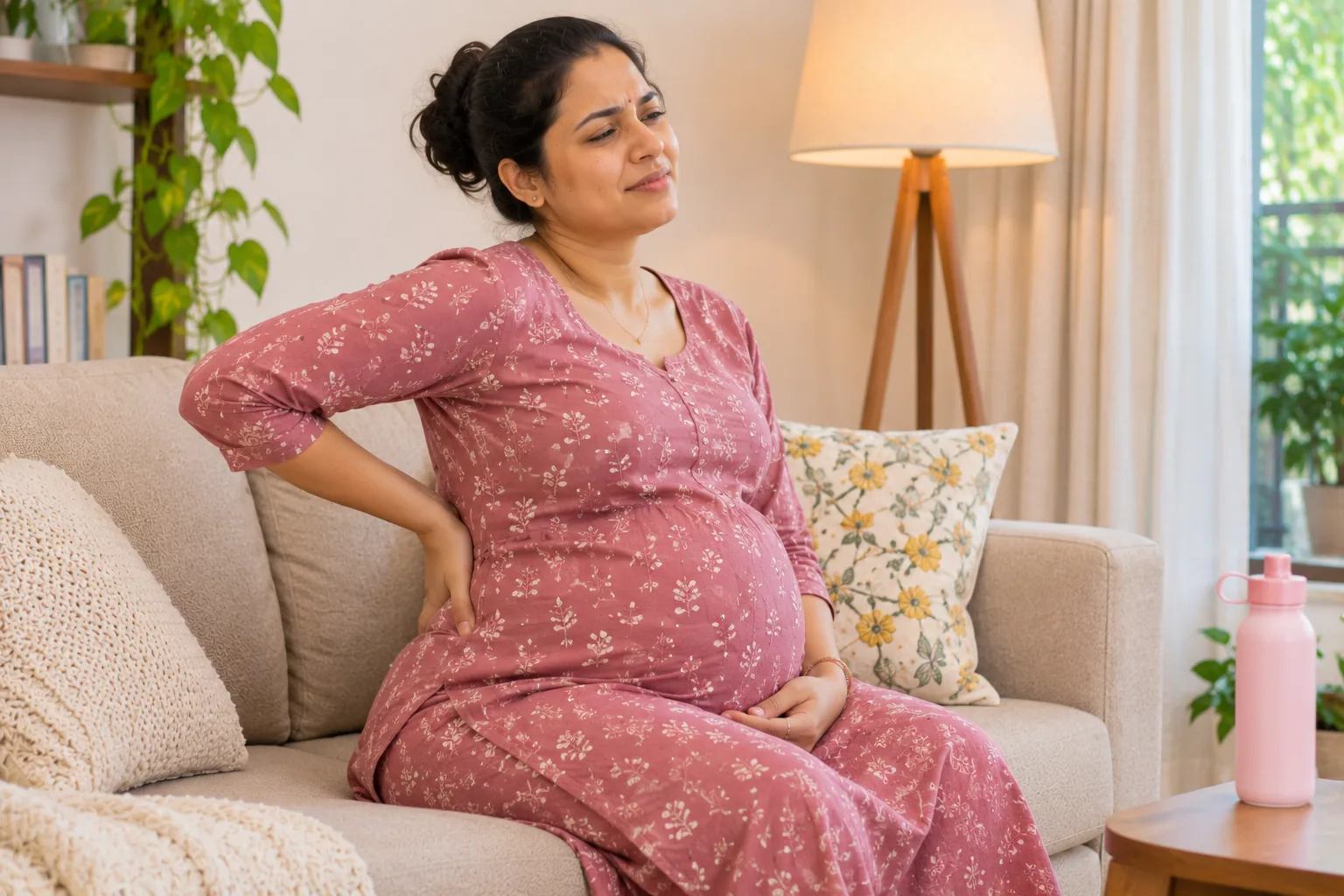
When Does Back Pain Start in Pregnancy?
Back pain can start as early as the first few weeks of pregnancy, and for many women it becomes more noticeable in the second and third trimesters as the bump grows. Early on, it is mostly caused by hormones that soften the ligaments around your pelvis and lower back. Later, the extra weight, a forward shift in your centre of gravity and stretched tummy muscles add to the strain. It is very common and usually not a sign of anything serious.
Some women notice a dull ache that feels like period cramps around week 4, before they've told anyone they're pregnant. Others feel nothing until the bump arrives. Both are normal. Here's what's behind it, what helps, and when it is worth calling your doctor.
Important: Mention any back pain to your doctor at your next check-up. Back pain in the second or third trimester can sometimes be a sign of early labour, so call sooner if it comes with the warning signs listed below.
How common is back pain in pregnancy?
Very. Estimates vary by study and by how back pain is defined: Cleveland Clinic puts it at about 40% of pregnant women, while Healthline and Gleneagles Hospitals put it closer to half to three quarters. Either way, a sore back is one of the most common complaints of pregnancy.
You are more likely to get it if you had back pain before pregnancy or in a previous pregnancy.
When back pain starts, trimester by trimester
| Stage | What causes it | What it often feels like |
|---|---|---|
| First trimester (weeks 1 to 12) | Hormones like relaxin and progesterone loosen ligaments; stress and tiredness tighten muscles | A dull, on-and-off ache in the lower back, a bit like pre-period cramps |
| Second trimester (weeks 13 to 27) | Growing bump shifts your centre of gravity; posture changes; tummy muscles stretch | Lower back ache after standing or sitting for long, pain in the buttocks or hips |
| Third trimester (weeks 28 to 40) | Extra weight, stretched or separated tummy muscles, baby's position | Stronger lower back or pelvic pain, sciatica down one leg, upper back ache |
Types of back pain in pregnancy
- Lower back (lumbar) pain: a dull ache across the lower back, often worse after standing or lifting.
- Pelvic girdle pain: a deeper ache in the buttocks, hips or front of the pelvis, sometimes worse when walking or climbing stairs.
- Sciatica: a shooting pain down one leg when a nerve is pressed.
- Upper back pain: more common later on, linked to posture and breast changes.
What helps back pain in pregnancy
These everyday changes come from the NHS and Cleveland Clinic advice on back pain in pregnancy:
- Lift carefully: bend your knees and keep your back straight. Avoid lifting heavy things.
- Move your feet when you turn around so your spine doesn't twist.
- Wear flat, supportive shoes.
- Split the load between two bags when carrying shopping.
- Sit with support: a cushion or rolled towel behind your lower back helps.
- Change position often. Avoid standing or sitting still for long.
- Use warmth: a warm bath, shower or a warm (not hot) water bottle on your lower back.
- Get a pregnancy massage from someone trained in prenatal massage.
- Sleep on your side with a pillow between your knees and one under your bump.
- Ask your doctor before taking any painkiller.
Gentle exercises that ease back pain
Regular gentle exercise strengthens the muscles that support your back. Walking is a great start. These moves are also easy to do at home:
1. Back arch on all fours (the NHS exercise)
- Start on your hands and knees with your back flat.
- Pull in your tummy muscles and gently round your back up towards the ceiling, letting your head relax down.
- Hold for a few seconds, then slowly return to a flat back. Don't let your back sag.
- Repeat 10 times, moving only as far as feels comfortable.
2. Pelvic tilts against a wall
- Stand with your back to a wall and knees soft.
- Gently press your lower back towards the wall, hold for 3 seconds and relax. 10 times.
3. Child's pose with knees wide
- Kneel with your knees apart and fold forward onto a stack of pillows. Rest for 1 minute.
4. Seated side stretch
- Sit tall, reach one arm up and over to the side, hold for 3 breaths and switch.
5. Kneeling over a birthing ball
- Kneel and drape your upper body over a ball, rocking gently. Lovely for later pregnancy.
If your pain is severe, ask for a referral to an obstetric or women's health physiotherapist. They can give you exercises tailored to your body.
You may also like our guide: Is Prenatal Yoga Safe? Expert Guidelines for Every Trimester
When should I worry about back pain in pregnancy?
Contact your doctor urgently if you have back pain and:
- You are in your second or third trimester, as it could be a sign of early labour
- You also have a fever, vaginal bleeding or pain when you pass urine
- You have pain in one or both sides, under your ribs
- The pain is severe, sudden or doesn't ease with rest
Go to emergency immediately if you have back pain and lose feeling in one or both legs, your bottom or your genitals.
Related reads you may find helpful
Frequently asked questions
Everything you need to know
Gentle Movement for a Happier Back
fitnoa's live prenatal classes include back-friendly sequences matched to your trimester. Our AI tracks your posture and alerts the instructor when your back or hips need adjusting, and Private Mode means only your trainer can see you. Book your free trial session.