
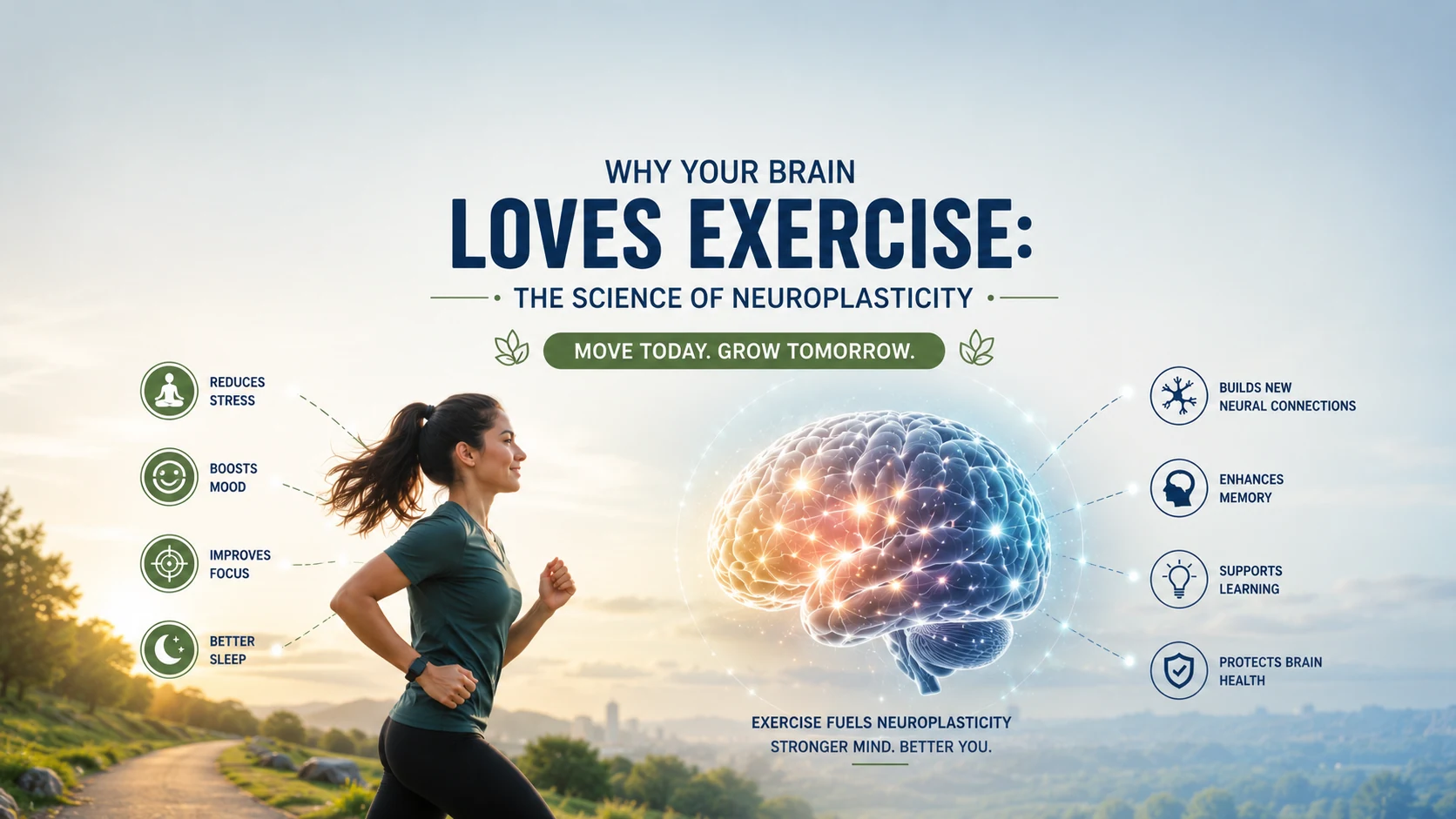
Why Your Brain Loves Exercise: The Science of Neuroplasticity
There is a reason a walk can clear your head, and it is not just a figure of speech. Exercise physically changes the structure of your brain, in ways that can be measured on scans and observed in actual behaviour and memory tests.
The scientific term for this is neuroplasticity, your brain's ability to reorganise itself, form new connections, and in some cases, grow new cells throughout your life. For a long time, scientists believed the adult brain was fixed and unchangeable. We now know that is simply not true, and exercise is one of the most powerful tools we have to support this kind of brain change.
This article explains what neuroplasticity actually is, how exercise triggers it, what changes you can expect to feel, and how to exercise in a way that maximises the benefit to your brain.
What Is Neuroplasticity, in Plain Language?
Neuroplasticity is your brain's ability to change its own structure and function in response to experience, learning, and behaviour. Every time you learn a new skill, form a habit, or even have a strong emotional experience, your brain physically adjusts the connections between neurons, the cells that make up your nervous system, to reflect that experience.
Think of your brain like a network of paths through a forest. Paths you walk often become clearer and easier to travel, while paths you stop using slowly become overgrown. Neuroplasticity is this process happening at a cellular level, strengthening the connections you use and gradually weakening the ones you do not.
This ability does not disappear with age, though it does change in nature. Older adults can still build new neural connections, just generally at a somewhat slower pace than in childhood or young adulthood.
How Does Exercise Trigger Neuroplasticity?
Exercise affects the brain through several distinct biological pathways, each contributing to the brain's ability to adapt and grow.
It Increases BDNF, a Key Growth Factor for Brain Cells
BDNF, short for brain-derived neurotrophic factor, is a protein that supports the survival of existing neurons and encourages the growth of new ones. Researchers sometimes describe it as acting like "fertiliser for the brain."
Aerobic exercise, activities like running, cycling, or brisk walking that raise your heart rate over a sustained period, has been shown to significantly increase BDNF levels. Higher BDNF is associated with better learning, memory, and mood regulation.
It Improves Blood Flow and Oxygen Delivery to the Brain
Exercise increases blood flow throughout the body, including to the brain. This means more oxygen and nutrients reach brain tissue, supporting healthier cell function and potentially reducing the build up of harmful substances linked to cognitive decline over time.
It Promotes Neurogenesis in the Hippocampus
Neurogenesis means the formation of entirely new neurons, brain cells. For a long time, scientists believed this only happened during early development, but research has confirmed that the hippocampus, a brain region central to memory and learning, continues producing new neurons in adulthood, and exercise meaningfully supports this process.
It Reduces Inflammation and Oxidative Stress
Chronic inflammation and oxidative stress, a kind of cellular damage caused by unstable molecules, are linked to cognitive decline and reduced neuroplasticity. Regular physical activity has measurable anti-inflammatory effects throughout the body, including the brain.
It Balances Stress Hormones That Can Otherwise Harm the Brain
Chronically high cortisol, the body's main stress hormone, can shrink the hippocampus over time and impair memory. Exercise helps regulate cortisol levels, protecting the brain from this kind of chronic stress damage. Learn more in doing everything right but still not losing weight, which explores how cortisol affects the body more broadly.
Related reading: the mind-body connection.
What Changes Can You Actually Notice From This?
The biological changes described above translate into real, noticeable benefits.
- Better memory and recall. Many people notice they remember information more easily after building a regular exercise habit, which aligns with research on hippocampal health and BDNF levels.
- Improved mood stability. Since neuroplasticity supports healthier connections in mood regulating brain regions, regular exercisers often report feeling more emotionally balanced over time.
- Sharper focus and concentration. Increased blood flow and neurotransmitter activity support attention and the ability to stay engaged with a task.
- Faster learning of new skills. Whether it is a new language, a new job skill, or a hobby, a brain primed by regular exercise tends to form new neural pathways more efficiently.
- Greater resilience to stress. A brain with stronger neuroplastic capacity tends to adapt more flexibly to challenges, rather than getting stuck in rigid stress responses.
You may also like our guide on how fitness improves focus and memory.
Which Type of Exercise Is Best for Brain Health?
Aerobic Exercise (Running, Cycling, Brisk Walking)
Strongly increases BDNF and supports neurogenesis. Best for memory, learning, and general cognitive health.
Strength Training
Supports cognitive function and may protect against age related decline. Best for long term brain health, especially in older adults. See weight training at home without injuries for a safe starting point.
Coordination Based Exercise (Dance, Sports Requiring Skill)
Engages multiple brain regions simultaneously, building diverse connections. Best for complex skill learning and motor coordination.
Yoga
Reduces cortisol and supports stress regulation, indirectly protecting the brain. Best for stress related cognitive fog and emotional regulation. Try this morning yoga routine for beginners at home in india.
High Intensity Interval Training
Strong short term boost in BDNF and alertness. Best for quick cognitive boosts and time efficient sessions.
A combination of aerobic exercise and strength training tends to offer the broadest brain health benefits, since each supports slightly different mechanisms.
Related reading: exercise for depression.
How Much Exercise Do You Need for Brain Benefits?
Research generally points to moderate, consistent activity rather than extreme amounts.
- 150 minutes per week of moderate aerobic activity, in line with general health guidelines, is associated with measurable cognitive benefits.
- Even a single session of 20 to 30 minutes of moderate exercise has been shown to produce short term improvements in focus and mood, thanks to an immediate, temporary rise in BDNF and other neurochemicals.
- Consistency over months, rather than occasional intense sessions, produces the clearest long term structural brain changes, including improvements visible on brain scans in some studies.
Important: Structural brain changes from neuroplasticity build over weeks and months of consistent practice, not from a single workout. Patience and consistency matter more than intensity here.
Common Mistakes People Make When Exercising for Brain Health
Point 1: Only focusing on weight loss or appearance goals, missing the deeper cognitive and emotional benefits that come from the same routine. Point 2: Doing the same workout every single time. Variety engages a wider range of neural pathways than repeating one single exercise type indefinitely. Point 3: Skipping rest days entirely. Recovery time is when much of the brain's adaptation and consolidation actually happens. Point 4: Expecting overnight results. Structural brain changes build over weeks and months of consistent practice, not a single workout. Point 5: Ignoring sleep. Poor sleep can significantly blunt the cognitive benefits of an otherwise good exercise routine.
Practical Tips to Maximise Brain Benefits From Exercise
- Mix aerobic and strength training across your week to engage multiple neuroplasticity pathways rather than relying on just one.
- Try learning a new physical skill, like a new sport or dance style, since combining physical activity with skill acquisition appears to amplify neuroplastic benefits.
- Exercise outdoors when possible. Natural environments have been associated with additional cognitive and mood benefits on top of the exercise itself.
- Prioritise consistency over intensity. Three or four moderate sessions a week, sustained over months, will likely benefit your brain more than occasional extreme workouts.
- Protect your sleep around workout days, since this is when many of the brain changes triggered by exercise are consolidated. See how sleep affects weight loss and hormones in women for more.
- Stay mentally engaged during exercise rather than going entirely on autopilot. Following along with a trainer or focusing on form appears to engage the brain more actively than mindless repetition.
How fitnoa Supports Brain Health Through Better Movement Habits
Since consistency, variety, and mental engagement all appear to matter for neuroplasticity, fitnoa is built around features that naturally support each of these.
Live fitness sessions with expert trainers: Following a real trainer in real time keeps you mentally engaged with your movement, rather than going through a workout on autopilot, which appears to support better neuroplastic benefits.
Yoga, cardio, strength training, and bodyweight exercises: Having access to a genuine variety of exercise types in one place makes it easier to build the kind of mixed routine that engages multiple brain pathways.
AI posture tracking with real-time rep counting: This adds an active feedback loop during your session, keeping your attention engaged with your own movement and form.
Detailed fitness reports after every session: Tracking performance and progress over time helps you notice gradual improvement, reinforcing the consistency that produces lasting brain benefits.
Goal-based fitness programs: Structured, progressive programs naturally build the kind of consistent, long term habit that supports lasting cognitive benefits, rather than sporadic, unplanned activity.
Learn how fitnoa's yoga and holistic wellness program can help.
Key Takeaways
- Neuroplasticity is your brain's lifelong ability to form new connections and adapt, and exercise is one of the most effective ways to support it.
- Exercise increases BDNF, improves blood flow, supports neurogenesis in the hippocampus, reduces inflammation, and regulates stress hormones, all of which protect and strengthen brain function.
- Benefits include better memory, sharper focus, improved mood stability, and faster learning of new skills.
- A mix of aerobic exercise and strength training, done consistently, offers the broadest range of brain health benefits.
- Around 150 minutes of moderate exercise per week, sustained over months, produces measurable cognitive improvements.
- Staying mentally engaged during exercise, rather than going on autopilot, appears to enhance these benefits further.
- Tools like fitnoa that combine variety, structure, and real time engagement can help you build the kind of consistent routine that genuinely supports brain health.
Related reads you may find helpful
- How Sleep Affects Weight Loss and Hormones in Women
- Weight Training at Home Without Injuries
- Morning Yoga Routine for Beginners at Home in India (10 Minutes, No Experience Needed)
- Doing Everything Right But Still Not Losing Weight? The Cortisol Factor
- Senior Fitness at Home: Safe Exercises for People Over 60
Frequently asked questions
Everything you need to know
Train Your Body, Rewire Your Brain
A mix of cardio, strength, and yoga does more than build fitness, it supports real changes in how your brain learns, remembers, and handles stress. fitnoa gives you that variety in one place, with live trainers to keep you engaged every session.