
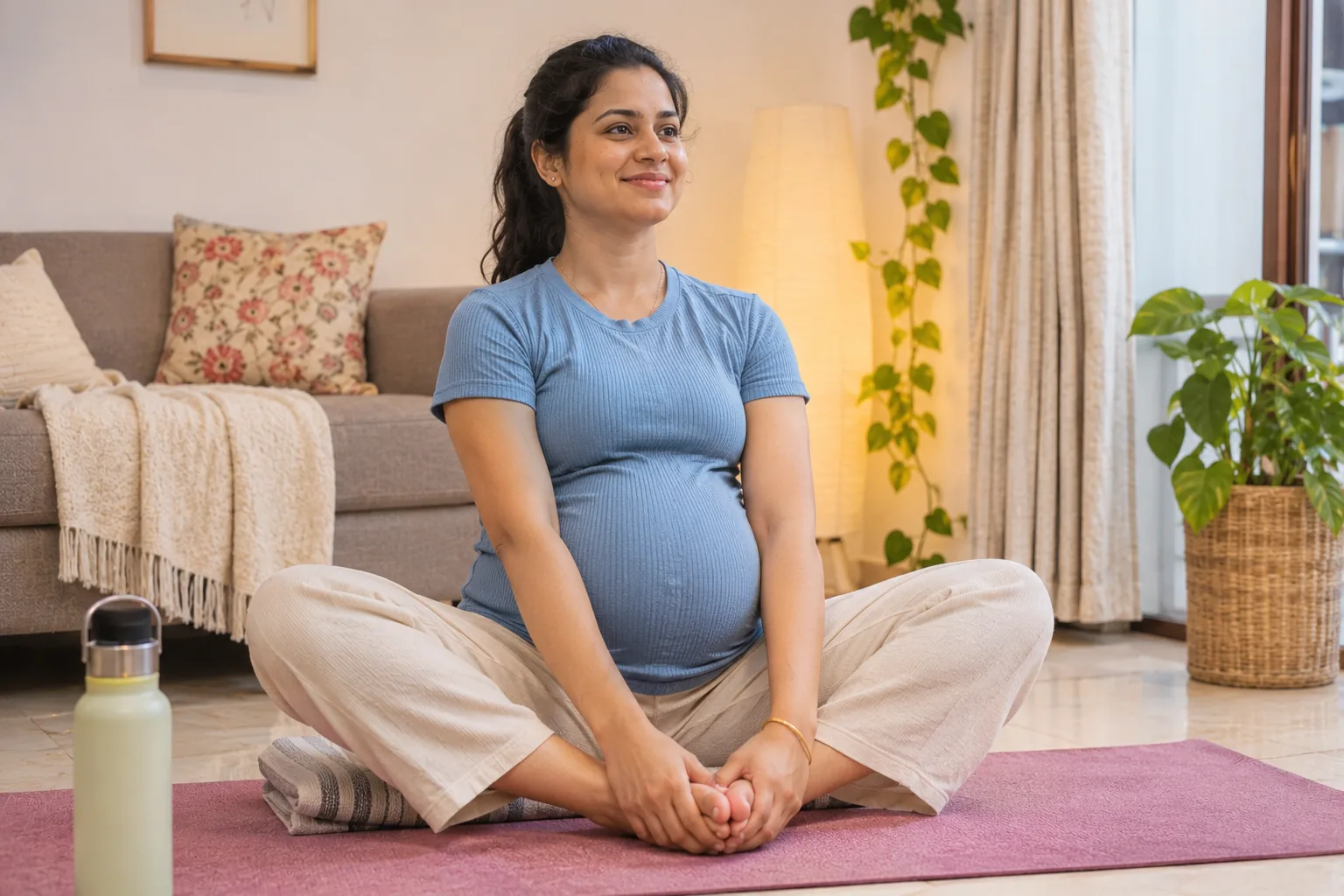
Kegel Exercises During Pregnancy: How to Do Them, How Often and When to Start
To do Kegel exercises during pregnancy, squeeze and lift the muscles you'd use to stop passing wind and urine, hold for 3 to 5 seconds while breathing normally, then fully relax for the same time. Build up to 10 squeezes held for up to 10 seconds, plus a set of quick squeezes, about three times a day. You can start in the first trimester and continue right through pregnancy. Kegels support the weight of your growing baby, help bladder control, may make pushing easier and lower your risk of leaking urine after birth.
Kegels are named after the gynaecologist Arnold Kegel, and they're one of the few pregnancy exercises you can do anywhere: in a traffic jam, at your desk or lying in bed, without anyone noticing.
Important: If you have pelvic, hip, back or bladder pain, ask your doctor or a pelvic floor physiotherapist before starting Kegels. For some women, the muscles are already too tight and need to learn to relax first.
Why do Kegels matter in pregnancy?
Your pelvic floor is a hammock of muscle running from your pubic bone at the front to your tailbone at the back, as Ireland's HSE describes it. It holds up your bladder, uterus and bowel. In pregnancy, it carries more weight every week, and in labour it stretches to let your baby through.
Strong, responsive pelvic floor muscles help with:
- Supporting the weight of your baby
- Bladder control, including leaks when you cough, sneeze or laugh
- Control during labour and pushing, according to Cleveland Clinic
- Healing of the perineum after birth
- Lower risk of urinary incontinence after delivery, according to the HSE
A 2018 Cochrane review, summarised by Fertilia, found pelvic floor muscle training to be the best-supported way to keep these muscles strong during and after pregnancy.
How to find your pelvic floor muscles
- Imagine stopping wind. Tighten the muscles around your back passage as if holding in gas.
- Imagine stopping urine. Lift the muscles around your vagina as if trying not to pee.
- Picture a lift. The HSE suggests imagining an elevator: the doors close, then the lift rises.
- Or a marble. Mayo Clinic suggests imagining you're sitting on a marble and lifting it upward.
You can try stopping your urine flow once to learn the feeling, but don't make a habit of it. Cleveland Clinic warns that repeatedly stopping and starting can lead to infection.
How to do Kegel exercises during pregnancy
Get comfortable
Start lying on your side with your thighs, bottom and tummy relaxed. Once you get the hang of it, you can practise sitting, standing or walking.
Long holds (for endurance)
- Tighten the muscles around your back passage.
- While holding, lift the muscles around your vagina.
- Hold for as long as you can, even just 2 or 3 seconds at first. Keep breathing normally.
- Relax fully for the same amount of time. You should feel a clear release.
- Repeat up to 10 times. Build towards 10-second holds over a few weeks.
Quick squeezes (for coughs and sneezes)
- Squeeze and lift quickly, as if the lift shoots up to the top floor.
- Let go straight away.
- Repeat until your muscles feel tired.
You may feel a gentle tightening just below your belly button. That's fine. Don't suck your stomach in, squeeze your buttocks or thighs, or hold your breath.
You may also like our guide: 7 Month Pregnancy Exercise for Normal Delivery
How many Kegels should you do?
| Source | Recommendation |
|---|---|
| HSE (Ireland) | 3 sessions a day while pregnant: 10 long holds (building to 10 seconds) plus quick squeezes |
| Mayo Clinic | At least 3 sets a day, working up to 10 to 15 Kegels per set |
| Cleveland Clinic | Start with 3-second squeeze and 3-second rest, 10 reps per set (5 if that's hard), at least 2 to 3 sets a day |
| Healthline (physical therapist Heather Jeffcoat) | If you have no symptoms: 3-second holds, 2 sets of 10 to 15 every other day, quick squeezes on the other days |
Pick one routine and stick to it. Consistency matters more than numbers.
When should I start doing Kegels during pregnancy?
You can start as soon as you know you're pregnant. UT Southwestern's physiotherapists say they'd ideally like to see women right after the first trimester to begin pelvic floor work. It's never too late, though. Starting in the third trimester still helps.
Relaxing matters as much as squeezing
Physical therapist Heather Jeffcoat, quoted by Healthline, makes an important point: pelvic floor muscles need to contract well and also relax and lengthen. That's especially true near delivery, when your pelvic floor has to let go so your baby can come down. Always finish each squeeze with a full release, and pair Kegels with slow belly breathing.
Signs of a weak pelvic floor in pregnancy
- Leaking urine when you cough, sneeze, laugh or exercise
- A sudden, urgent need to pee
- Difficulty holding in wind
- A heavy or dragging feeling in your vagina
If you notice any of these, talk to your doctor. The HSE notes that you may be referred to a specialist women's health physiotherapist.
When Kegels may not be right for you
Cleveland Clinic notes that doing too many Kegels, or doing them when you don't need to, can make the muscles too tense. Healthline adds that pelvic, abdominal, hip or back pain, bladder pain or vulvar pain are reasons to see a pelvic floor physiotherapist before starting.
Getting the rest of your core right too
Kegels work best alongside good posture, breathing and the rest of your core. In fitnoa's live prenatal classes, pelvic floor work and breathing are part of the routine, and an AI watches each person's posture and alerts the instructor when someone needs a correction. You get personal attention in a group session, and Private Mode means only your trainer can see you.
Stop and call your doctor if you notice
- Pain during or after Kegels
- Leaking fluid that might be from your waters
- Vaginal bleeding
- Burning or pain when you pass urine
Related reads you may find helpful
Frequently asked questions
Everything you need to know
Pelvic Floor Work, Done Right
fitnoa's live prenatal classes include pelvic floor training and breathing, matched to your trimester. Our AI alerts your instructor when your posture needs fixing. Book your free trial session.